
Kumon
Ages 3-17 · paid · Product · kumon.com ↗
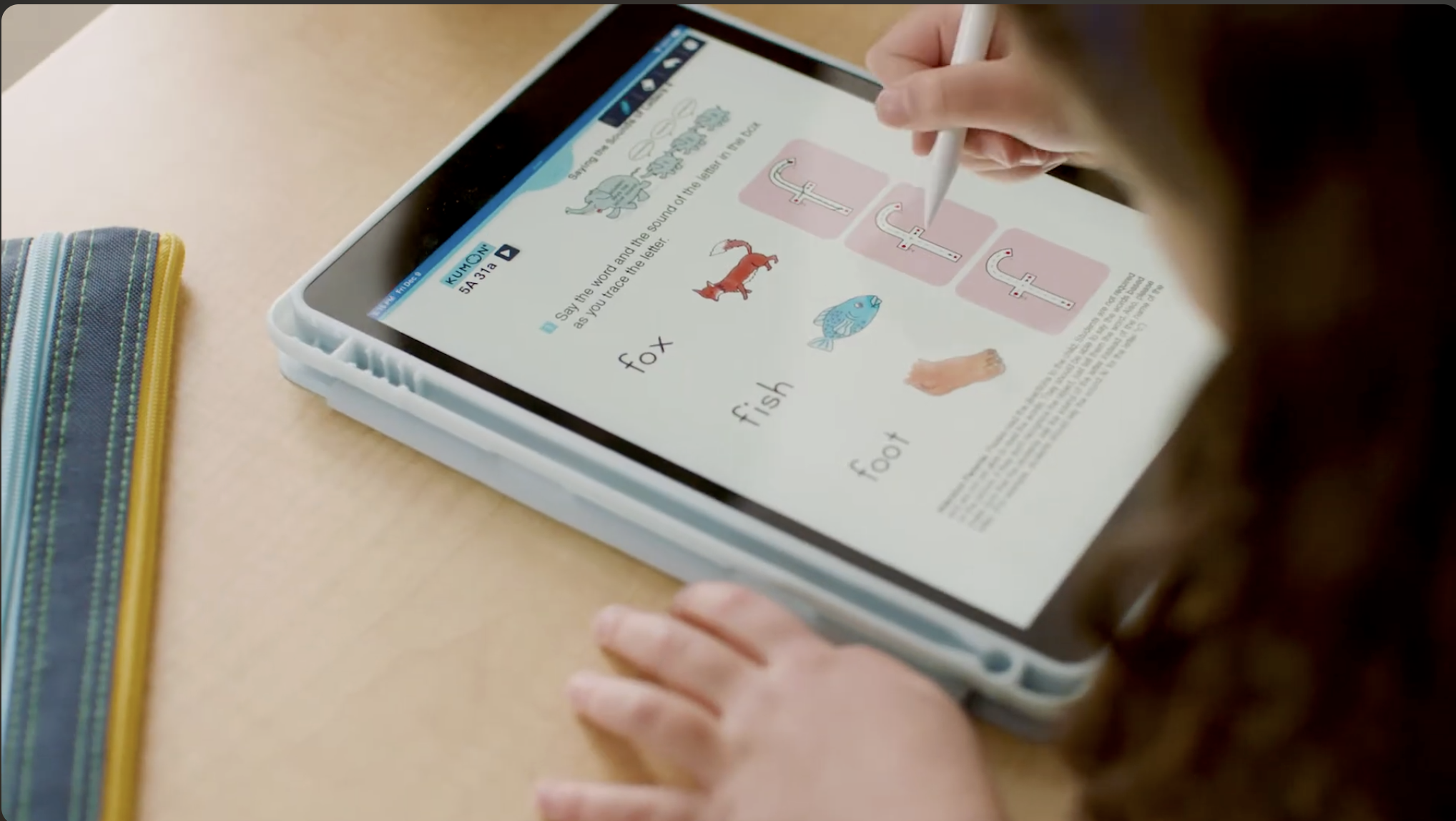
Kumon is a center-based math and reading program built around daily worksheets. Kids attend a center twice a week, do homework the other five days, and move forward only after mastering each step. Some centers use Kumon Connect, which puts the same worksheet routine on a tablet with a stylus.
Kumon has focused developmental strength worth knowing about. It builds persistence. The main growth opportunity: curiosity and creativity stay thin. The worksheet loop is about accuracy and speed, not exploration or original work.
Strengths & gaps
Strengths
- ● Kumon's strongest developmental effect is Persistence. The program makes practice daily, incremental, and hard to skip.
- ● It also builds a useful kind of self-paced discipline. Kids start where they can work comfortably and move forward step by step.
- ● Kumon Connect keeps the routine workable for families who want the same method without paper clutter.
Gaps
- ○ Curiosity and creativity stay thin. The worksheet loop is about accuracy and speed, not exploration or original work.
- ○ Connection is mostly outside the product. Instructors matter, but the child isn't learning with peers.
- ○ Kids who need explanation or conceptual discussion may feel boxed in by repetition.
Detailed scores
How Kumon performs on each of the 9 literacies in our framework.
Doing
— 1 of 3 Strong
Kumon gives children real control over pace. They start at a comfortable level and progress through an individualized plan. But the instructor and the worksheet sequence still set the path, so the child is choosing inside a fixed structure.
Kumon is built to make practice routine. Daily worksheets, small steps, and mastery-before-moving-on create real follow-through. The program and parent testimonials both frame this as learning to persevere through mistakes and hard work.
Kumon changes the level, not the task style. Children keep doing the same worksheet format while the difficulty rises gradually. That helps with accuracy and fluency, but it doesn't ask for much flexibility.
Thinking
— 0 of 3 Strong
Kumon is designed to close skill gaps, not spark rabbit holes. The child follows a prescribed sequence and moves on after mastery. There is little built-in room for asking new questions or following tangents.
Kumon is a right-answer routine. Kids are not inventing, designing, or revising their own work. The program rewards correct responses and steady completion.
Older Kumon reading work asks children to interpret text and evaluate evidence. The program says this also supports analysis and critical thinking. Still, most judgment is exercised inside guided worksheets rather than real-world tradeoffs.
Being
— 0 of 3 Strong
Kumon has instructors and parent check-ins, but it isn't built around peer interaction. The child doesn't collaborate with other children or work in a shared social environment. That makes Connection peripheral rather than central.
Kumon trains habit through repetition and routine. The child returns to work every day, waits for grading, and keeps going through difficult material. But the method doesn't explicitly teach emotional coping or attention control.
Kumon talks about confidence, discipline, and academic success. It doesn't make a sustained link to identity, values, or contribution to others. That leaves Purpose mostly outside the program.
Based on 10 sources
- Product kumon.com
- Product kumon.com — math program
- Product kumon.com — reading program
- Product kumon.com — small step worksheets
- Product kumon.com — frequently asked questions
- Product kumon.com — kumon connect
- Product kumon.com — parents share their kumon experience
- Product brighterly.com — kumon review
- Product homeschool.com — kumon
- Product trustpilot.com — www.kumon.com
Reviewed by New Literacies
Scored by our research-derived framework · AI-assisted analysis with editorial review · 10 sources reviewed · Our methodology →
Get the next guide before it goes live
One email when a new product review ships.
Free. No spam. Unsubscribe anytime.
See other products strong in the same literacies: