
Kodable
Ages 4-10 · freemium · Curriculum · kodable.com ↗
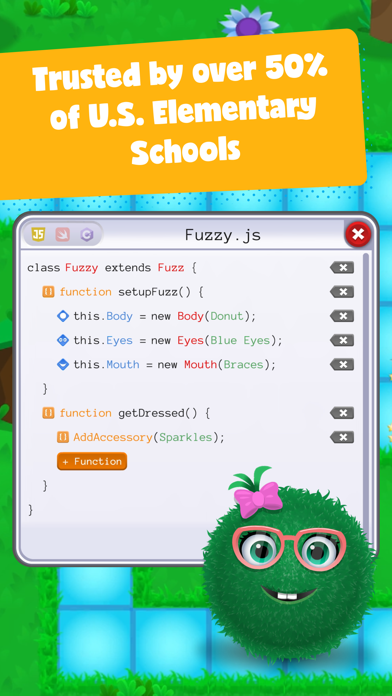
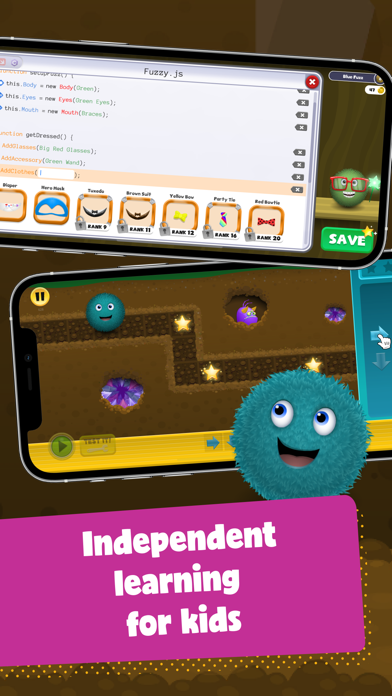
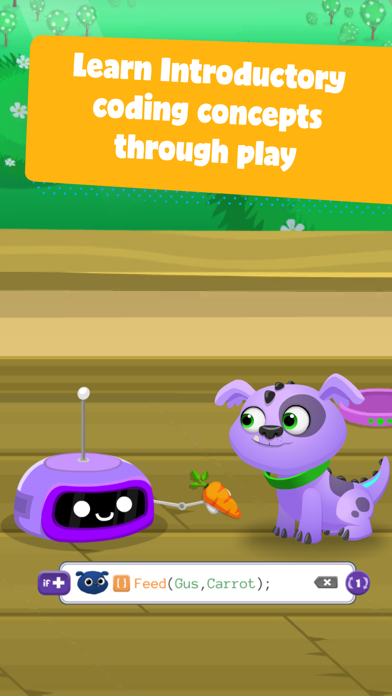
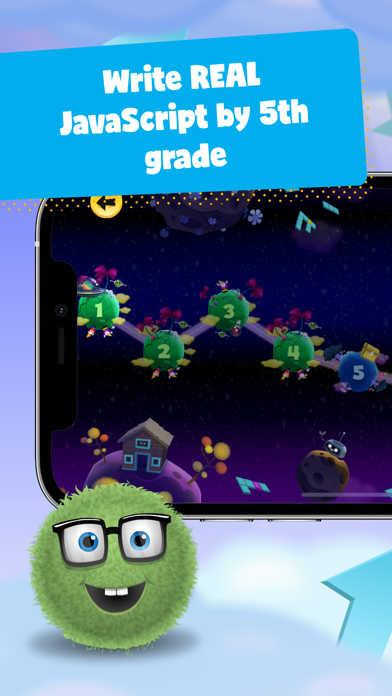
Kodable is an elementary coding program that starts with simple maze-style logic games and grows into broader coding and creation activities across K-5. Younger children work through self-paced coding challenges with little reading required. Older students move further into creation and written code, with the classroom version adding lesson plans, unplugged work, and teacher supports.
Kodable stands out for developmental impact across multiple literacies. It builds action and persistence, creativity. The main growth opportunity: curiosity is mostly platform-bound. The product keeps children exploring inside Kodable, not necessarily beyond it.
Strengths & gaps
Strengths
- ● Kodable is broad for an elementary coding product. It is not only a puzzle ladder. It also opens into creation.
- ● Agency is strong because children are not just following instructions. They can shape what happens and eventually make their own coded experiences.
- ● The K-5 progression matters. Kodable keeps changing the work as children get older instead of trapping them in one beginner format.
Gaps
- ○ Curiosity is mostly platform-bound. The product keeps children exploring inside Kodable, not necessarily beyond it.
- ○ Connection depends on context. In classrooms it can become collaborative, but the app itself is not built around peer interaction.
- ○ Purpose is thin. Kodable is good at building coding confidence, but it does not explicitly connect that work to values or contribution.
Detailed scores
How Kodable performs on each of the 9 literacies in our framework.
Doing
— 3 of 3 Strong
Kodable gives children real control over their work. The younger layers are still guided, but they are self-paced, and the broader suite includes game and level creation. That means the child is not only solving. They are shaping outcomes.
Kodable builds persistence through replay and debugging. A child has to stay with the challenge, revise, and try again. Because the pace is self-directed, the struggle can belong to the learner instead of feeling imposed by a rushing adult or timer.
Kodable asks children to keep changing how they think. The product moves from early symbolic logic into more advanced structures and eventually real JavaScript. That is real transfer, not just more of the same.
Thinking
— 1 of 3 Strong
Kodable is playful and inviting, and that helps children want to keep exploring. But the curiosity mostly stays inside the Kodable universe. The product sparks interest without opening the wider inquiry loops that some stronger curiosity-builders create.
Kodable has a genuine creation layer. Children can build games, design characters, and create new levels rather than only clearing premade ones. That makes creativity more than a side feature.
Kodable builds judgment through code. Children decide what a sequence should do, test it, and revise when it fails. That is valuable reasoning. It just remains mostly technical rather than broad.
Being
— 0 of 3 Strong
Kodable can become collaborative in classrooms, and the teacher examples make that visible. Students work in groups, discuss solutions, and help one another. Still, that social layer depends on implementation more than on the core app design.
Kodable gives children many chances to tolerate frustration, slow down, and keep trying. The structure is friendly, but the work still asks for follow-through. The missing piece is explicit regulation coaching, so Moderate is the right fit.
Kodable clearly builds capability and confidence. It is less clear that it builds purpose in the rubric’s deeper sense of values, contribution, or identity. That dimension sits mostly outside the product’s frame.
Based on 8 sources
- Review commonsense.org — kodable
- Review commonsensemedia.org — kodable
- Product kodable.com
- Product support.kodable.com — 417324 what ages is kodable intended for
- Product kodable.com — teaching coding
- Product apps.apple.com — id
- Product kodable.com — first grade coding
- Product kodable.com — teacher reviews
Reviewed by New Literacies
Scored by our research-derived framework · AI-assisted analysis with editorial review · 8 sources reviewed · Our methodology →
Get the next guide before it goes live
One email when a new product review ships.
Free. No spam. Unsubscribe anytime.
See other products strong in the same literacies: