
Kingdomino
Ages 8-14 · paid · Product · blueorangegames.com ↗

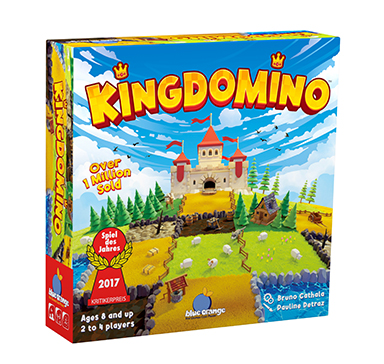

Kingdomino is a short tile-laying board game from Blue Orange Games. Kids draft domino-like landscape tiles, place them into a 5x5 kingdom, and try to score by building connected terrain areas with crowns. The turn-order twist matters, because taking a better tile now usually means picking later next round.
We've reviewed Kingdomino against our 9-literacy developmental framework. The main growth opportunity: kingdomino does not build much curiosity. It gives you a puzzle to solve, not a world to explore.
Strengths & gaps
Strengths
- ● Kingdomino is easy to bring to the table. The official page says 2-4 players, 15 minutes, and strategy / problem solving, which fits the game’s quick pace and light rules.
- ● The turn-order twist gives kids real tradeoffs. A good tile now can cost you first pick next round.
- ● It works well as a family game. Reviewers describe it as simple to teach and something children and adults can enjoy together.
Gaps
- ○ Kingdomino does not build much curiosity. It gives you a puzzle to solve, not a world to explore.
- ○ Purpose is absent. The game stays on the table and does not connect effort to values, identity, or contribution.
- ○ The emotional challenge is mild. Kids practice waiting and handling luck, but the game does not teach coping skills.
Detailed scores
How Kingdomino performs on each of the 9 literacies in our framework.
Doing
— 0 of 3 Strong
Kingdomino gives kids real choices every turn. They decide which tile to draft and where to place it, and those choices change the next round. But the game still gives them a fixed goal and a fixed board shape.
The game keeps attention, but it does so in short bursts. A blocked plan or a bad tile draw can be annoying, yet the round ends quickly and the table resets. That makes it good for repeated play without turning into a sustained struggle game.
Kingdomino rewards pivots. The tile you want now changes the order of play later, so kids have to adjust as the board and available options shift. The pattern is consistent, though, so this is tactical flexibility rather than broad transfer.
Thinking
— 0 of 3 Strong
Kingdomino is about matching terrain and scoring points. The random tile draw creates surprise, but it does not open up a real exploration loop. Kids react to the board state; they do not get invited to go looking for more.
Each child builds a kingdom that looks different from everyone else’s. That gives some room for composition and spatial expression. The scoring rules still narrow the experience, so it never becomes open-ended creation.
This is the game’s clearest cognitive lift. Kids have to judge whether a good tile is worth giving up first pick next round, and they have to weigh terrain size, crowns, and board shape together. The decisions matter, even if the game stays lightweight.
Being
— 0 of 3 Strong
Kingdomino is a face-to-face family game, so the child is playing with real people. There is shared anticipation and a little table talk as everyone watches the draft. The interaction is still competitive, so it builds connection only in a narrow way.
Players have to handle waiting, turn order, and the mild disappointment of losing a tile they wanted. That creates a safe little practice space for emotional control. The game does not teach coping strategies directly, so the regulation practice is incidental.
Kingdomino does not connect play to identity, values, or contribution. The child is trying to score well and build a nicer kingdom, not work toward a larger meaning beyond the game. Purpose is outside the product’s design.
Based on 8 sources
- Product blueorangegames.com — king domino
- Product spiel-des-jahres.de — kingdomino
- Product wargamer.com — family board games
- Product engagedfamilygaming.com — efg essentials great board games for kids
- Product boardgamesandbookclub.com — review kingdomino.html
- Product youtube.com — watch
- Product reddit.com — 12uvoku
- Product creativelearningtoys.com — kingdomino
Reviewed by New Literacies
Scored by our research-derived framework · AI-assisted analysis with editorial review · 8 sources reviewed · Our methodology →
Get the next guide before it goes live
One email when a new product review ships.
Free. No spam. Unsubscribe anytime.