Kindle Kids
Ages 6-12 · paid · Product · amazon.com ↗


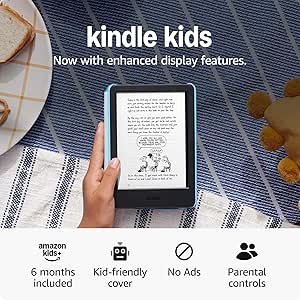
Kindle Kids is a stripped-down Kindle built for reading. A child opens books on a glare-free e-ink screen, changes text settings, bookmarks pages, and looks up words without apps, videos, or games in the way. Parents use Amazon Parent Dashboard to add books, set age filters, check progress, and set bedtime.
We've reviewed Kindle Kids against our 9-literacy developmental framework. The main growth opportunity: Kindle Kids doesn't create much challenge.
Strengths & gaps
Strengths
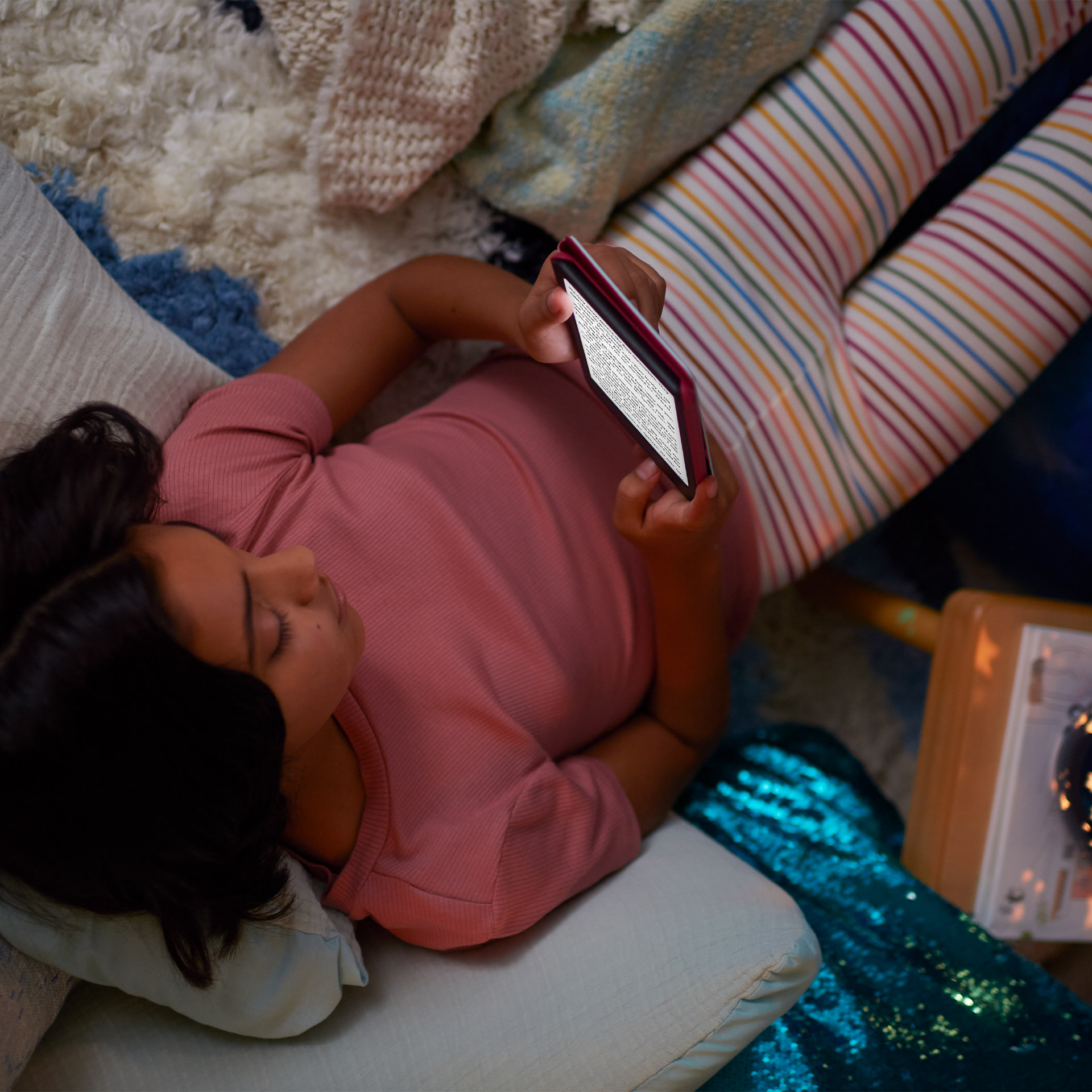
- ● Kindle Kids is built to keep the child in books. The screen is e-ink, the device has no apps or games, and Amazon says kids read more than an hour a day when they sit down with it.
- ● Curiosity gets a real boost. Thousands of chapter books, graphic novels, and audiobooks give kids room to browse and sample.
- ● Parents get practical controls. They can add books, set age filters, and set bedtime without turning the device into a tablet.
Gaps
- ○ Kindle Kids doesn't create much challenge. It supports reading, but it doesn't ask kids to push through hard problems or revise a strategy.
- ○ Creativity and connection stay thin. The child is mostly consuming books, not making or sharing work inside the product.
- ○ The experience still depends on adult curation. A parent has to choose the library and tune the limits.
Detailed scores
How Kindle Kids performs on each of the 9 literacies in our framework.
Doing
— 0 of 3 Strong
Kindle Kids gives children control over the reading moment. They choose a book, change the font and spacing, bookmark pages, and look words up while they read. But the library itself is still curated by adults through Amazon Kids+ and the Parent Dashboard, so the child is choosing within a frame rather than setting their own direction.
Kindle Kids helps children stay with reading because the device is stripped down to books. Amazon says kids read more than an hour a day when they sit down with it, and the long battery life plus the lack of apps or games keeps attention on the page. That supports sustained reading, but it doesn't create the kind of productive struggle the rubric reserves for Strong.
The child can switch titles or adjust display settings, but Kindle Kids doesn't require strategy changes. Reading on the device stays a reading routine. It changes the format of the text, not the way the child has to think through a challenge.
Thinking
— 0 of 3 Strong
Kindle Kids opens a wide library of books and audiobooks that can pull a child deeper into topics they like. They can browse titles, sample new authors, and move from one series to the next without leaving the device. The curation is still bounded, so curiosity stays broad but not open-ended.
Kindle Kids lets children annotate what they read, but the core behavior is still consumption. There is no blank page, no original artifact, and no built-in creation workflow. That keeps the product firmly on the reading side of the line.
Choosing a book and using the dictionary are useful reading behaviors, but they don't amount to broader judgment practice. Kindle Kids doesn't ask children to compare evidence, weigh tradeoffs, or evaluate competing viewpoints. That keeps the capacity outside the main scope of the product.
Being
— 0 of 3 Strong
The Parent Dashboard gives adults control, but it doesn't create a child-to-child social layer. Kindle Kids doesn't facilitate collaboration, shared projects, or discussion inside the device. Any connection happens outside the product, around family reading routines.
Kindle Kids removes most distractions and helps create a stable reading routine. Amazon also lets parents set bedtimes, daily limits, and age filters, which makes it easier to keep use calm and predictable. The device supports self-regulation conditions, but it doesn't teach coping tools directly.
Kindle Kids builds the habit of reading, not a deeper sense of identity or contribution. A child can use it to read better and longer, but the product doesn't tie reading to values or service. Purpose is simply not part of its design.
Based on 11 sources
- Review commonsensemedia.org — does reading on the ipad or kindle count toward my kids daily reading minutes or would it be considered screen
- Product pmc.ncbi.nlm.nih.gov — PMC
- Product joanganzcooneycenter.org — e book quickstudy
- Product joanganzcooneycenter.org — five tips for reading e books with young children
- Product techradar.com — amazon kindle for kids review
- Product tomsguide.com — amazon kindle kids edition
- Product goodereader.com — amazon releases new amazon kindle e reader
- Product goodereader.com — whats new in the all new kindle kids
- Product theverge.com — kindle paperwhite colorsoft kids twelve south plugbug charger deal sale
- Product reddit.com — 1fhshv
- Product reddit.com — 16114bn
Reviewed by New Literacies
Scored by our research-derived framework · AI-assisted analysis with editorial review · 11 sources reviewed · Our methodology →
Get the next guide before it goes live
One email when a new product review ships.
Free. No spam. Unsubscribe anytime.