
KidsNanny
All ages · paid · AI Product · kidsnanny.ca ↗
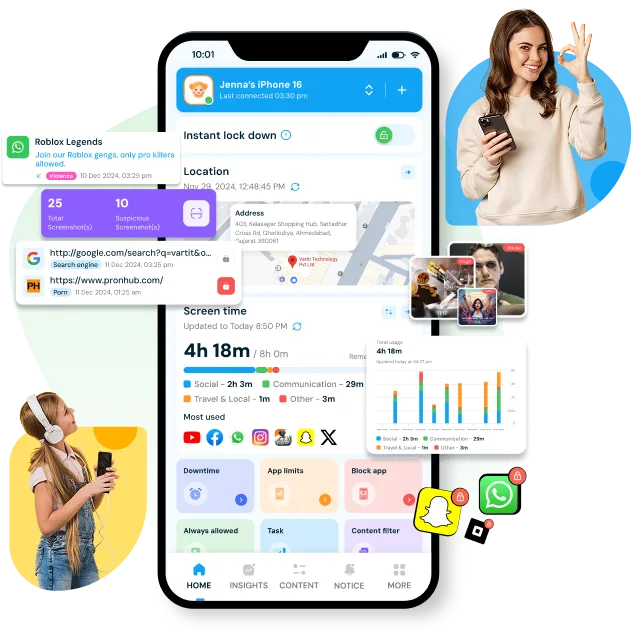
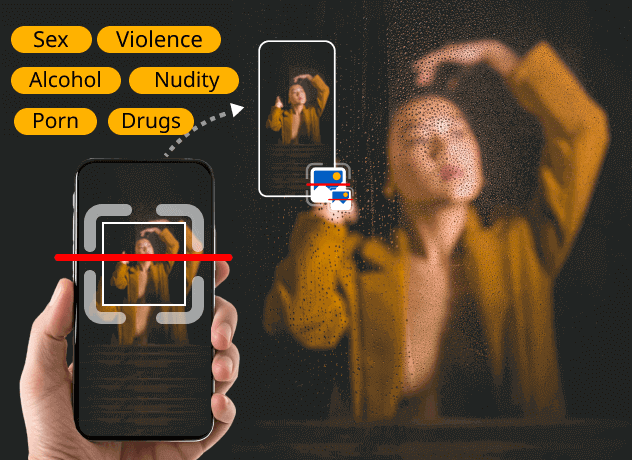
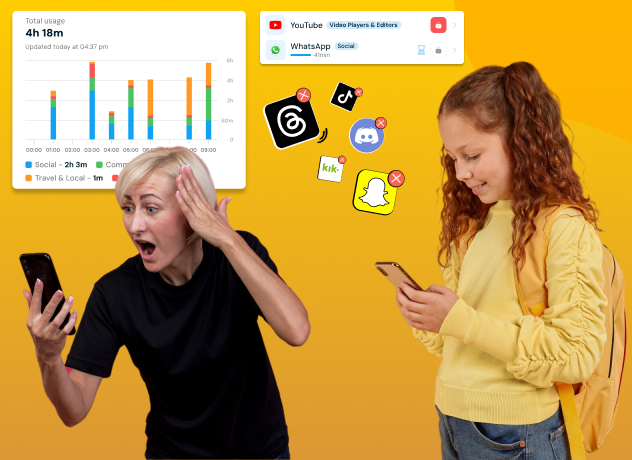
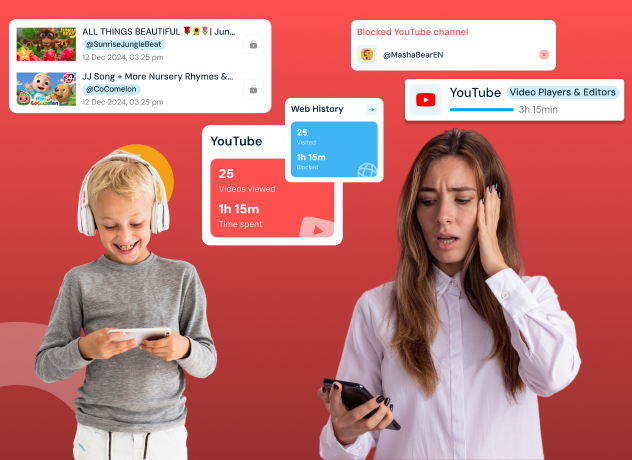
KidsNanny is an all-in-one parental-control app with AI monitoring features layered on top. Parents can set screen-time limits, block apps or websites, review location history, monitor YouTube and WhatsApp behavior, and receive alerts from a central dashboard. For the child, KidsNanny mostly shows up as the system controlling what is allowed and when.
We've reviewed KidsNanny against our 9-literacy developmental framework. The main growth opportunity: KidsNanny does not do much to build child-owned agency or judgment.
Strengths & gaps
Strengths
- ● KidsNanny’s strongest case is practical structure. Families can use it to create more consistent device routines and add oversight to online activity.
- ● It also covers a broad set of real family concerns in one product. Screen time, web activity, YouTube, location, and messaging controls are all part of the public feature set.
Gaps
- ○ KidsNanny does not do much to build child-owned agency or judgment. Most meaningful decisions are made by adults through the dashboard.
- ○ The public evidence is also mostly marketing and implementation guidance. That keeps confidence moderate rather than high.
Detailed scores
How KidsNanny performs on each of the 9 literacies in our framework.
Doing
— 0 of 3 Strong
KidsNanny gives the parent the dashboard and the child the boundaries. That can help with family management. But it does not create much room for the child to direct the experience.
The harvested evidence does not show difficult work, retry loops, or productive struggle. KidsNanny is a control system, not a practice environment.
KidsNanny can change settings and rules, but the public record does not show children learning how to pivot strategies or reflect on their own process. Adaptability remains outside scope.
Thinking
— 0 of 3 Strong
The product is built to narrow exposure through filters and controls. That may be useful for safety. It does not directly build exploration or self-directed inquiry.
Children do not build or make through KidsNanny itself. It sits around other digital experiences as a monitoring layer. Creativity is not engaged.
KidsNanny helps adults review and block. Because so many safety decisions are routed upward to the parent, the child gets limited direct practice making wise digital choices independently.
Being
— 0 of 3 Strong
Check-ins and shared visibility can help coordination. But the product logic is still surveillance-first, so it does not directly teach trust, empathy, or collaborative communication.
Time limits, downtime, and tasks can support healthier routines. That is a real support for self-regulation. But it stays mostly external rather than becoming a deeply internalized skill.
KidsNanny is framed around digital safety and parental management. The reviewed sources do not connect it to values, identity, or contribution.
Based on 5 sources
- Product kidsnanny.ca
- Product kidsnanny.ca — how kidsnanny works
- Product apps.apple.com — id
- Product kidsnanny.ca — app
- Product kidsnanny.ca — pricing
Reviewed by New Literacies
Scored by our research-derived framework · AI-assisted analysis with editorial review · 5 sources reviewed · Our methodology →
Get the next guide before it goes live
One email when a new product review ships.
Free. No spam. Unsubscribe anytime.