
KidGPT (diy.org)
All ages · freemium · AI Product · diy.org ↗
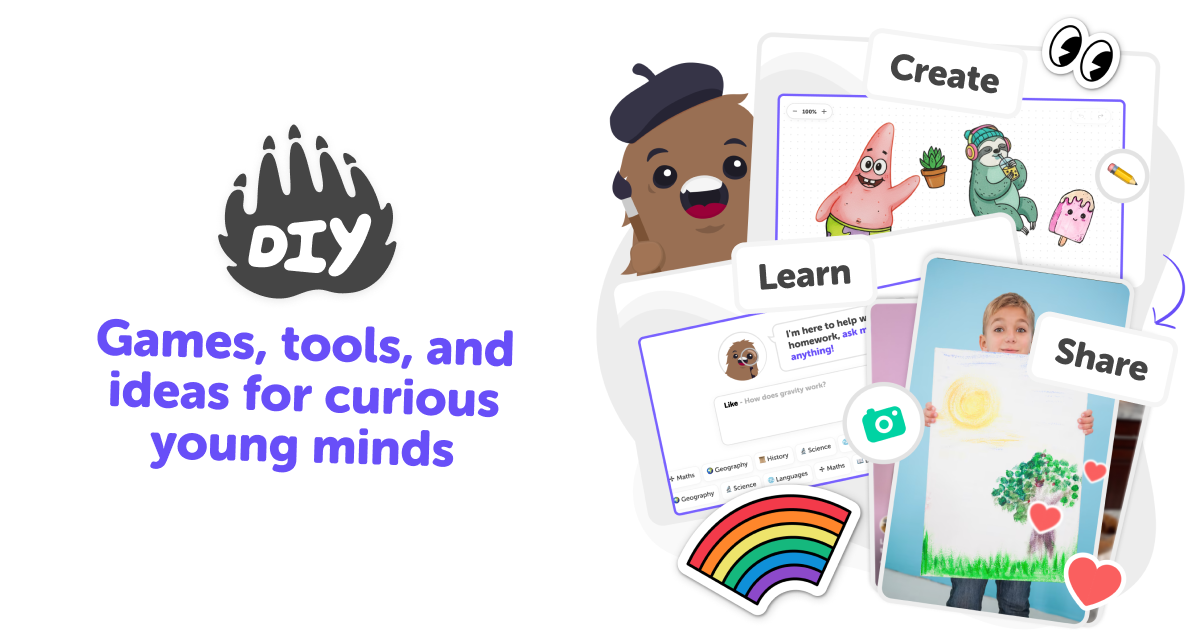


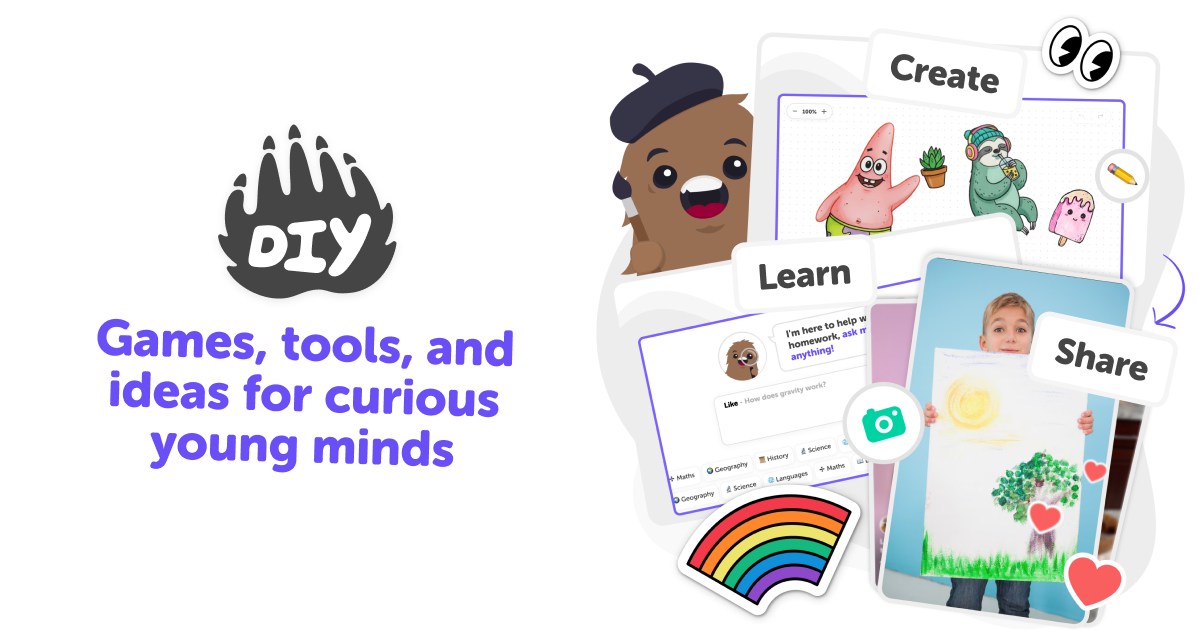
KidsGPT is a child-facing AI homework helper inside DIY.org. A child asks a question, gets an explanation or step-by-step answer, and can also use it for prompts like story starters, writing help, or general school subjects. It is framed as safer and more kid-friendly than a generic chatbot.
We've reviewed KidGPT (diy.org) against our 9-literacy developmental framework. The main growth opportunity: persistence is the main weakness. The whole point of the helper is to reduce friction, which also reduces struggle.
Strengths & gaps
Strengths
- ● KidsGPT is accessible. A child can start from their own question instead of waiting for a fixed lesson.
- ● The product tries to explain, not just answer. That is better than a pure copy-the-result workflow.
- ● DIY’s broader knowledge environment adds some depth through adjustable reading levels and kid-facing articles.
Gaps
- ○ Persistence is the main weakness. The whole point of the helper is to reduce friction, which also reduces struggle.
- ○ Judgment is weak too. There is little visible emphasis on checking evidence, comparing sources, or challenging the AI.
- ○ Confidence is limited because the evidence is mostly first-party. Independent reviews for this specific helper were hard to find.
Detailed scores
How KidGPT (diy.org) performs on each of the 9 literacies in our framework.
Doing
— 0 of 3 Strong
Kids do get to start with their own question. That matters. But after that, the AI largely sets the path by choosing what explanation to give and how much to break down. The child is directing the topic more than the learning process.
Homework helpers make work easier by design. KidsGPT promises step-by-step support and fast explanations, which can be useful in the short term. But it also means the child spends less time wrestling with a hard problem independently. That weakens persistence-building.
The platform can shift across subjects and seems to support different reading levels in the broader DIY ecosystem. That gives some flexibility. But the child is not being trained to switch strategies or reflect on what approach works best. Most of the adaptation happens inside the system.
Thinking
— 0 of 3 Strong
Because kids can ask almost anything, the product can support curiosity some of the time. The prompt galleries also help children move from one school question to another. But the overall framing stays answer-first. It supports curiosity, but does not center it.
Story starters and brainstorming can help a child begin. That is useful. But the AI is doing part of the imaginative work, which makes this a supported creativity tool rather than a strong creativity builder.
KidsGPT explains answers, but the visible experience does not foreground citations, source comparison, or skepticism. That matters. If the child learns to accept the helper’s explanation as the explanation, judgment gets outsourced instead of trained.
Being
— 0 of 3 Strong
This is mostly a one-child-one-bot experience. There is no meaningful evidence of collaboration, shared interpretation, or relationship-building in the product itself.
DIY’s platform has safety and privacy rules, but that is not the same as helping a child manage frustration, attention, or impulse. The helper may lower stress. It does not strongly build self-regulation.
KidsGPT is about school support and ideas on demand. It does not connect effort to values, identity, service, or contribution in a meaningful way.
Based on 5 sources
- Product diy.org — ai homework helper
- Product diy.org — artificial_intelligence
- Product diy.org — privacy
- Product diy.org — guidelines
- Product diy.org — machine_learning
Reviewed by New Literacies
Scored by our research-derived framework · AI-assisted analysis with editorial review · 5 sources reviewed · Our methodology →
Get the next guide before it goes live
One email when a new product review ships.
Free. No spam. Unsubscribe anytime.