
Imagiration / MITA
Ages 2-8 · paid · AI Product · imagiration.com ↗
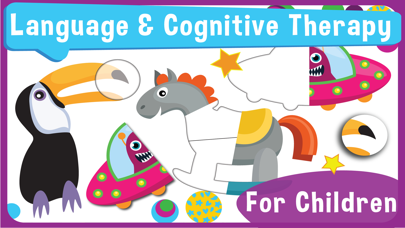


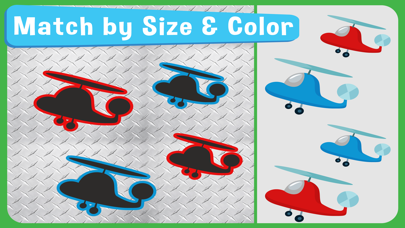
MITA is a language-therapy app for children with autism and language delay. Kids work through adaptive visual and verbal puzzles designed to train language comprehension, mental imagery, and following increasingly complex instructions over repeated long-term practice.
Imagiration / MITA has focused developmental strength worth knowing about. It builds persistence. The main growth opportunity: The evidence base is still mixed.
Strengths & gaps
Strengths
- ● MITA is strongest for persistence. It is not a lightweight entertainment app. It asks children to stay with cognitively demanding exercises over long stretches of time.
- ● Adaptive variation is another real advantage. The exercises are designed to avoid simple rote memorization and keep matching the child's level.
Gaps
- ○ The evidence base is still mixed. The biggest published study is observational and includes clear company conflicts, while the registered RCT has not posted results yet.
- ○ Curiosity, creativity, and broader judgment remain narrow. MITA is a therapy tool, not a broad developmental environment.
Detailed scores
How Imagiration / MITA performs on each of the 9 literacies in our framework.
Doing
— 1 of 3 Strong
MITA asks the child to actually solve problems rather than just watch content. That matters. But adults still manage most of the structure, and the activities are tightly defined.
Persistence is MITA's clearest strength. The product is cognitively demanding, designed to resist routinization, and built for long repeated use over months or years.
Dynamic instructions and adaptive difficulty give MITA more flexibility than a static drill app. But the child's work still stays inside a narrow therapeutic lane.
Thinking
— 0 of 3 Strong
MITA is not designed for open-ended discovery or self-generated questions. Its job is structured therapy practice.
The app does not meaningfully build creative ideation or making. It trains language and mental synthesis in a guided way.
There is some real reasoning involved because children must follow complex relations and mentally combine elements. But the app does not go far beyond that narrow domain.
Being
— 0 of 3 Strong
MITA can pull parents and therapists into more shared practice, and the published paper makes that point directly. Still, connection is a secondary byproduct rather than the main design goal.
Children have to sustain attention and effort through hard tasks. That is useful self-regulatory exercise. But the app does not explicitly teach emotional coping.
MITA is about functional language growth. It does not connect work to values, identity, or contribution.
Based on 4 sources
- Product imagiration.com — mita faqs
- Product mdpi.com —
- Product clinicaltrials.gov — NCT
- Product play.google.com — details
Reviewed by New Literacies
Scored by our research-derived framework · AI-assisted analysis with editorial review · 4 sources reviewed · Our methodology →
Get the next guide before it goes live
One email when a new product review ships.
Free. No spam. Unsubscribe anytime.
See other products strong in the same literacies: