
Gus on the Go
Ages 3-8 · free · Product · gusonthego.com ↗
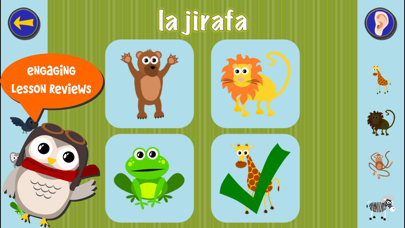
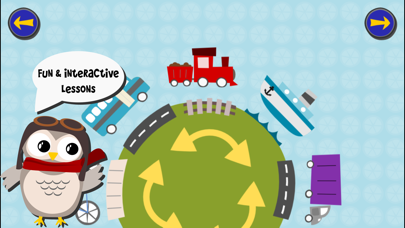
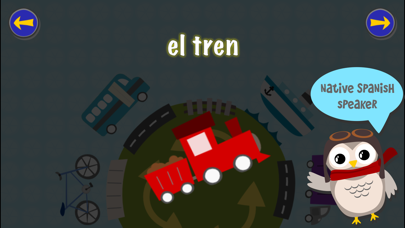
Gus on the Go is a free vocabulary app where young kids follow Gus the owl through 10 interactive lessons per language, learning words for numbers, colors, shapes, animals, and more in up to 30 languages. After completing lessons, kids unlock six reinforcement games. A companion Stories app teaches vocabulary through interactive retellings of classic stories. Every word is spoken by a native speaker, and the app includes no ads or in-app purchases. It also offers endangered languages like Ingush.
We've reviewed Gus on the Go against our 9-literacy developmental framework. The main growth opportunity: Gus on the Go is a vocabulary exposure tool, not a comprehensive language program.
Strengths & gaps
Strengths
- ● Gus on the Go is completely free with no ads and no in-app purchases. For a preschool language app, that's unusual and means zero friction for families or interruption for kids.
- ● The lesson-to-game progression creates an age-appropriate persistence loop. Kids complete vocabulary activities to unlock games, which a kindergarten teacher reports they "consider a reward and look forward to."
- ● Offering 30 languages including Ingush (an endangered Caucasian language) reflects a genuine commitment to language diversity that goes beyond commercial language apps.
Gaps
- ○ Gus on the Go is a vocabulary exposure tool, not a comprehensive language program. Kids learn isolated words (numbers, colors, animals) without grammar, sentences, or conversation.
- ○ No creative or open-ended activities. Every interaction is predetermined matching or selection.
- ○ Limited evidence base. Most reviews are from 2015-2018 and no academic research exists.
Detailed scores
How Gus on the Go performs on each of the 9 literacies in our framework.
Doing
— 0 of 3 Strong
For a 3-5 year old, choosing which lesson to explore and navigating the app independently is meaningful agency. Gus on the Go runs with zero ads and no paywalls, so the child's experience is uninterrupted. The Educators' Spin On It notes the app works well "on-the-go" during transitions, meaning kids use it autonomously.
The app locks games behind lesson completion. For preschoolers, finishing 10 vocabulary activities to unlock a racing game or matching game is genuine delayed gratification. A kindergarten teacher reports children "look forward to it" and view it as a reward. This is modest but age-appropriate persistence practice.
The same vocabulary-matching format applies across all 30 languages. Learning French colors works the same way as learning Mandarin numbers. No strategy variation is ever needed or possible.
Thinking
— 0 of 3 Strong
The Stories app adds a narrative dimension: kids interact with characters in "classic stories with a silly twist." For preschoolers, exploring a story world while encountering foreign words is age-appropriate curiosity engagement. This is a generous rating, acknowledging the very young target audience.
All activities are predetermined. Matching, tapping, and selecting from options. No drawing, building, speaking, or creating.
Being
— 0 of 3 Strong
Solo app. Connection is outside Gus on the Go's scope.
Completing lessons before games is a small delayed-gratification exercise. For a 3-5 year old who wants to play the racing game, doing vocabulary activities first practices patience. This is modest but real for the target age.
Based on 5 sources
Reviewed by New Literacies
Scored by our research-derived framework · AI-assisted analysis with editorial review · 5 sources reviewed · Our methodology →
Get the next guide before it goes live
One email when a new product review ships.
Free. No spam. Unsubscribe anytime.