
Gaggle
Ages 5-17 · paid · AI Product · gaggle.net ↗


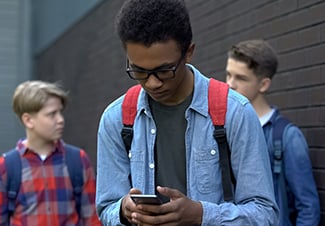

Gaggle is a school surveillance and crisis-response stack. It scans student-created content, email, docs, and web activity, then routes serious alerts to school staff or after-hours crisis teams. Students experience it as a hidden layer of automated review attached to school life.
We've reviewed Gaggle against our 9-literacy developmental framework. The main growth opportunity: gaggle does not build capacities in the child. It monitors, classifies, and escalates.
Strengths & gaps
Strengths
- ● Gaggle gives districts a strong emergency-response workflow, including after-hours escalation.
- ● The company has built a serious operational system for school safety teams.
Gaps
- ○ Gaggle does not build capacities in the child. It monitors, classifies, and escalates.
- ○ The trust cost is high. Reporting on false alarms, content deletions, and involuntary interventions suggests that students can experience the product as surveillance first and support second.
- ○ Curiosity and connection are both weakened when ordinary drafts, messages, and searches feel risky to make.
Detailed scores
How Gaggle performs on each of the 9 literacies in our framework.
Doing
— 0 of 3 Strong
Gaggle scans student work and routes concerns to adults. Students are not governing the environment. They are navigating one that constantly evaluates them.
There is no productive struggle loop in Gaggle. It is a monitoring and escalation tool layered over school work. Persistence is outside scope.
Gaggle does not teach students to reflect or revise strategies. It observes and classifies. Adaptability is not directly engaged.
Thinking
— 0 of 3 Strong
Students explore less freely when they know drafts, searches, and documents may trigger an alert. That is especially true for mental-health, identity, or other sensitive topics. Gaggle's structure works against open inquiry.
Gaggle is not a place where students make or revise work for its own sake. It is an oversight system.
The product automates risk evaluation and sends it up the chain. Students are not being trained in discernment. They are being interpreted by someone else's rules.
Being
— 0 of 3 Strong
The strongest outside evidence here is about mistrust: students feeling watched, benign work being misread, and major interventions triggered by false alarms. That is poor ground for real connection.
Gaggle relies on external monitoring and intervention. That may change outcomes. It does not build internal self-regulation in the student.
Gaggle is built for crisis response and school liability reduction. It does not directly help students connect activity to values, identity, or contribution.
Based on 7 sources
- Product gaggle.net
- Product gaggle.net — safety management
- Product gaggle.net — after hours
- Product apnews.com — 25a3946727397951fd42324139aaf70f
- Product apnews.com — 381fa82978f27eb85f20d
- Product eff.org — student monitoring tools should not flag lgbtq keywords
- Product washingtonpost.com — students lawsuit ai tool gaggle
Reviewed by New Literacies
Scored by our research-derived framework · AI-assisted analysis with editorial review · 7 sources reviewed · Our methodology →
Get the next guide before it goes live
One email when a new product review ships.
Free. No spam. Unsubscribe anytime.