Forbidden Island
Ages 8-14 · paid · Product · gamewright.com ↗
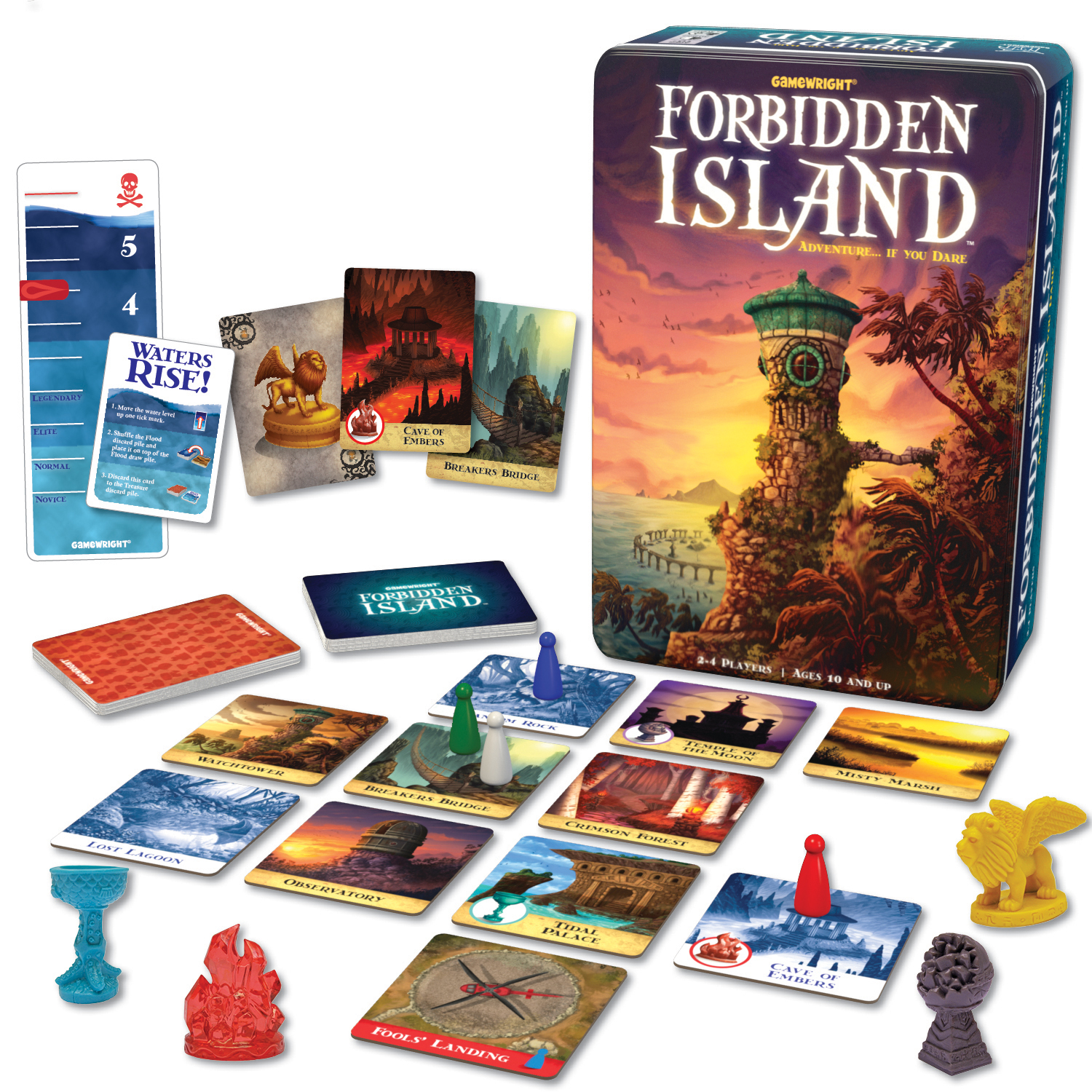
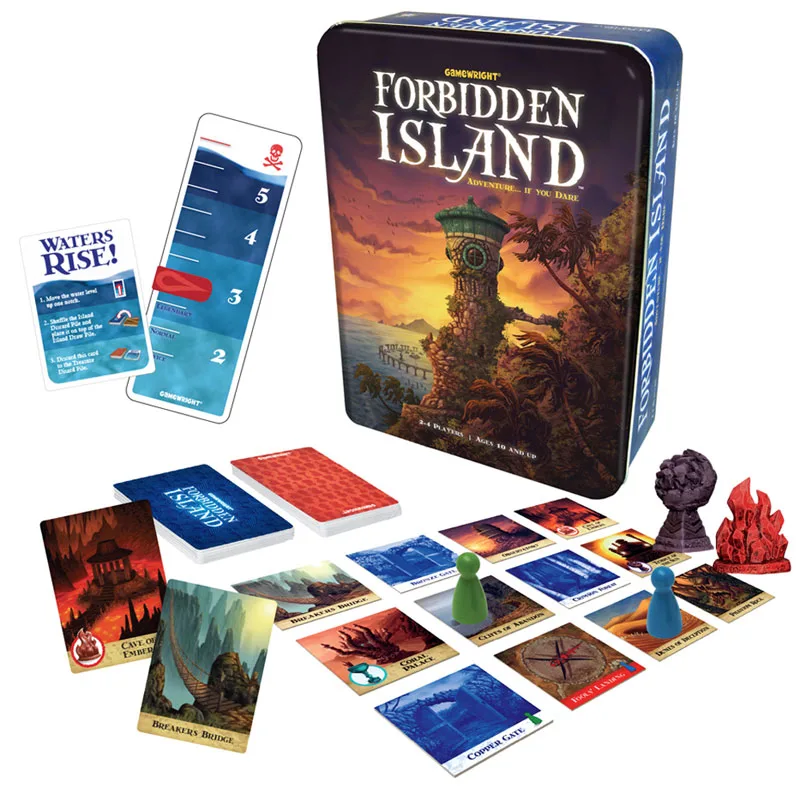
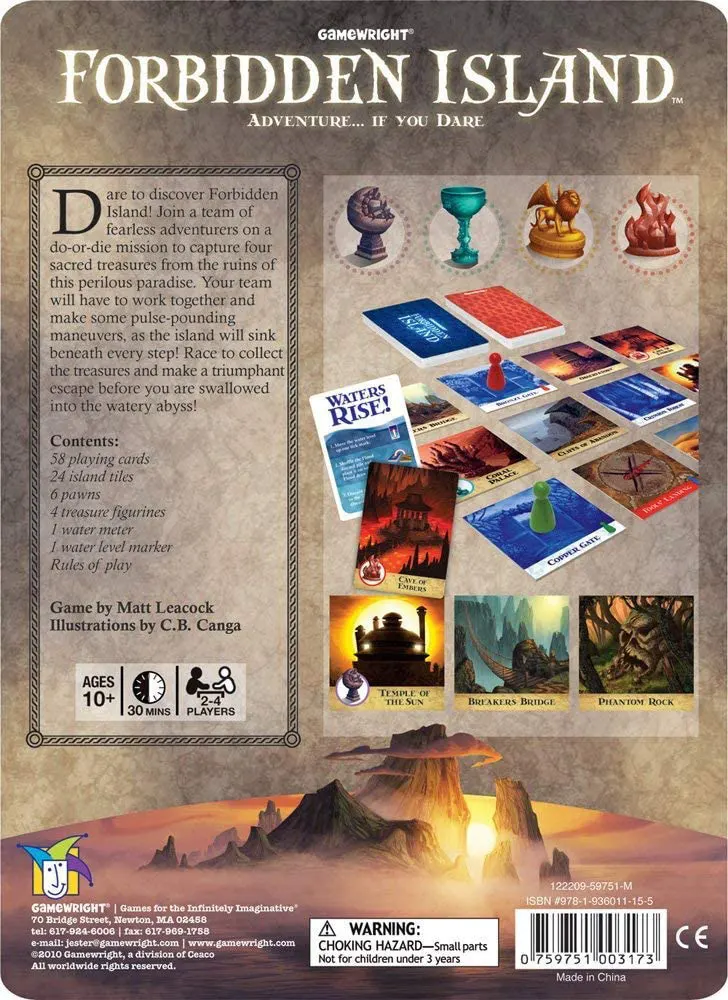
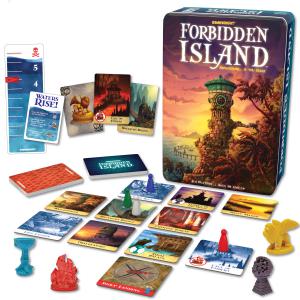
Forbidden Island is a cooperative board game where 2-4 players work together to collect four treasures and escape a sinking island before it disappears. Each player gets a unique role with a special ability, and on every turn the team spends three actions moving, shoring up flooded tiles, and trading cards — then draws flood cards that sink the board out from under them. Games run about 30 minutes, and the whole table wins or loses together.
Forbidden Island stands out for developmental impact across multiple literacies. It builds adaptability, judgment, connection. The main growth opportunity: Curiosity and Creativity stay limited.
Strengths & gaps
Strengths
- ● Forbidden Island is strongest for Connection. The game makes kids talk, coordinate, and share responsibility for the result.
- ● Adaptability is a real feature, not an accident. The island changes every game, and the board can collapse under a plan that looked good a minute ago.
- ● Judgment gets constant practice. Kids have to decide what to save, what to give up, and when to move.
Gaps
- ○ Curiosity and Creativity stay limited. The game is a fixed system with a closed set of actions, not a discovery tool or a creation tool.
- ○ Purpose is outside the design. The adventure theme is fun, but it doesn't point outward to identity, values, or contribution.
Detailed scores
How Forbidden Island performs on each of the 9 literacies in our framework.
Doing
— 1 of 3 Strong
Forbidden Island gives each player three actions per turn and six roles with distinct powers. That means kids make meaningful decisions every round. But the mission is already set, and reviews warn that louder players can take over unless the table stays balanced.
The water meter keeps climbing and tiles disappear, so the game does create pressure. Kids have to recover from bad draws and near misses. Still, a single game is only about 30 minutes, so the struggle is real but brief.
The board changes constantly as tiles flood and sink. A safe route can vanish in a turn, and role powers push players to rethink their plan. Forbidden Island keeps asking the table to pivot, which is why this is one of its clearest strengths.
Thinking
— 1 of 3 Strong
The game is easy to learn and the rule space stays small. That is good design for families, but it means there are only so many surprises left after a few plays. Replayability comes from board setup and pressure, not from deep exploration.
Forbidden Island does not ask children to make something new. It asks them to work a fixed puzzle well. That is useful, but it is not creative output in the sense this rubric measures.
Every turn is a tradeoff. Do you shore up a tile now, move toward a treasure, or pass a card to a teammate? The best move depends on the board state, the water level, and what the team can afford to lose.
Being
— 1 of 3 Strong
The whole game is built on shared responsibility. Teammates have to talk through moves, use their role powers together, and live with the same win-or-lose outcome. That makes communication and coordination central, not optional.
The rising water meter creates real tension. When plans fall apart, kids can get frustrated. But the game does not teach calming strategies or emotional language, so it gives practice without explicit scaffolding.
The adventure theme is engaging, but it stays inside the game. Forbidden Island does not connect effort to values, service, identity, or real-world contribution. That keeps Purpose outside the scope of the product.
Based on 10 sources
- Product wired.com — forbidden island
- Product gamewright.com — Forbidden island
- Product gamewright.com — ForbiddenIslandTM RULES.pdf
- Product leacock.com — forbidden island
- Product pmc.ncbi.nlm.nih.gov — PMC
- Product coopboardgames.com — forbidden island board game review
- Product fathergeek.com — forbidden island
- Product geeky-guide.com — forbidden island
- Product nobleknight.com — Forbidden Island
- Product puzzlewarehouse.com — gamewright forbidden island
Reviewed by New Literacies
Scored by our research-derived framework · AI-assisted analysis with editorial review · 10 sources reviewed · Our methodology →
Get the next guide before it goes live
One email when a new product review ships.
Free. No spam. Unsubscribe anytime.
See other products strong in the same literacies: