Experience CS
Ages 8-14 · free · Curriculum · experience-cs.org ↗

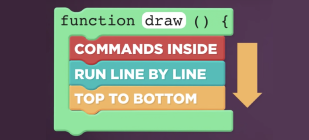

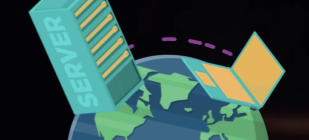
Experience CS is a free curriculum from the Raspberry Pi Foundation that teaches computer science through core subjects like science, art, health, language arts, and social studies. Students build projects in a school-safe Scratch environment, but the coding is tied to bigger contexts: create an anti-app, model an ecosystem, tell a personal story, design a quiz game, or build a community system. It is less "learn coding in isolation" and more "use coding to think inside the world."
Experience CS stands out for developmental impact across multiple literacies. It builds hands-on skills, cognitive skills, purpose. The main growth opportunity: agency is meaningful but still bounded by the unit structure.
Strengths & gaps
Strengths
- ● Experience CS is one of the strongest purpose-builders in this batch. It consistently gives coding a reason to matter.
- ● Adaptability is another major strength because students use CS ideas across a wide range of subjects.
- ● Creativity is central. Students are making original projects, not only completing drills.
Gaps
- ○ Agency is meaningful but still bounded by the unit structure.
- ○ Connection is present through pedagogy more than through a built-in peer community.
- ○ Most of the evidence is official because the curriculum is still new, so confidence is a little lower than it would be with a longer outside review trail.
Detailed scores
How Experience CS performs on each of the 9 literacies in our framework.
Doing
— 2 of 3 Strong
Experience CS gives students real room to make and decide inside projects. They are not only following fixed coding puzzles. But the broader learning path still comes from the curriculum. That makes Agency meaningful without fully clearing Strong.
Experience CS asks students to test, debug, and revise. The lesson materials make that explicit through checklists and multistep project work. That kind of visible iteration is exactly what Strong persistence looks like.
This is one of the clearest strengths. Experience CS keeps moving coding into new domains: ecosystems, stories, health, music, community systems. Students have to transfer what they know instead of applying one narrow routine forever.
Thinking
— 2 of 3 Strong
The curriculum creates lots of entry points for curiosity because the coding is attached to interesting questions and topics. Students are not just asking how to code. They are also asking how weather patterns work, how feeds shape behavior, or how a digital garden might behave. That is a stronger curiosity signal than many coding products manage.
Experience CS is built around project creation. Students make original Scratch-based artifacts in several forms, from stories to games to simulations. That puts creativity near the center of the experience.
Students do make design choices, test code, and decide whether a project is working. That is real judgment. It just stays more technical and project-bound than the rubric’s strongest examples.
Being
— 1 of 3 Strong
The pedagogy clearly values collaboration and peer feedback, and that matters. But the platform is not a social creation community in its own right. Connection is present, just not dominant.
Experience CS creates good conditions for self-regulation because the projects are multistep and mistakes are normal. Students have to keep going and improve the work. The curriculum does not explicitly teach regulation strategies, though, so Moderate is the right fit.
Purpose is one of Experience CS’s best qualities. The coding consistently points outward to subjects, communities, and real-life contexts. That helps students feel that programming is not only a technical trick. It is a way of understanding and shaping the world.
Based on 8 sources
- Product experience-cs.org — about
- Product experience-cs.org
- Product raspberrypi.org — experience cs a new way to teach computer science
- Product raspberrypi.org — experience cs a free integrated curriculum for computer science
- Product experience-cs.org — units
- Product experience-cs.org — tracking the score
- Product experience-cs.org — getting started
- Product noise.getoto.net — experience cs a safe creative way to teach computing
Reviewed by New Literacies
Scored by our research-derived framework · AI-assisted analysis with editorial review · 8 sources reviewed · Our methodology →
Get the next guide before it goes live
One email when a new product review ships.
Free. No spam. Unsubscribe anytime.
See other products strong in the same literacies: