
Eedi
Ages 9-14 · paid · AI Product · eedi.com ↗
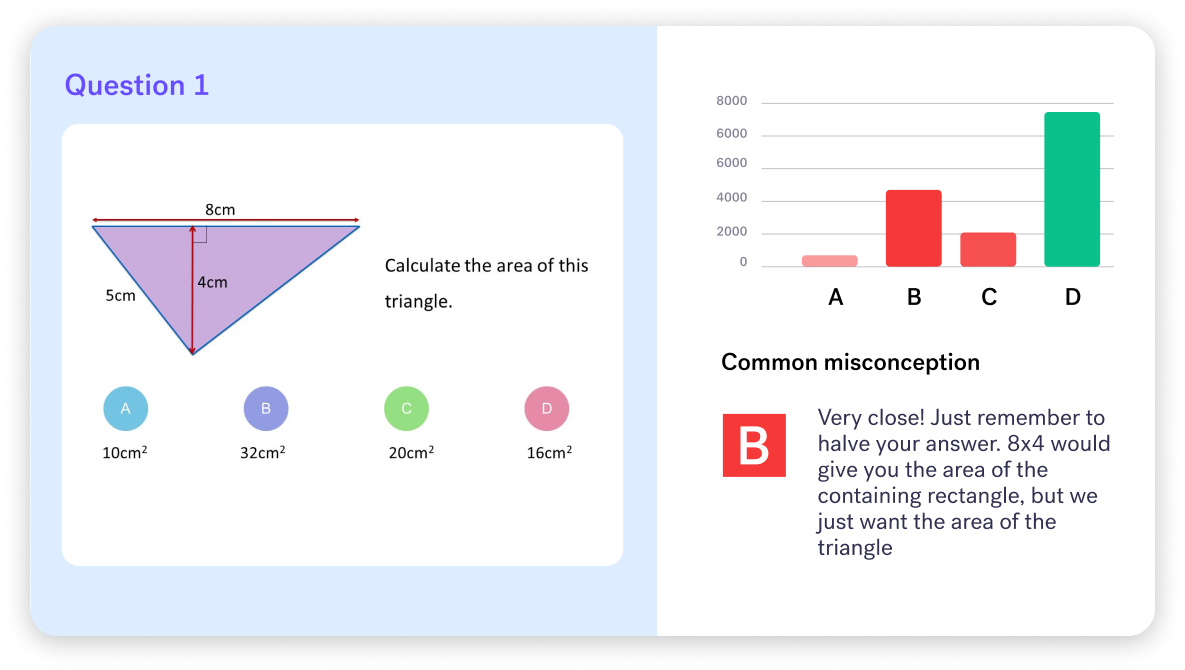
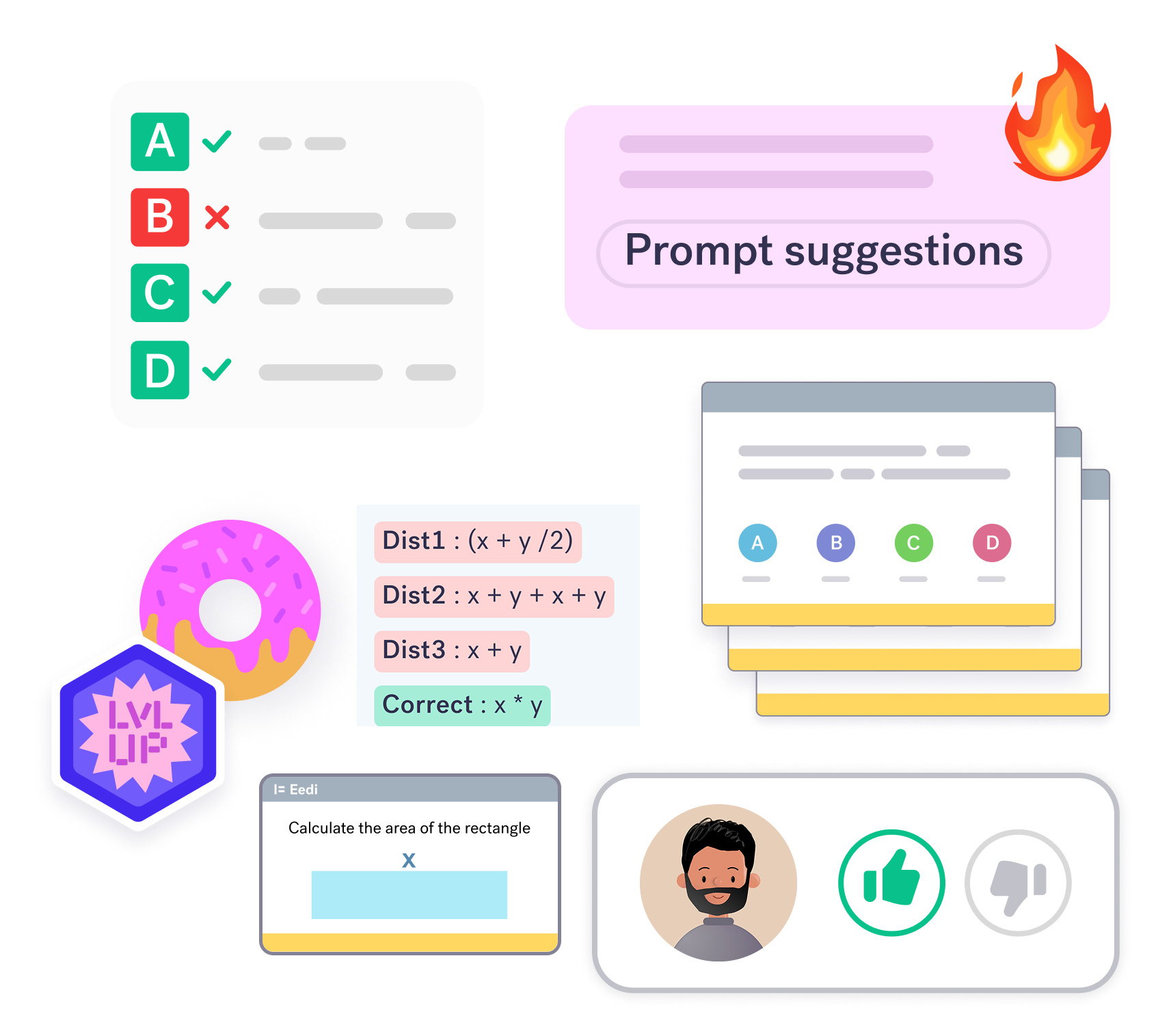

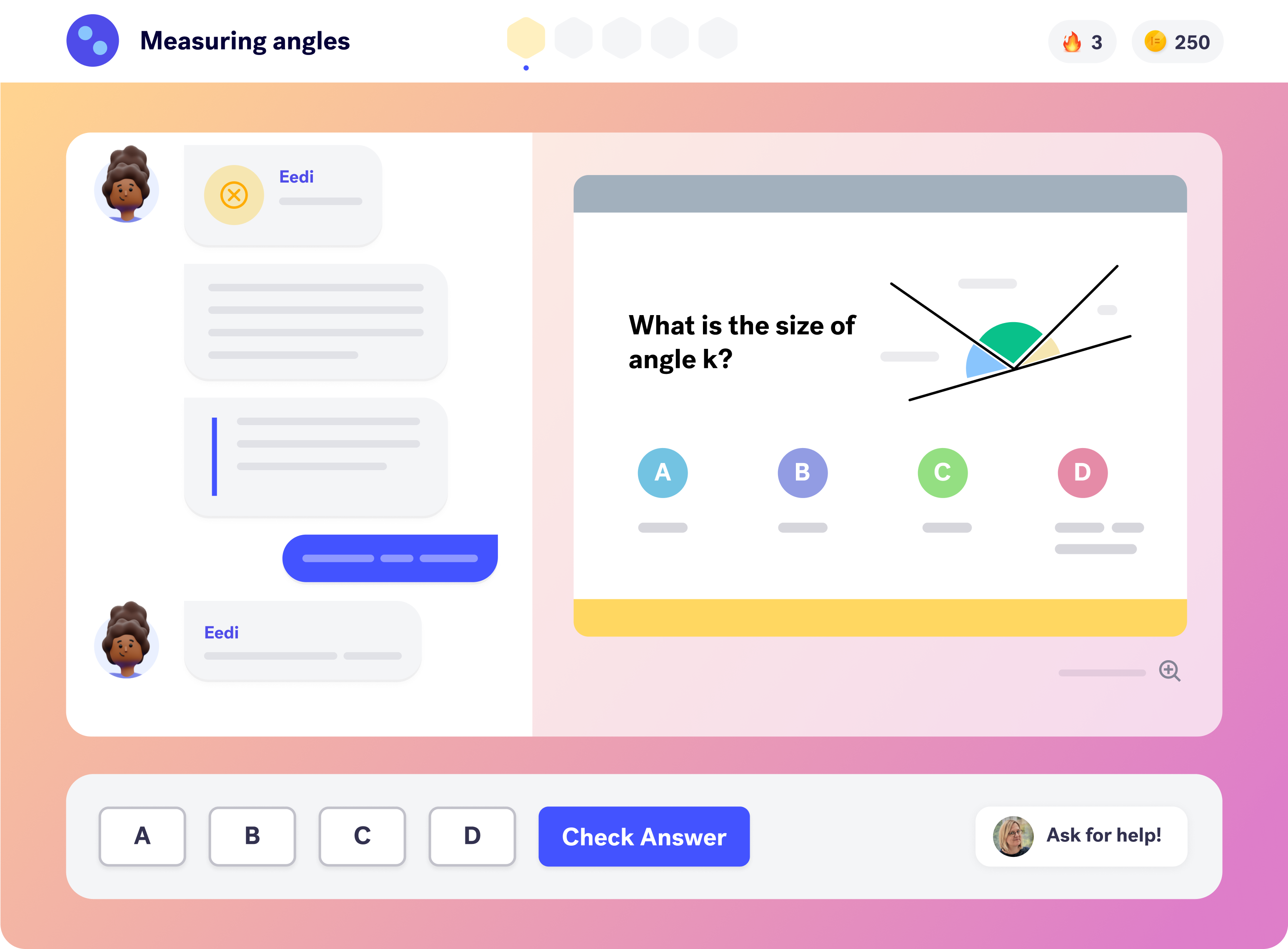
Eedi is a math platform that diagnoses student misconceptions, then pushes students through targeted explanations, prompts, and follow-up practice. Teachers use it to assign diagnostic questions and see what students misunderstand. Students experience it as a structured loop of answer, correction, explanation, and retry.
We've reviewed Eedi against our 9-literacy developmental framework. The main growth opportunity: eedi is narrow and corrective. It is not trying to build curiosity, creativity, or purpose.
Strengths & gaps
Strengths
- ● Eedi is better than a simple drill tool at surfacing how a student is thinking. That gives students more than just right-or-wrong feedback.
- ● Eedi supports persistence and adaptability inside math. Wrong answers trigger support and revision instead of quiet failure.
- ● Eedi may help students build analytical judgment. The product is built around noticing and repairing misconceptions.
Gaps
- ○ Eedi is narrow and corrective. It is not trying to build curiosity, creativity, or purpose.
- ○ Eedi keeps the child inside a teacher-shaped workflow. Agency is present, but bounded.
- ○ Eedi’s forced interventions may frustrate some students even while helping others stick with the work.
Detailed scores
How Eedi performs on each of the 9 literacies in our framework.
Doing
— 0 of 3 Strong
Eedi does not let students set their own learning direction. Teachers assign the work. But once students are inside the system, Eedi gives them clearer information about what they misunderstand and what to do next, which supports bounded academic agency.
Eedi makes students stay with misconceptions instead of moving on quickly. Wrong answers trigger videos, prompts, and more practice. That creates real persistence practice, but it is heavily scaffolded and sometimes system-driven.
Eedi is built around changing mental models. Students are not just told they are wrong. They are pushed to revise a faulty strategy and try a better one. That is meaningful adaptability inside a narrow subject domain.
Thinking
— 0 of 3 Strong
Eedi is not an inquiry tool. It does not invite rabbit holes or self-directed questions. The product is focused on diagnosing and fixing misunderstandings efficiently.
Students are solving structured math questions, not making anything new. There is room for reasoning, but little room for creation. Creativity stays limited.
Eedi’s best thinking contribution is judgment. The whole system is designed to reveal how a student is thinking, then help them compare that reasoning with a better path. That is real evaluative work, even if it stays inside math.
Being
— 0 of 3 Strong
Teachers and tutors matter a lot around Eedi. But the product itself is not designed to build peer interaction, belonging, or collaboration. Connection is weak in the current evidence base.
Eedi can normalize correction and help students recover after mistakes. That supports self-regulation. But because the interventions are often forced by the system, the product builds the skill indirectly and sometimes clumsily.
Eedi is about diagnosing and improving math understanding. It does not connect effort to contribution, identity, or values. Purpose is outside the design.
Based on 6 sources
- Product eedi.com — us
- Product help.eedi.co.uk — 8524265 eedi s pedagogy
- Product help.eedi.co.uk — 7234087 the research behind eedi
- Product help.eedi.co.uk — 4364845 what is eedi
- Product eedischool.com — the commonwealth academy va
- Product trustpilot.com — eedi.com
Reviewed by New Literacies
Scored by our research-derived framework · AI-assisted analysis with editorial review · 6 sources reviewed · Our methodology →
Get the next guide before it goes live
One email when a new product review ships.
Free. No spam. Unsubscribe anytime.