Duolingo ABC
Ages 3-8 · free · AI Product · duolingo.com ↗
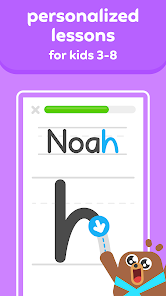
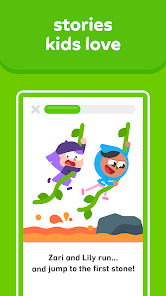
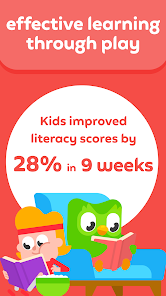
Duolingo ABC is a starter reading app for young kids. A child works through short lessons on letters, phonics, sight words, tracing, speaking, and simple stories, with each step unlocking the next. The app leans hard on animation, audio, and rewards to keep reading practice moving.
We've reviewed Duolingo ABC against our 9-literacy developmental framework. The main growth opportunity: duolingo ABC is tightly guided. Kids do not set goals or pick their own path.
Strengths & gaps
Strengths
- ● Duolingo ABC is easy for young kids to start. The lessons are short, clear, and structured so kids can move forward without getting lost.
- ● It gives early readers a lot of repetition without much friction. That is useful for phonics, tracing, and sight-word practice.
- ● The app is designed to feel playful. Stories, characters, animation, and rewards keep the work from feeling like a worksheet.
Gaps
- ○ Duolingo ABC is tightly guided. Kids do not set goals or pick their own path.
- ○ It does not build much originality or collaboration. The child is practicing reading, not making something for someone else.
- ○ It can feel like a drill path for kids who already know some basics. Common Sense notes they cannot choose where to start.
Detailed scores
How Duolingo ABC performs on each of the 9 literacies in our framework.
Doing
— 0 of 3 Strong
Duolingo ABC puts the child inside a preset lesson path. Kids tap through each activity and unlock the next one only after completing the current step. That makes the app straightforward, but it leaves very little room for self-directed goal setting or meaningful choice.
The app keeps lessons short and rewards progress, which helps young kids stay engaged. Parents also describe children finishing early levels quickly and wanting to keep going. But the challenge level is modest, so this is more about sustaining attention than building deep persistence.
Duolingo says the app personalizes lessons to the child’s pace and adjusts to strengths and weaknesses. That means the sequence is not perfectly flat. Still, the adaptation happens inside a guided lesson path, so the child is not really practicing flexible problem-solving on their own.
Thinking
— 0 of 3 Strong
Duolingo ABC uses animated stories and character-driven mini-games to make reading feel lively. That can spark interest and make kids want to see the next step. But the app is still delivering a controlled sequence, so curiosity stays limited to the reading path.
Tracing letters, speaking words, and dragging pieces into place are all good practice. They do not ask the child to invent anything original. Creative output is not part of the app’s core job.
The app asks children to identify sounds, letters, and word forms. That is appropriate for early literacy, but it is not broader judgment. The child is not weighing evidence or comparing options in any meaningful sense.
Being
— 0 of 3 Strong
Duolingo ABC does not build a shared social layer. It is designed for one child on one device, with adults nearby if needed. Connection is outside its design.
Short lessons and rewards help kids keep moving without getting overwhelmed. That creates some practice staying with a task and tolerating correction. But the app does not explicitly teach calming strategies or emotional recovery.
Duolingo ABC is about learning to read. It does not connect that work to identity, service, or values. Purpose is not part of the product.
Based on 6 sources
- Review commonsensemedia.org — duolingo abc learn to read
- Product blog.duolingo.com — a good read building duolingo abc for android
- Product play.google.com — details
- Product apps.apple.com — id
- Product apps.apple.com — id
- Product reddit.com — j3wdq
Reviewed by New Literacies
Scored by our research-derived framework · AI-assisted analysis with editorial review · 6 sources reviewed · Our methodology →
Get the next guide before it goes live
One email when a new product review ships.
Free. No spam. Unsubscribe anytime.