
Dorosi AI
All ages · freemium · AI Product · dorosi.ai ↗

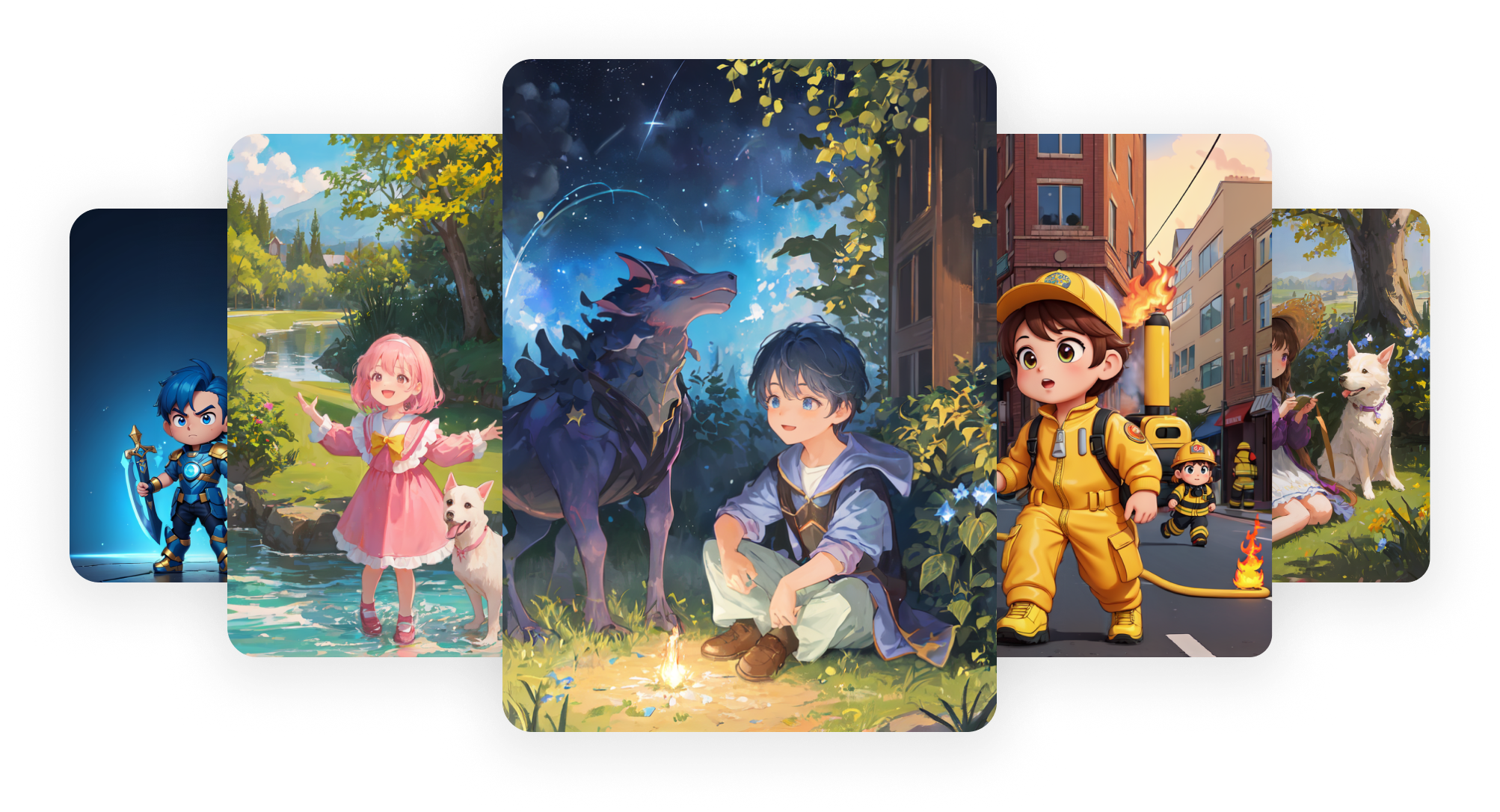


Dorosi AI is a beta story generator built around fairy tales and richly illustrated outputs. The user provides a short imaginative prompt, and Dorosi turns it into a fuller narrative with images. The workflow looks closer to "idea in, story out" than to a child writing and revising a book step by step.
We've reviewed Dorosi AI against our 9-literacy developmental framework. The main growth opportunity: the public evidence is extremely thin. This is one of the lowest-confidence packages in the batch.
Full review
The NL Score measures developmental capacity-building, not product quality.
Strengths & gaps
Strengths
- ● Dorosi can turn a child's idea into a story artifact very quickly. That can make imagination feel visible and immediate.
- ● The fairy-tale framing gives the product more wonder and curiosity potential than a generic text generator.
Gaps
- ○ The public evidence is extremely thin. This is one of the lowest-confidence packages in the batch.
- ○ Dorosi appears to automate most of the composition work, which limits Agency, Persistence, and Judgment.
- ○ There is no clear social or family-connection layer in the evidence collected here.
Detailed scores
How Dorosi AI performs on each of the 9 literacies in our framework.
Doing
— 0 of 3 Strong
Dorosi begins with the user's own idea. That is important. But the product's promise is that it transforms that idea into a rich narrative with very little effort required from the user. Agency is therefore real at the front end, then sharply reduced once the generation begins.
Nothing public about Dorosi suggests a hard creative process. It looks built for fast magical output. That makes it convenient, but it does not strongly build persistence.
The child can change prompts. That is not enough to count as strong adaptability practice. Dorosi does not clearly ask the child to recognize when a strategy is failing and try a different one.
Thinking
— 0 of 3 Strong
The "what happens if I try this?" loop is real. Fairy-tale generation is good at provoking that kind of experimentation. But Dorosi answers the question quickly and does not clearly open into deeper inquiry. Moderate fits.
Prompting imaginative snippets still counts for something. The child or adult is helping set the direction of the story. But because Dorosi handles most of the actual narrative and visual composition, the creativity signal stays shared and moderate.
The evidence collected publicly does not show much revision, comparison, or craft refinement. Dorosi may allow some output selection, but that is not enough to make judgment a clear strength. Limited is the safer call.
Being
— 0 of 3 Strong
Dorosi looks like a solo generation tool. The package evidence does not show collaboration, reading-together structure, or peer interaction. Connection is not visible enough to score positively.
The product lowers friction rather than asking the child to manage it. That is part of the appeal, but it means Dorosi does not appear to demand much self-regulation from the user. The rating stays low.
The prompt becomes a finished story artifact, which gives the activity more shape than a throwaway chat response. That creates some purpose. It still does not become a strong values- or audience-driven signal on this evidence.
Based on 2 sources
- Product dorosiai.typedream.app
- Product producthunt.com — reviews
Reviewed by New Literacies
Scored by our research-derived framework · AI-assisted analysis with editorial review · 2 sources reviewed · Our methodology →
Get the next guide before it goes live
One email when a new product review ships.
Free. No spam. Unsubscribe anytime.