Dojo Tutor
Ages 5-14 · paid · Product · classdojo.com ↗
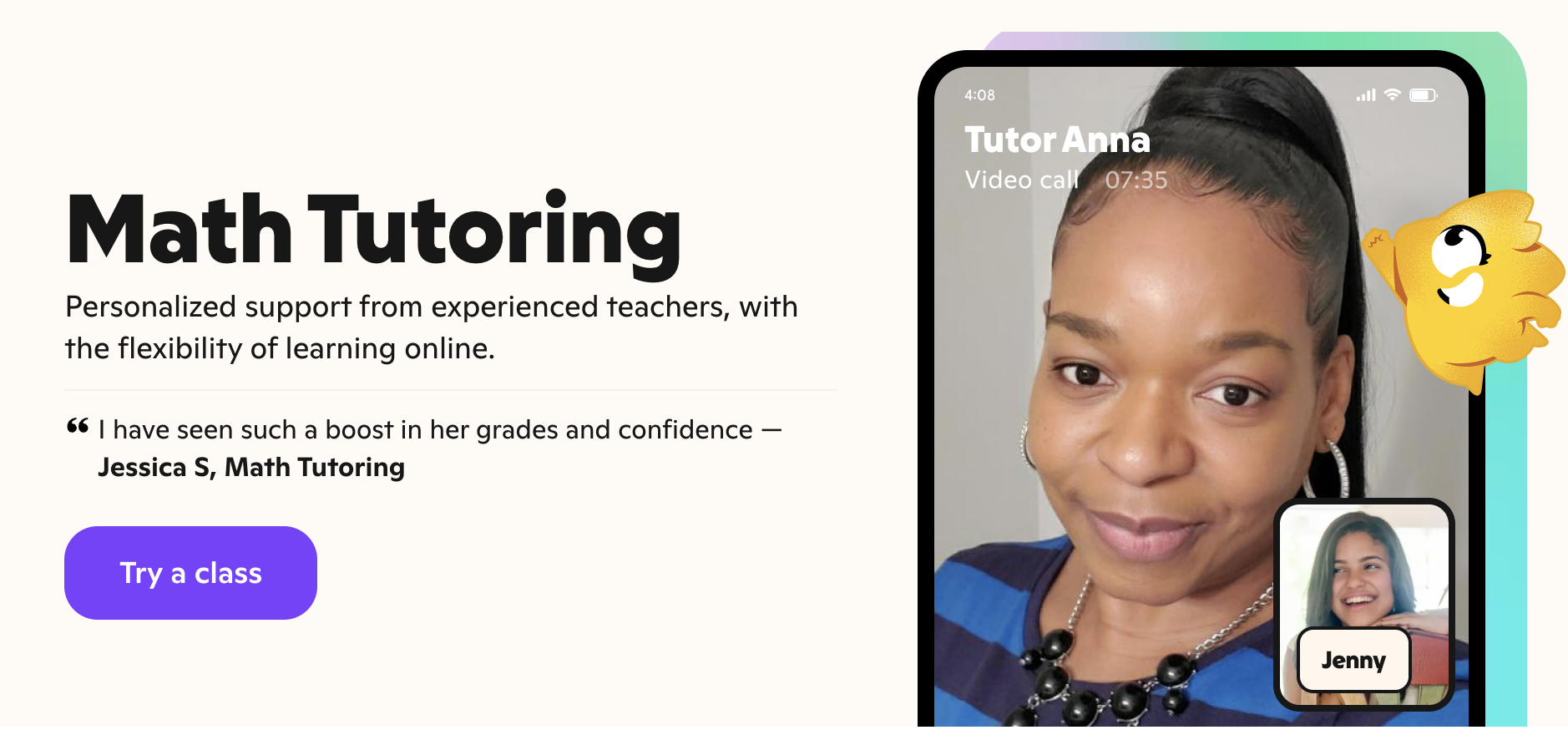
Dojo Tutor matches a child with a live teacher for 25- or 55-minute online sessions in reading or math. Each child starts with a trial assessment, then moves into weekly lessons shaped around their level, needs, and interests. The public experience feels built for younger learners more than teen test-prep: the visible tutor roster, grade filters, and subject pages lean heavily elementary and middle school.
Dojo Tutor has focused developmental strength worth knowing about. It builds persistence. The main growth opportunity: Agency is bounded.
Full review
Disclosure: The NL Score editor is an executive at ClassDojo. This package was scored using the standard rubric, with extra scope checks because the product is part of ClassDojo's broader ecosystem.
Strengths & gaps
Strengths
- ● Dojo Tutor is strongest for Persistence. A live teacher can slow down, reframe a problem, and keep a child from shutting down when reading or math gets hard.
- ● The human relationship matters here. Repeated 1:1 sessions with a real teacher create more connection, trust, and accountability than most tutoring apps or AI homework helpers.
- ● The younger-child fit is a real advantage. Public tutor profiles, grade ranges, and specialties like dyslexia, ESL, and early reading make the experience feel more elementary-and-middle-school-native than many online tutoring products that skew older.
Gaps
- ○ Agency is bounded. The child's needs shape the plan, but this is still guided instruction rather than a self-directed learning environment.
- ○ Creativity and Purpose stay thin. The experience is about making progress in school subjects, not making things or connecting effort to a larger sense of meaning.
- ○ Most public evidence comes from ClassDojo itself. The score is usable, but independent external evidence is still lighter than for more established tutoring brands.
Detailed scores
How Dojo Tutor performs on each of the 9 literacies in our framework.
Doing
— 1 of 3 Strong
Dojo Tutor gives the child more voice than a rigid curriculum. The trial session, personalized plan, and tutor matching all create room for the child's needs and interests to matter. But the teacher still decides most of the route, so the agency is meaningful but bounded.
Dojo Tutor earns its best mark on Persistence. The live format lets a teacher catch frustration early, adjust the challenge, and keep a child working through a hard reading passage or math problem instead of bailing out. Parent reviews repeatedly point to confidence gains and kids becoming more willing to show up for the work.
Dojo Tutor adapts well to the learner. Tutors assess gaps, change pacing, and shift the lesson to match what the child can actually handle. But most of that flexibility is supplied by the adult, not practiced by the child as self-directed meta-learning.
Thinking
— 0 of 3 Strong
Dojo Tutor has more curiosity upside than a worksheet app because a good tutor can follow a child's interests and questions. Reading sessions can branch into discussion, and math sessions can linger on how a child is thinking. But the product is still organized around support and progress, not open exploration.
The scored scope here is reading and math tutoring, not writing workshops or project-based learning. Children mostly practice, explain, solve, and respond. There may be creative moments inside a great session, but the design does not center on making something new.
Dojo Tutor gives Judgment a solid workout. A live tutor can ask why a math strategy works, press on comprehension, and help the child compare stronger and weaker answers. That is more judgment-rich than simple correctness checking, even if the work remains tightly scaffolded.
Being
— 0 of 3 Strong
Dojo Tutor builds real human connection because the child is working with an actual teacher, not just software. That trust can matter a lot for younger kids who need warmth and responsiveness before they will risk struggling in public. But the connection is still instructional and one-to-one, not a broader social environment.
Dojo Tutor asks the child to log in, attend, listen, persist, and recover from mistakes in real time. Those are meaningful self-regulation reps. But the tutor carries much of the structure, so Dojo Tutor supports regulation more than it fully trains independent regulation.
Dojo Tutor is framed around catching up, staying on track, getting ahead, and feeling more confident at school. That is useful and often urgent for families. But the product does not do much to connect reading and math work to values, identity, or contribution beyond academic improvement.
Based on 8 sources
- Product classdojo.com — tutoring
- Product classdojo.com — math
- Product classdojo.com — reading
- Product tutor-help.classdojo.com — 26283419845901 General Dojo Tutor FAQs
- Product tutor-help.classdojo.com — 38422325579021 Dojo Tutor Pricing
- Product tutor-help.classdojo.com — 26283733147661 Create your Dojo Tutor account
- Product classdojo.com — partners
- Product trustpilot.com — tutor.classdojo.com
Reviewed by New Literacies
Scored by our research-derived framework · AI-assisted analysis with editorial review · 8 sources reviewed · Our methodology →
Get the next guide before it goes live
One email when a new product review ships.
Free. No spam. Unsubscribe anytime.
See other products strong in the same literacies: