
Dixit
Ages 8-14 · paid · Product · libellud.com ↗
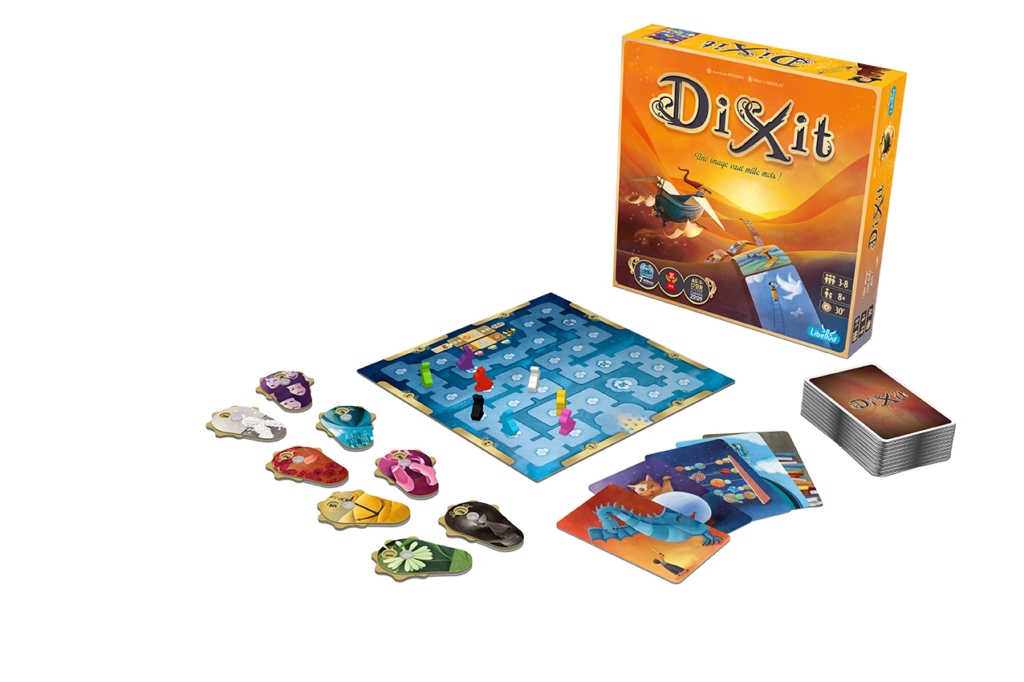


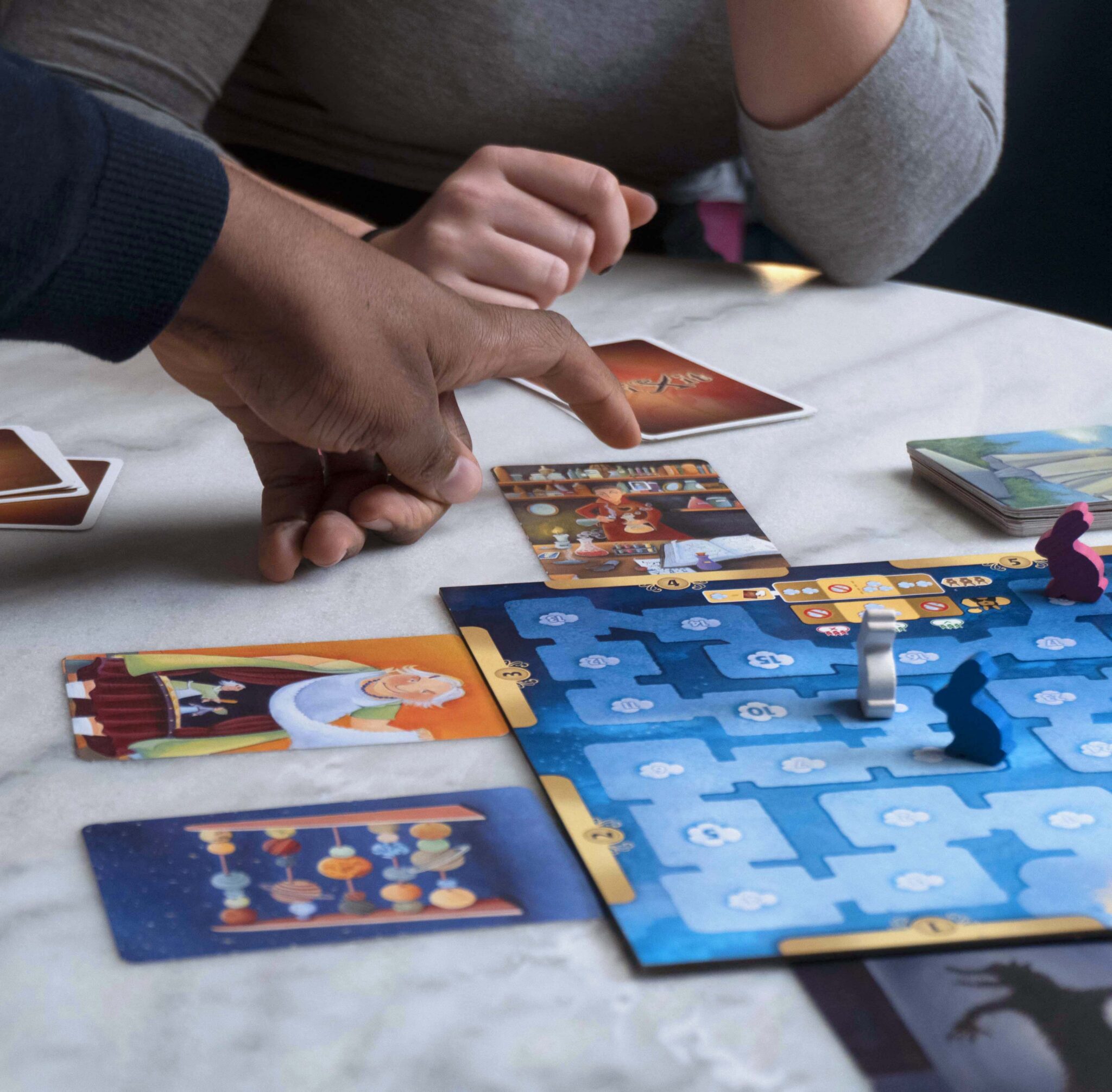
Dixit is a social card game built on surreal illustrated images. One player gives a clue for a card in their hand, everyone else submits a decoy card that could also fit, and then the table tries to guess which image was the storyteller’s. The whole game turns on one subtle skill: saying just enough.
Dixit stands out for developmental impact across multiple literacies. It builds cognitive skills, connection. The main growth opportunity: dixit is not a persistence builder. The challenge is subtle, but the stakes and friction are low.
Strengths & gaps
Strengths
- ● Dixit is strongest for Creativity, Judgment, and Connection. Kids have to invent, interpret, and read other minds all at once.
- ● The game is especially good at showing how communication changes with audience. A clue that works with one group can fail completely with another.
- ● The surreal art gives the table a shared imaginative space. Kids are not recalling facts; they are making meaning together.
Gaps
- ○ Dixit is not a persistence builder. The challenge is subtle, but the stakes and friction are low.
- ○ Self-regulation is barely touched. A child may feel a missed clue, but the game does not create real frustration practice.
- ○ Purpose is outside the scope. The game is about social imagination, not values or contribution.
Detailed scores
How Dixit performs on each of the 9 literacies in our framework.
Doing
— 0 of 3 Strong
Dixit gives kids a real authorial role. As storyteller they choose the clue, and as listeners they choose which card to submit as a decoy. Those choices matter. But the structure of each round is fixed and the product tightly defines success. Agency is present, but bounded.
Dixit is not built on hard challenge. The rounds are quick, playful, and socially forgiving. Kids may experiment with better clues over time, but the game does not create the try-fail-recover loop that persistence scoring needs.
Dixit makes kids adjust to the audience. A smart clue depends on who is listening, what references they share, and how literally they tend to think. That is real adaptation. But the challenge is always the same kind of adaptation, so Moderate fits better than Strong.
Thinking
— 2 of 3 Strong
The artwork is the hook. The cards are strange enough to make kids wonder what they are seeing and how someone else might interpret the same image. But the curiosity stays inside each guessing round. Dixit prompts wonder more than sustained inquiry.
Creativity is the heart of Dixit. Kids have to make original clues from ambiguous images and do it in a way that is memorable without being too precise. There is no template for that. Each round asks the child to invent something new in language and association.
Dixit rewards calibrated judgment. A child has to predict what this group will understand, what will be too obvious, and what will be too obscure. That is not random guessing. It is weighing audience, context, and consequence in real time.
Being
— 1 of 3 Strong
Dixit works because players learn how each other think. Shared references, inside jokes, and surprising interpretations are the engine of the game. The table laughs, misreads, and suddenly understands each other a little better. Connection is built into the mechanic.
Dixit rarely pushes emotional stamina. A missed clue can sting for a moment, but the game quickly moves on and does not require much emotional recovery. It is a social language game, not a regulation workout.
Dixit creates a strong shared experience, but it does not connect that experience to identity, contribution, or values beyond the moment of play. Purpose is outside the product’s design.
Based on 8 sources
- Product wired.com — late to the game dixit
- Product libellud.com — dixit
- Product libellud.com — dixit
- Product cdn.svc.asmodee.net — DIXIT_REFRESH_RULES_US UK AU_BD.pdf
- Product packthepjs.com — review dixit game storytelling imagination
- Product toppingthetable.com — dixit review
- Product frontlinegaming.org — board game review dixit
- Product boardwalk-games.com — dixit
Reviewed by New Literacies
Scored by our research-derived framework · AI-assisted analysis with editorial review · 8 sources reviewed · Our methodology →
Get the next guide before it goes live
One email when a new product review ships.
Free. No spam. Unsubscribe anytime.
See other products strong in the same literacies: