
Destination Imagination
Ages 5-18 · paid · Curriculum · destinationimagination.org ↗
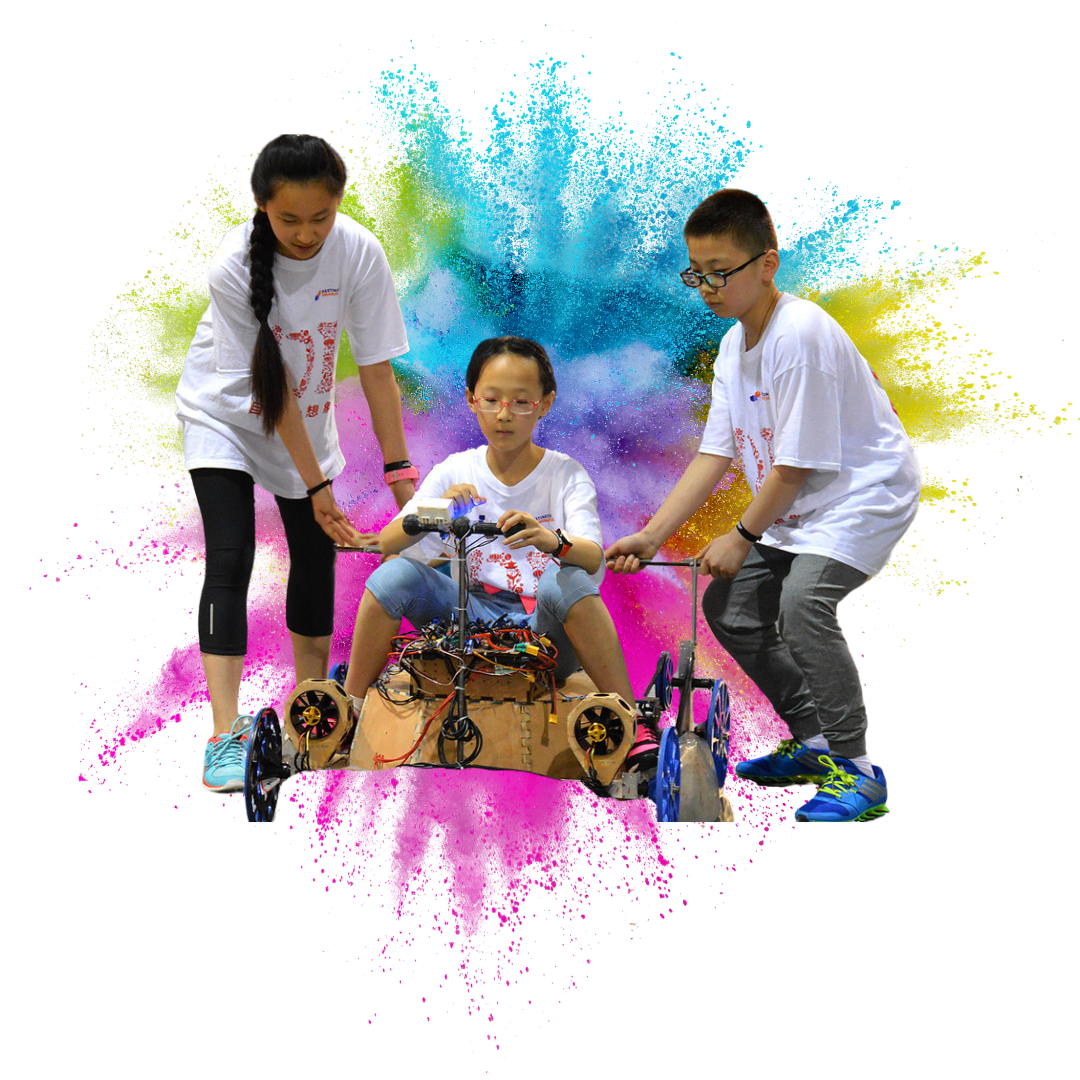


Destination Imagination is a team-based extracurricular program where groups of 2-7 kids pick an open-ended STEAM challenge, then spend several months brainstorming, building, and rehearsing an original solution to present at a live tournament. Adults serve as Team Managers but are structurally barred from contributing to the solution — kids own every decision. At tournament, teams also face a surprise Instant Challenge they must solve on the spot with no preparation.
Destination Imagination is one of the strongest developmental products we've reviewed. It builds action and persistence, cognitive skills, interpersonal skills. The main growth opportunity: Curiosity is present, but it is mostly instrumental.
Full review
The NL Score measures developmental capacity-building, not product quality.
Strengths & gaps
Strengths
- ● Destination Imagination's clearest strength is Agency. Kids own the solution end to end, and adults are structurally barred from stepping into the work.
- ● Creativity, Judgment, and Connection travel together here. The program asks kids to invent something original, make tradeoffs, and do it as a team.
- ● Purpose is not an afterthought. The Service Learning challenge asks students to address a real community need, not just simulate one.
Gaps
- ○ Curiosity is present, but it is mostly instrumental. Kids research because the challenge requires it, not because the product is built around open-ended discovery.
- ○ Self-Regulation gets practiced through pressure and failure, but DI does not explicitly teach coping tools or emotional vocabulary.
Detailed scores
How Destination Imagination performs on each of the 9 literacies in our framework.
Doing
— 3 of 3 Strong
Destination Imagination gives kids real ownership. The work must be 100% theirs, and adults are limited to teaching skills, keeping kids safe, and helping them think through the process. That means the child is the one choosing, building, revising, and presenting the solution.
DI is designed as a long season, not a quick activity. Teams spend months testing ideas, fixing failures, and preparing for tournament day, where the work finally gets public stakes. The process rewards sticking with hard problems instead of looking for a shortcut.
Instant Challenges are the sharpest evidence here. Kids have to think quickly with unfamiliar materials and a confidential prompt, then adjust when their first idea doesn't work. The creative process itself is also non-linear, so switching direction is built into the program.
Thinking
— 2 of 3 Strong
DI does spark curiosity. Teams pick challenges that appeal to them, and the season includes research, exploration, and experimentation. But the curiosity is still tied to a defined goal, so it does not open the wide exploratory space needed for Strong.
Original creation is the point of DI. Teams invent their own solution, build from scratch, and present something that did not exist before the season started. The open-ended challenge format gives enough structure to focus the work without turning it into a template exercise.
The program demands constant judgment. Kids have to decide how to spend time and money, which materials are worth using, and how to interpret rules without an adult making the call for them. That is real tradeoff thinking, not just following instructions.
Being
— 2 of 3 Strong
Connection is structural in DI. Teams are small, interdependent, and public-facing, so kids have to negotiate roles, resolve disagreements, and coordinate the final presentation together. The impact page's teamwork results back up what the design already makes obvious.
DI creates emotional challenge on purpose. Kids face pressure, conflict, and failure, and some participants report learning ways to lower stress and refocus attention. But the program doesn't directly teach those tools, so the regulation gains are real but indirect.
Service Learning pushes DI beyond personal accomplishment. Teams have to identify a community need and carry out a project that responds to it, which gives effort a clear outward direction. That is enough to make Purpose a real strength, not just a mission statement.
Based on 10 sources
- Product wired.com — dive in to destination imagination
- Product eric.ed.gov
- Product destinationimagination.org — Destination Imagination An Examination of Highly Creative Childrens Experiences on Their Journey Through Imagination.pdf
- Product hundred.org — destination imagination challenge experience
- Product destinationimagination.org
- Product destinationimagination.org — who we are
- Product destinationimagination.org — challenge previews
- Product destinationimagination.org — pricing
- Product destinationimagination.org — what is interference
- Product destinationimagination.org — our impact
Reviewed by New Literacies
Scored by our research-derived framework · AI-assisted analysis with editorial review · 10 sources reviewed · Our methodology →
Get the next guide before it goes live
One email when a new product review ships.
Free. No spam. Unsubscribe anytime.
See other products strong in the same literacies: