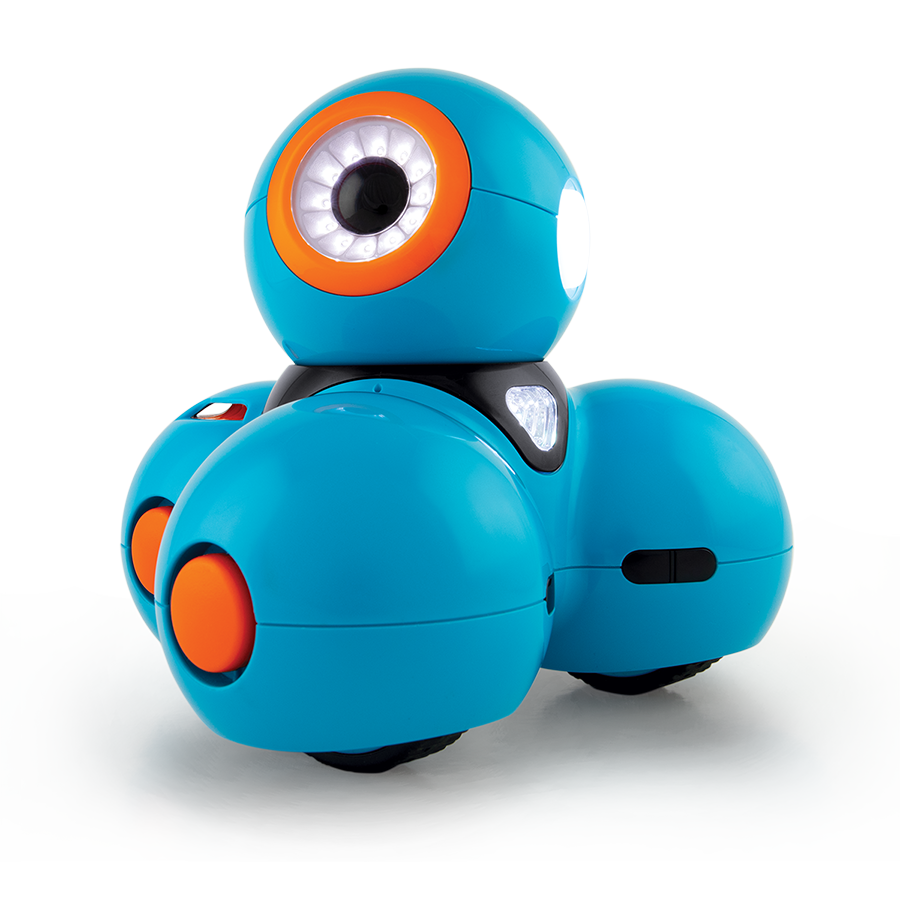
Dash Robot (Wonder Workshop)
Ages 6-12 · paid · Product · makewonder.com ↗
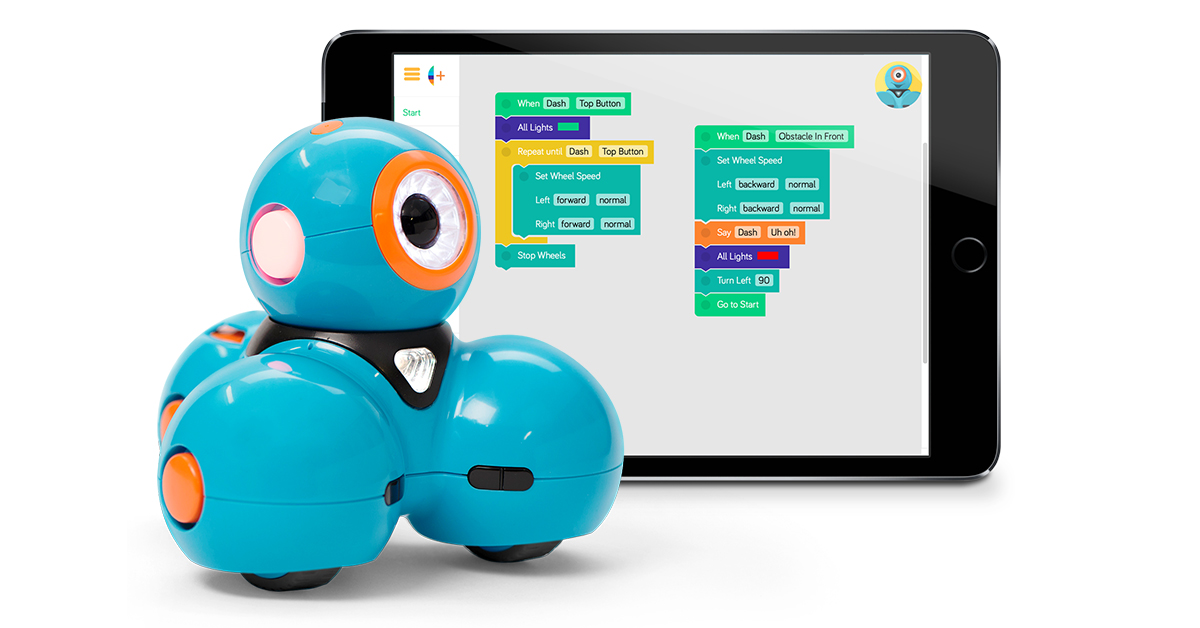
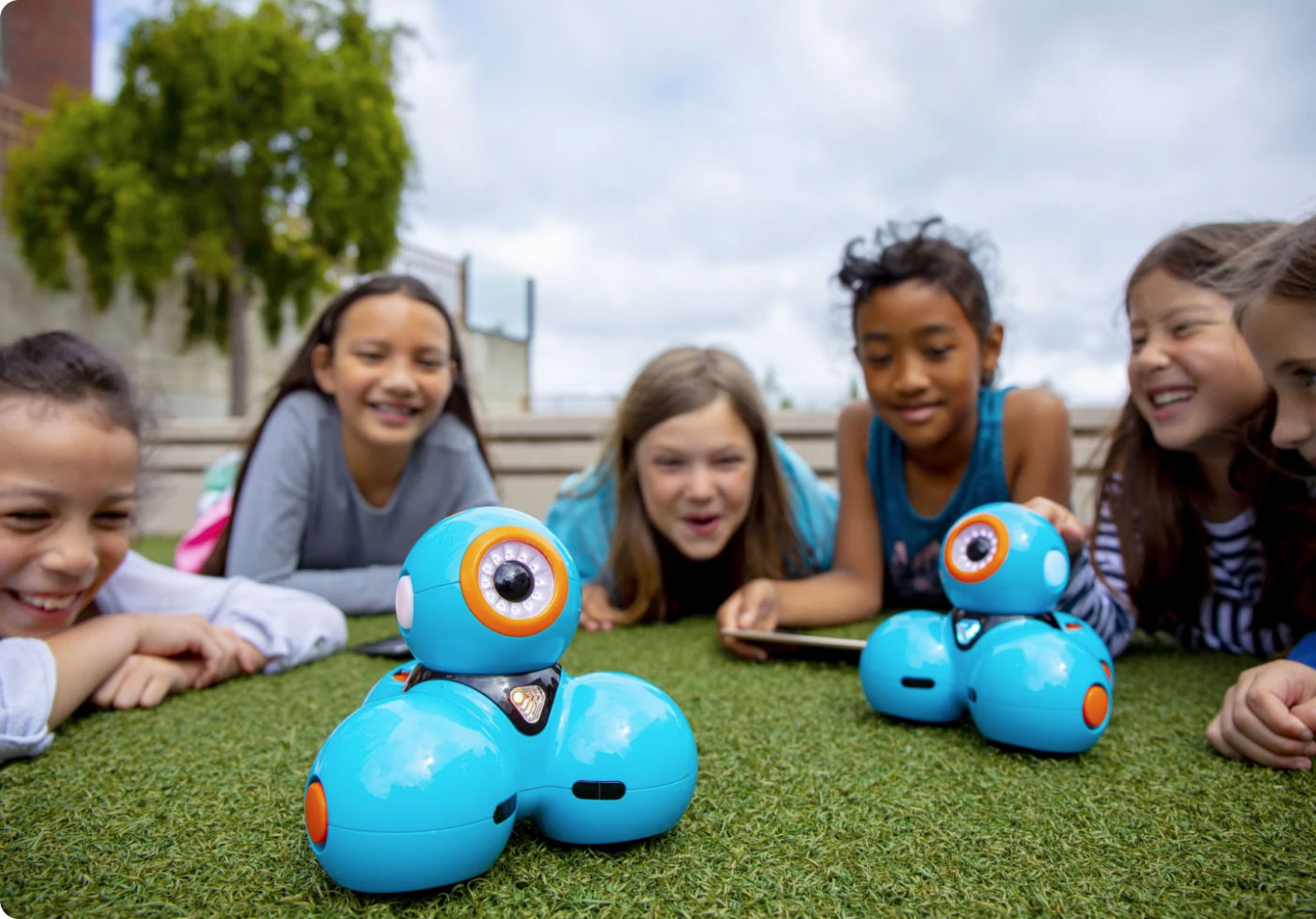

Dash Robot is a prebuilt coding robot that kids drive, program, and customize through a suite of Wonder Workshop apps. Younger kids start with remote control and path-drawing; older kids move into block coding and, with Blockly Pro, JavaScript. The robot responds with lights, motion, sounds, and recorded voice clips. Wonder League adds story-based missions that frame the coding as teamwork and real-world problem solving.
Dash Robot (Wonder Workshop) stands out for developmental impact across multiple literacies. It builds hands-on skills, creativity. The main growth opportunity: Dash does not explicitly teach emotion regulation.
Strengths & gaps
Strengths
- ● Dash is strongest where coding becomes tangible. Kids decide what the robot does, then watch it happen in real space.
- ● The app ladder is well paced. Go, Path, Wonder, Blockly, and Blockly Pro move from simple control to real programming.
- ● Shared play works better than it does in a lot of coding toys. Two kids can share one robot and trade off planning and execution.
- ● Wonder League gives the work a wider frame. Dash isn't just a toy robot; it shows up in team missions and school-oriented problem solving.
Gaps
- ○ Dash does not explicitly teach emotion regulation. Kids practice it when a program fails, but the support is mostly implicit.
- ○ Preliterate kids may need help. The app text can carry more reading demand than some younger users can handle alone.
- ○ Purpose is present, but modest. The product points kids toward shared missions and future STEM work without making values or identity central.
Detailed scores
How Dash Robot (Wonder Workshop) performs on each of the 9 literacies in our framework.
Doing
— 2 of 3 Strong
Dash gives kids real control over what happens next. In Blockly and Wonder, they choose commands, build routines, and save programs to the robot itself. That is more than following instructions; it is authorship.
Dash is built around progressive challenge. The apps start with easy wins, then move toward harder puzzles and more complex programming. That makes retrying part of the experience instead of a dead end.
Dash asks kids to change approaches as they move through the app ladder. Direct control, path drawing, block coding, and JavaScript each demand a different way of thinking. The ceiling is Moderate because all of that switching stays inside one narrow coding world.
Thinking
— 1 of 3 Strong
Dash is interesting because the robot visibly responds to what kids do. That makes it easy to ask "what happens if I try this?" The product still steers kids through guided challenges instead of open inquiry, so it stays short of Strong.
Dash lets kids make original routines, sounds, and robot behaviors. The accessories and Sketch Kit extend that making space further. Kids are not just solving tasks; they are creating things others can watch and reuse.
Dash asks kids to think through sequences, conditions, and debugging. They have to decide what command fits next and why a program failed. That is strong analytical practice, but it stays inside a narrow technical lane.
Being
— 0 of 3 Strong
Dash works best when more than one child is involved. The robot can be shared, and the code can be shared, which gives kids a reason to talk through choices together. Still, the product does not build belonging on its own.
Dash creates real frustration when a program doesn't work. It also gives hints and quick retries, which makes the child practice staying with the problem. The product supports regulation, but it doesn't teach it directly.
Dash connects coding to team missions, real-world problem solving, and future STEM preparation through Wonder League and the classroom curriculum. That gives the work a purpose beyond a private score or solo achievement. It still doesn't ask kids to reflect much on values or identity, so Moderate fits better than Strong.
Based on 9 sources
- Review commonsensemedia.org — path for dash robot
- Review commonsensemedia.org — blockly for dash dot robots
- Review commonsensemedia.org — wonder for dash and dot robots
- Product makewonder.com — dash
- Product makewonder.com — getting started
- Product makewonder.com — robotics competition
- Product techadvisor.com — dash robot review.html
- Product tomshardware.com — wonder workshop dash robot sketch kit%2C5722.html
- Product influenster.com — wonder workshop dash robot
Reviewed by New Literacies
Scored by our research-derived framework · AI-assisted analysis with editorial review · 9 sources reviewed · Our methodology →
Get the next guide before it goes live
One email when a new product review ships.
Free. No spam. Unsubscribe anytime.
See other products strong in the same literacies: