
Conker
Ages 5-17 · freemium · AI Product · conker.ai ↗
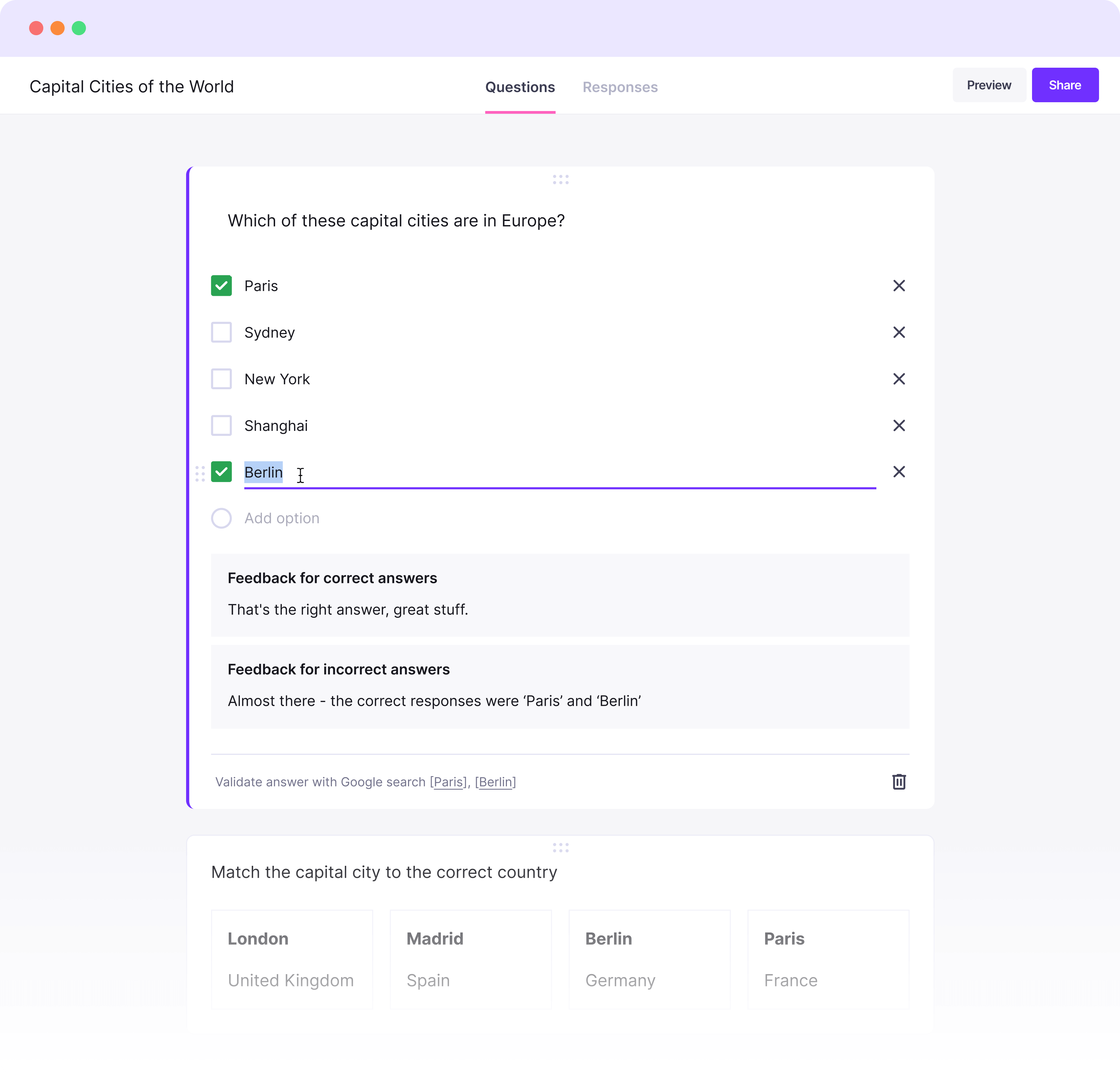
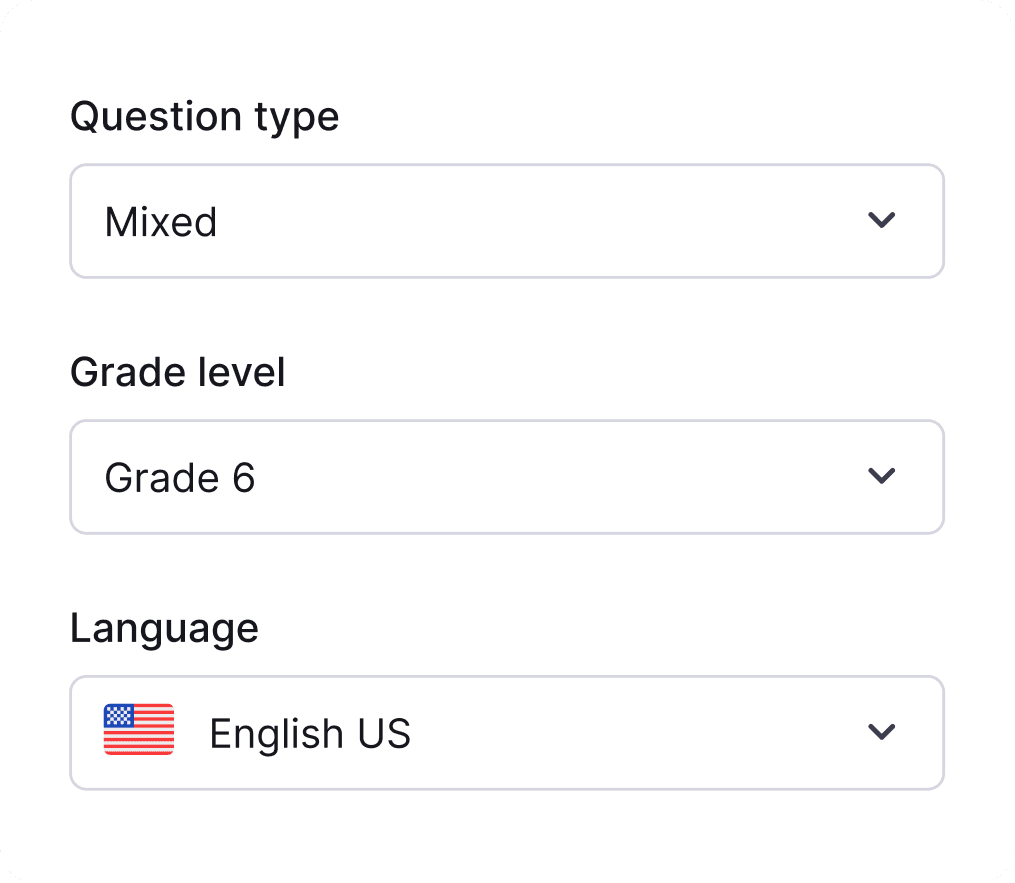
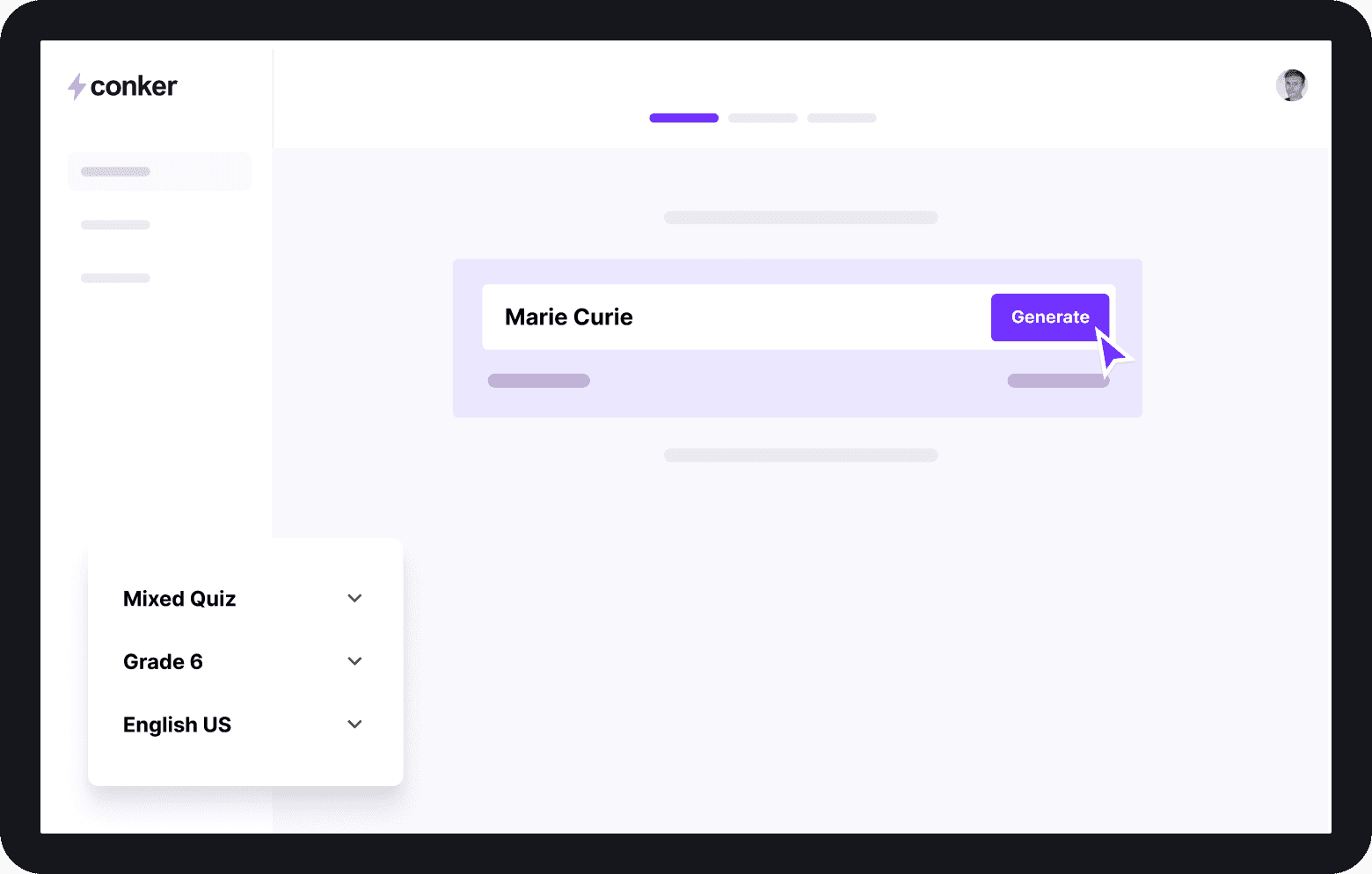
Conker is a browser-based quiz generator for teachers. A teacher enters a topic, chooses a quiz format, and Conker builds a standards-aligned assessment that can be shared with students by link or access code. Students then answer the quiz in the browser, usually as a quick check for understanding. The experience is built for speed. It is more about creating and delivering assessments quickly than about giving children an open-ended space to think, build, or explore.
We've reviewed Conker against our 9-literacy developmental framework. The main growth opportunity: it doesn't build much developmental depth. The child mostly answers questions inside a teacher-shaped frame.
Strengths & gaps
Strengths
- ● Conker is fast. A teacher can turn a topic into a sharable quiz in minutes, which makes it practical for exit tickets and quick knowledge checks.
- ● Accessibility is built in. Read-aloud support, Google Forms export, and Canvas sharing make it easy to distribute quizzes across classroom setups.
- ● It is easy for students to access. They can open a link or access code in a browser without much setup.
Gaps
- ○ It doesn't build much developmental depth. The child mostly answers questions inside a teacher-shaped frame.
- ○ Curiosity and creativity are thin. Conker is better at checking what a student knows than helping them explore or create.
- ○ Purpose and connection are mostly outside the design. The tool supports assessment logistics, not belonging or meaning.
Detailed scores
How Conker performs on each of the 9 literacies in our framework.
Doing
— 0 of 3 Strong
Conker gives students a quiz to take, not a goal to set. Teachers choose the topic, quiz type, and sharing flow, and the student mostly responds to the questions. That is execution inside a prescribed frame, not real ownership.
The product is optimized for speed. Tech & Learning recommends it as an exit ticket or quick knowledge check, which means the challenge is meant to be brief rather than persistent. There is little evidence of sustained productive struggle.
Teachers can differentiate quizzes before students see them. Once the quiz is in front of the child, though, the interaction is still a straight answer path with little strategy switching. The system adapts the assessment more than it develops adaptation in the child.
Thinking
— 0 of 3 Strong
Conker closes a knowledge check, it doesn't open an inquiry loop. The student is answering a teacher-made question, often with a single correct response, which is the opposite of exploration. That makes it a weak fit for curiosity by the rubric's standard.
Conker can generate a quiz quickly, but that creative act belongs to the teacher or the AI authoring workflow. The student side is mostly selecting answers or filling blanks. There is not enough open-ended creation here to count as developmental creativity.
Some quiz formats ask students to distinguish the best answer from distractors. Even so, that is narrower than the rubric's judgment target, which looks for weighing evidence and tradeoffs. Conker checks knowledge more than it trains judgment.
Being
— 0 of 3 Strong
Conker is not trying to build peer belonging or collaborative practice. Students may share the same quiz, but that is a classroom logistics function, not a social design. Connection sits outside the product's core loop.
Any quiz requires a child to stay focused long enough to finish it. Conker does not go further than that, and it does not teach emotion labeling, coping, or delay of gratification. The regulation load is light and external.
Conker is about checking understanding. It does not connect effort to identity, service, or contribution, and it doesn't ask the child to reflect on why the work matters. Purpose is outside scope here.
Based on 6 sources
- Product techlearning.com — what is conker and how can it be used for teaching tips and tricks
- Product teachersloveai.com — conker
- Product f6s.com — conker
- Product conker.ai
- Product conker.ai — ai quiz maker
- Product conker.ai — terms
Reviewed by New Literacies
Scored by our research-derived framework · AI-assisted analysis with editorial review · 6 sources reviewed · Our methodology →
Get the next guide before it goes live
One email when a new product review ships.
Free. No spam. Unsubscribe anytime.