
Cognoa (Canvas Dx)
Ages 18 months-6 years · paid · AI Product · cognoa.com ↗

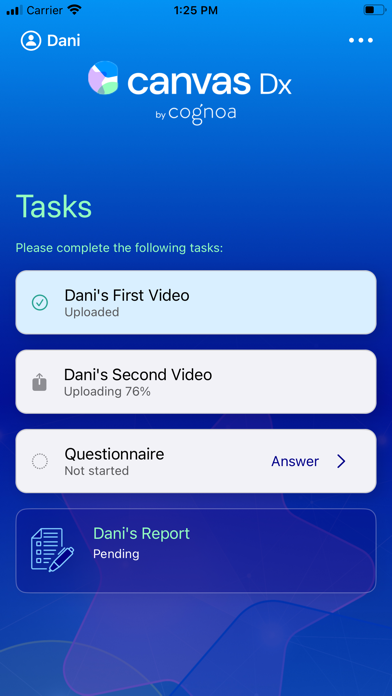
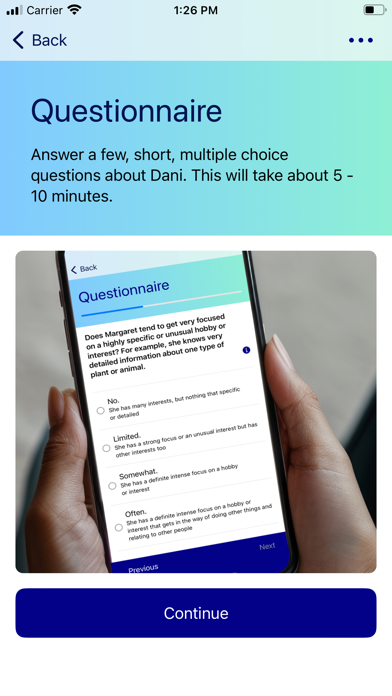
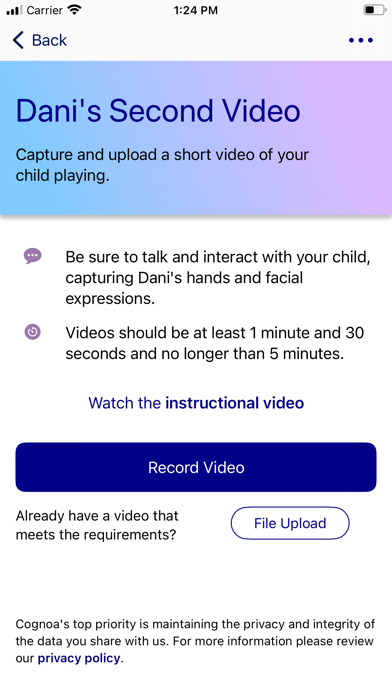
Canvas Dx is an autism-diagnostic aid used inside a prescription clinical workflow. A parent or caregiver completes questionnaires, records short home videos of the child, and a clinician combines those inputs with Canvas Dx outputs and their own judgment to diagnose or rule out autism more quickly.
We've reviewed Cognoa (Canvas Dx) against our 9-literacy developmental framework. The main growth opportunity: canvas Dx is not really a child developmental environment. It is a diagnostic process.
Strengths & gaps
Strengths
- ● Canvas Dx may help families get answers sooner. That matters in a real-world system where autism evaluations often take too long.
- ● The home-video workflow can also give clinicians a better look at the child in a natural setting than a short clinic visit alone.
Gaps
- ○ Canvas Dx is not really a child developmental environment. It is a diagnostic process.
- ○ That means most rubric capacities sit outside scope. The product may influence later support, but it does not directly build agency, curiosity, creativity, or judgment in the child.
Detailed scores
How Cognoa (Canvas Dx) performs on each of the 9 literacies in our framework.
Doing
— 0 of 3 Strong
Canvas Dx does not ask the child to set goals, make choices, or shape outcomes. The child is observed as part of an evaluation. Agency is outside this product's core function.
There is no real productive struggle loop for the child here. Canvas Dx is an assessment aid, not a practice tool.
Any adaptive value shows up after diagnosis, when adults change support plans. The child is not practicing flexible strategy use inside Canvas Dx.
Thinking
— 0 of 3 Strong
Canvas Dx is not built to spark child-led inquiry. It is a medical-style diagnostic workflow.
The product does not involve making, storytelling, or experimentation. Creativity is outside scope.
The tool informs clinician judgment, but the rubric is about what the child develops. The child is not doing evaluative reasoning through Canvas Dx.
Being
— 0 of 3 Strong
Canvas Dx may improve connection indirectly because parents, analysts, and clinicians work from structured observations of the same child. That can reduce guesswork and help adults respond more coherently. But the child is not practicing reciprocal social connection with the tool itself.
Canvas Dx does not teach coping strategies, reflection, or emotional recovery. It may lead to later services that do, but that is outside the scored scope.
The product is about diagnosis and care access, not purpose development.
Based on 7 sources
- Product accessdata.fda.gov — denovo.cfm
- Product accessdata.fda.gov — pmn.cfm
- Product apps.apple.com — id
- Product cognoa.com — clinical research
- Product cognoa.com — cognoa clinical
- Product cognoa.com — find a canvas dx prescriber
- Product cognoa.com — autism evaluations
Reviewed by New Literacies
Scored by our research-derived framework · AI-assisted analysis with editorial review · 7 sources reviewed · Our methodology →
Get the next guide before it goes live
One email when a new product review ships.
Free. No spam. Unsubscribe anytime.