Codenames (Family Edition)
Ages 8-14 · paid · Product · czechgames.com ↗
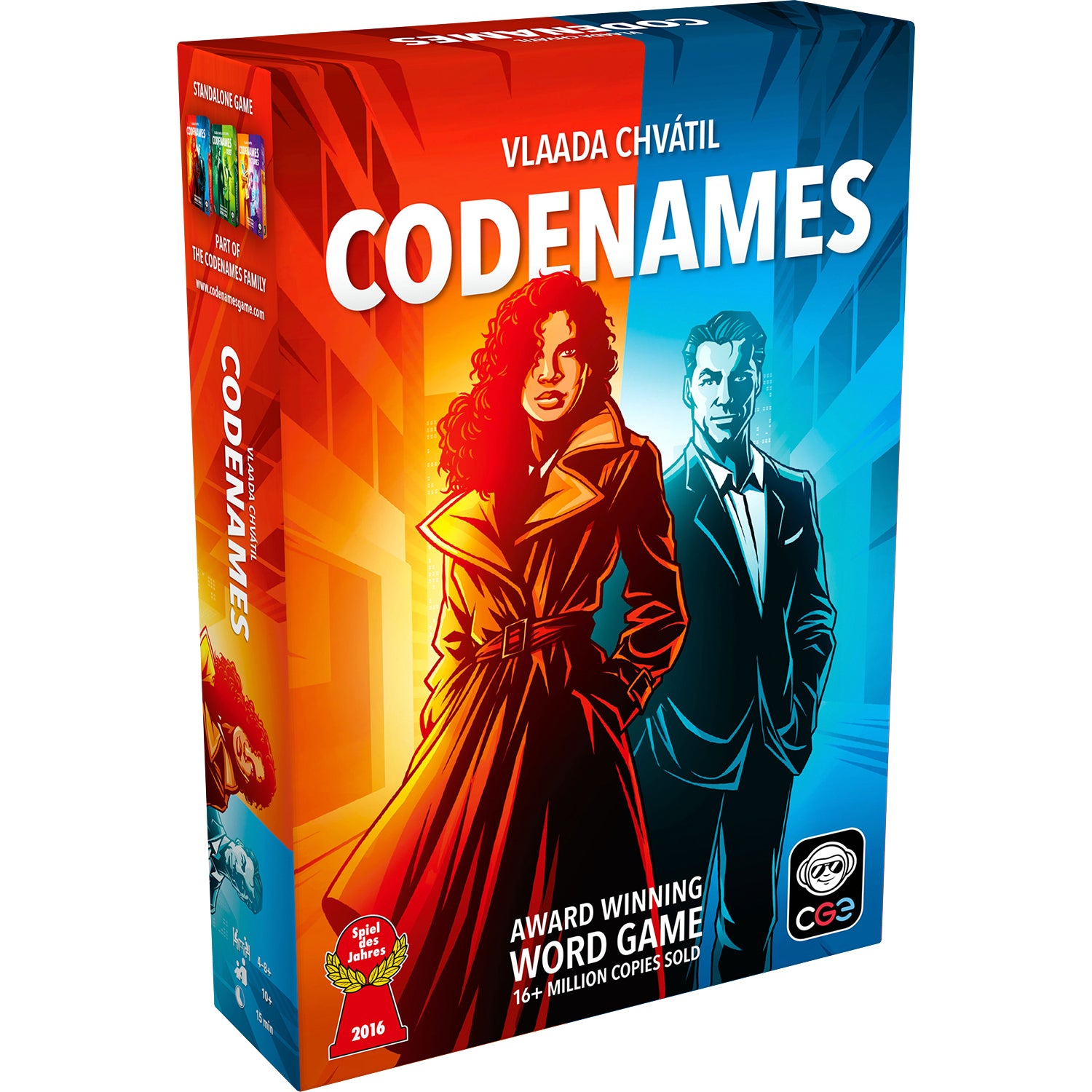
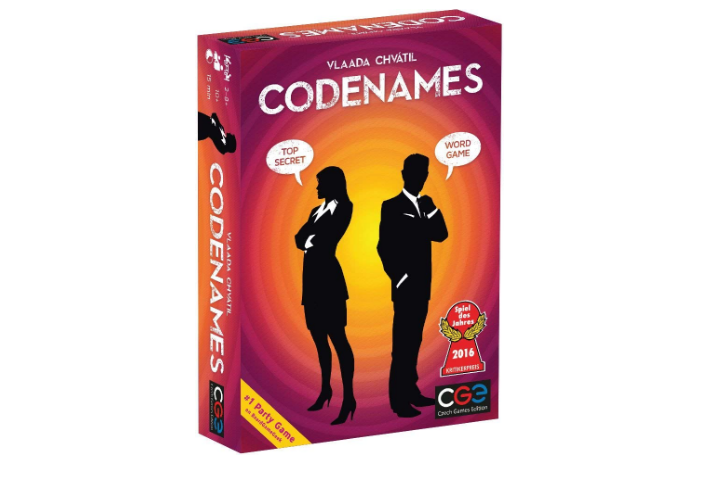
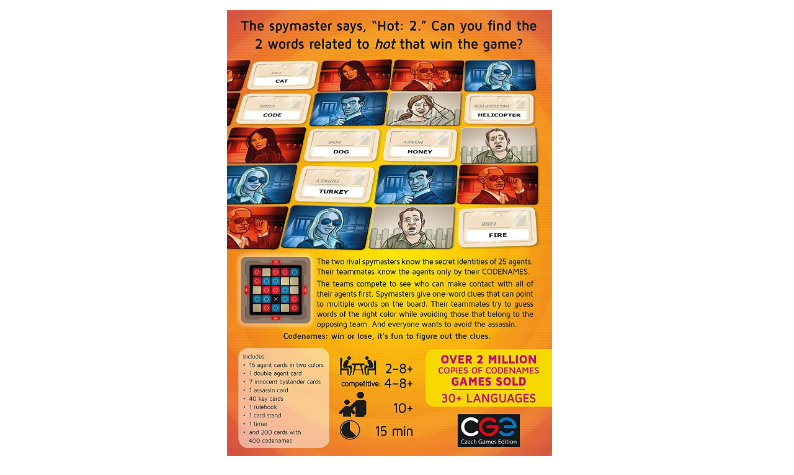
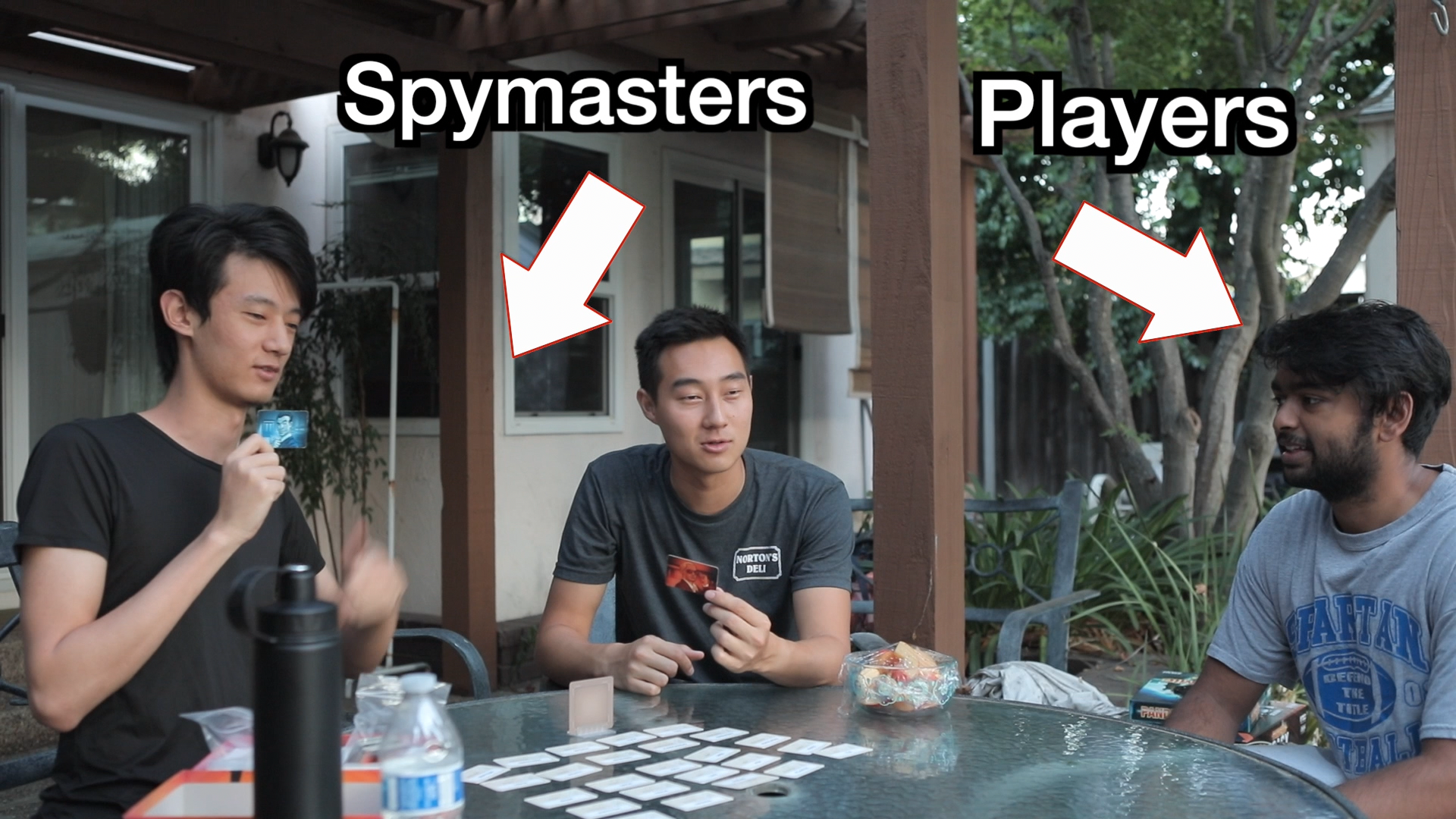
Codenames is a fast word-association party game. Two teams use one-word clues to uncover their agents on a 5x5 grid while avoiding bystanders and the assassin. The refreshed CGE edition keeps that same loop and packages it for game nights with friends and family. The table lives or dies by how well people read each other's associations. Some groups click right away. Others spend most of the round arguing over what a clue really means.
Codenames (Family Edition) stands out for developmental impact across multiple literacies. It builds cognitive skills, connection. The main growth opportunity: persistence isn't the point. The game can ask for patience, but it doesn't create deep productive struggle.
Full review
The NL Score measures developmental capacity-building, not product quality.
Strengths & gaps
Strengths
- ● Codenames is strongest for Creativity, Judgment, and Connection. The clue has to be original, risky, and understandable to real people at the table.
- ● It is easy to teach and quick to start. That makes it workable for families, mixed-age groups, and casual game nights.
- ● The game is social in a useful way. People end up explaining how they think and learning how other people think back.
Gaps
- ○ Persistence isn't the point. The game can ask for patience, but it doesn't create deep productive struggle.
- ○ Purpose is absent. Codenames doesn't tie play to values, contribution, or identity.
- ○ The game depends heavily on the clue giver. If that person freezes or overthinks, the whole table feels it.
Detailed scores
How Codenames (Family Edition) performs on each of the 9 literacies in our framework.
Doing
— 0 of 3 Strong
Codenames gives kids meaningful control, but not a blank canvas. They choose how to interpret a clue, or they choose the clue if they are the spymaster. But the game engine is already set, so the child is making decisions inside someone else's structure rather than setting the whole direction.
Codenames is not built to test staying power. Shelfside calls out the downtime, and One Board Family says patience is required, but those are side effects of the pacing, not a designed struggle loop. The game can be replayed, but it doesn't train persistence in the way a hard puzzle or long campaign does.
The clue giver has to adapt to the table's shared language. The Guardian notes that the best teams often share enough mental shorthand to make those associations work, which means the clue has to fit real people, not just a dictionary definition. Still, the task stays the same every round, so the adaptation is real but narrow.
Thinking
— 2 of 3 Strong
Codenames creates little moments of "wait, how did you get that?" The clue and the guessed cards rarely line up in a perfectly obvious way, so kids keep testing their assumptions against other people's thinking. That sparks curiosity, but the game doesn't let the child keep digging once the clue is resolved.
This is the game's most obvious strength. The spymaster has to generate a clue that reaches across multiple cards and still stays out of trouble, which is a real act of invention. The official store page explicitly frames the game around creative thinking, and the family reviews show how much the fun depends on that original clue.
Codenames is a judgment game disguised as a party game. The clue has to be broad enough to help but narrow enough to avoid disaster, which means the spymaster is constantly weighing risk against payoff. That kind of repeated tradeoff under uncertainty is exactly the kind of judgment the rubric is trying to surface.
Being
— 1 of 3 Strong
Codenames is built on shared understanding. The Guardian says the game rewards people who can work their way into someone else's mental lexicon, and One Board Family describes the funny, family-specific moments that come out of that process. The game makes people think together, and it often leaves them feeling a little more known by the end.
The game can be stressful, especially for the clue giver. One Board Family says the board can be hard to stare at for a minute, and Tabletop Therapy places Codenames in the executive-functioning and social-emotional lane for ages 10-14. That creates practice with patience and pressure, but it doesn't explicitly teach calming skills.
Codenames is about play, not purpose. It doesn't ask kids to connect their effort to identity, service, or values beyond the round itself. That's outside the scope of what the game is trying to do.
Based on 6 sources
- Product store.czechgames.com — codenames new
- Product oneboardfamily.com — review codenames
- Product borncute.com — codenames board game review
- Product theguardian.com — vlaada chvatil codenames board game market czech phone
- Product shelfside.co — codenames review
- Product tabletoptherapy.org — review codenames
Reviewed by New Literacies
Scored by our research-derived framework · AI-assisted analysis with editorial review · 6 sources reviewed · Our methodology →
Get the next guide before it goes live
One email when a new product review ships.
Free. No spam. Unsubscribe anytime.
See other products strong in the same literacies: