
CodeCombat
Ages 9-14 · freemium · AI Product · codecombat.com ↗
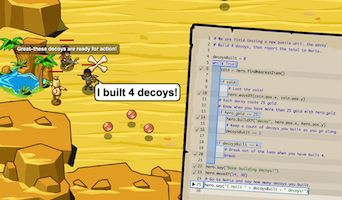
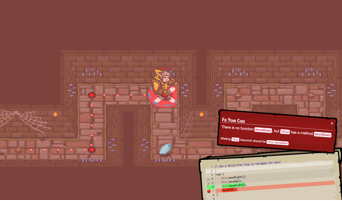
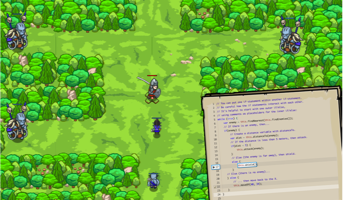
CodeCombat is a browser-based adventure game where kids type real code to move a hero through fantasy levels. The first five Kithgard Dungeon levels are free, while Premium opens more levels, game development courses, web development courses, and private clans. Teachers can create classes, add students with class codes or Google Classroom, and review student code and progress. The platform supports Python, JavaScript, and C++.
CodeCombat stands out for developmental impact across multiple literacies. It builds action and persistence, creativity. The main growth opportunity: Connection depends on class or family context.
Strengths & gaps
Strengths
- ● CodeCombat's clearest win is Agency. Kids don't just click through content; they write code and watch it change the world.
- ● Persistence and Adaptability are both strong because the platform asks children to debug, retry, and move across languages and course types.
- ● Creativity is real once Premium opens game development and web development, and the level-creation path gives kids something they can point to as theirs.
Gaps
- ○ Connection depends on class or family context. CodeCombat supports teams and clans, but it does not build direct student conversation.
- ○ Purpose is present in the mission and community, but it stays secondary to learning computer science.
- ○ The deepest experience is gated. The free trial is useful, but the broader curriculum lives behind Premium or classroom licensing.
Detailed scores
How CodeCombat performs on each of the 9 literacies in our framework.
Doing
— 3 of 3 Strong
CodeCombat puts the child in the driver seat. They type the commands, choose the solution, and see the hero respond in real time. The platform also lets advanced learners create levels and make games, which gives them ownership beyond a single puzzle.
This is a retry engine. When code fails, the child has to fix it and run it again, and Common Sense notes that the text-heavy supports can make the struggle more frustrating, not less. That is exactly the kind of productive effort that builds persistence.
CodeCombat moves across Python, JavaScript, and C++, then expands into game dev and web dev. That variety matters because kids have to change how they think instead of repeating one memorized procedure. The platform rewards switching strategy.
Thinking
— 1 of 3 Strong
The fantasy adventure structure gives kids a reason to keep wondering what comes next. They can experiment and see the effect immediately. But the experience still routes them through curriculum and levels, so curiosity is guided more than open-ended.
CodeCombat becomes much more than a coding puzzle once Premium is in play. Kids can make and share games, build websites and interactive apps, and create levels others can play. That is original production, not just practice.
The child is constantly making technical decisions: which command to use, how to sequence it, and why a run failed. That is real judgment practice. It stays Moderate because the platform does not push much on evidence, ethics, or broader tradeoffs.
Being
— 0 of 3 Strong
CodeCombat supports classrooms, shared teams, and private clans, so kids do work in a social frame. Family and classmates can participate together, which matters. But there is no direct student chat, so the social layer is structured rather than relational.
The platform creates frustration on purpose. The child has to keep calm enough to read the error, revise the code, and try again. The support exists, but the product does not explicitly coach emotion management.
CodeCombat says it exists to make computer science accessible to every student on Earth. That mission, plus open-source community contributions and shared creation, gives the work a real sense of meaning. Still, the experience is mostly about learning to code, not asking what kind of person the child wants to be.
Based on 17 sources
- Review commonsense.org — codecombat
- Review commonsense.org —
- Review commonsense.org —
- Product codecombat.com — about
- Product codecombat.zendesk.com — 4410481859095 What is CodeCombat
- Product codecombat.zendesk.com — 4412244162839 What ages are appropriate for CodeCombat
- Product codecombat.zendesk.com — 1500009123361 What programming languages are available in CodeCombat
- Product codecombat.zendesk.com — 13500882009623 Is CodeCombat Free to Play
- Product codecombat.zendesk.com — 4412315987223 What is CodeCombat Premium
- Product codecombat.zendesk.com — 4412722246807 Do you offer family subscriptions
- Product codecombat.zendesk.com — 4412276653463 Does CodeCombat have microtransactions or any in game purchases
- Product codecombat.zendesk.com — 1500009108962 CodeCombat Getting Started Guide
- Product codecombat.zendesk.com — 4405991420695 Can students communicate with one another in CodeCombat
- Product codecombat.zendesk.com — 1500009074022 Can classmates friends and family participate together
- Product codecombat.zendesk.com — 4412245492759 What are the system requirements for CodeCombat
- Product kigumigroup.com — kid coder review codecombat
- Product discourse.codecombat.com —
Reviewed by New Literacies
Scored by our research-derived framework · AI-assisted analysis with editorial review · 17 sources reviewed · Our methodology →
Get the next guide before it goes live
One email when a new product review ships.
Free. No spam. Unsubscribe anytime.
See other products strong in the same literacies: