
Code.org - AI Modules
Ages 5-17 · free · AI Product · code.org ↗
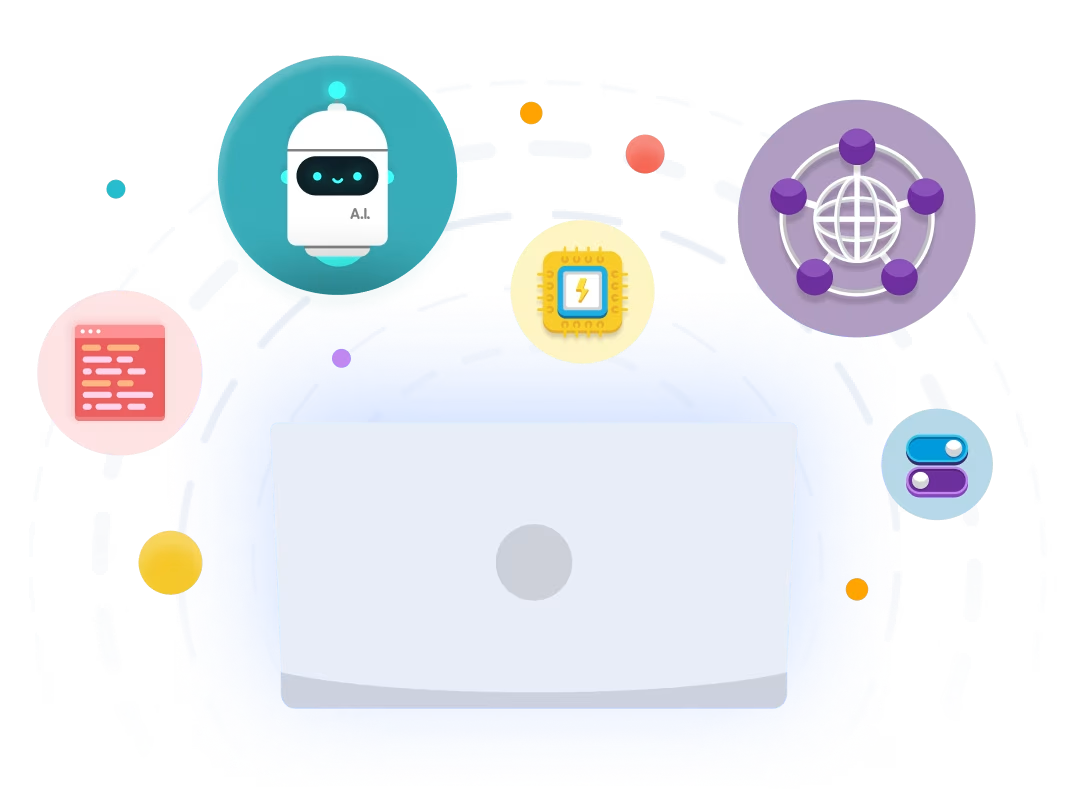
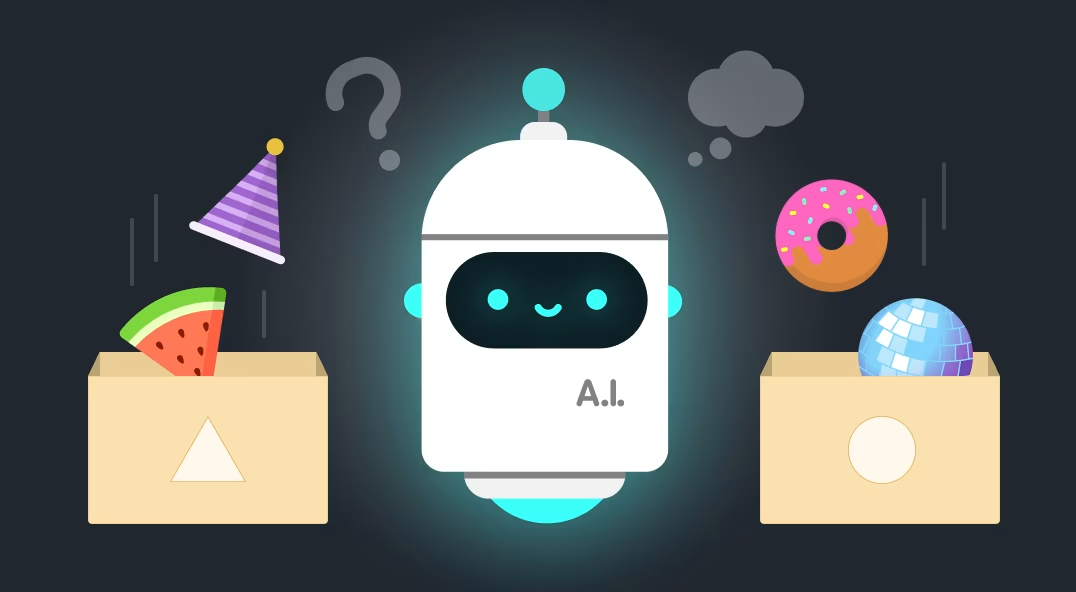
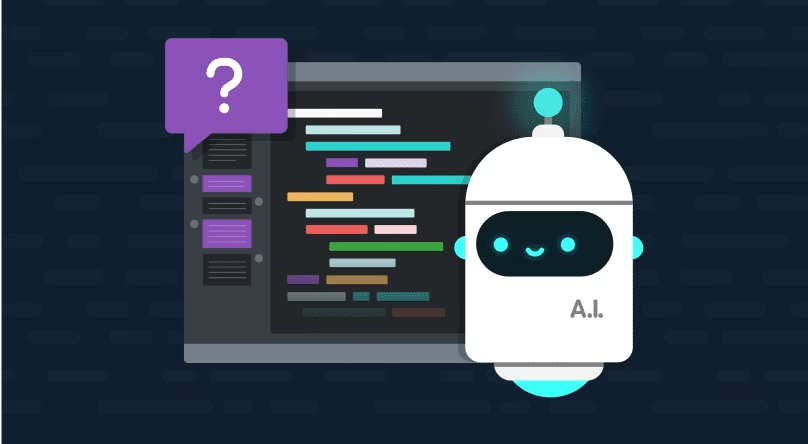
Code.org's AI modules are a free, teacher-led set of classroom lessons on how AI works, how to code with AI, and how to build with generative AI. Students watch short explanations, test predictions, discuss ethics and bias, and work through guided projects like AI Chat Lab and class-wide code-of-ethics activities. The experience is flexible, but it is still a curriculum, not a standalone app.
Code.org - AI Modules has focused developmental strength worth knowing about. It builds cognitive skills. The main growth opportunity: agency stays bounded. Students make meaningful choices inside lessons, but they do not set the overall direction.
Full review
The NL Score measures developmental capacity-building, not product quality. A lower score does not mean a bad curriculum. It means this curriculum builds some capacities more than others.
Strengths & gaps
Strengths
- ● Code.org is strongest where parents and teachers need it most: Curiosity and Judgment. The modules keep asking how AI works, what can go wrong, and how students should respond.
- ● The curriculum is flexible without becoming vague. Teachers can choose standalone units or a longer course, and students work at a pace that fits the classroom.
- ● It is practical, not abstract. Students do actual AI-related work, including chatbot customization, code generation, and ethics exercises.
Gaps
- ○ Agency stays bounded. Students make meaningful choices inside lessons, but they do not set the overall direction.
- ○ Self-regulation is not a direct design goal. The structure is helpful, but it does not explicitly teach coping or attention control.
- ○ Connection is real but limited. The classroom discussion layer matters, yet it is still teacher-mediated.
Detailed scores
How Code.org - AI Modules performs on each of the 9 literacies in our framework.
Doing
— 0 of 3 Strong
Code.org gives students room to choose how they work through a lesson and how they respond to prompts. Common Sense notes that students can move at their own pace, and Code.org's AI Foundations page says the units are modular and tailored to school goals. But the lesson path is still teacher-set, so this is bounded agency rather than full child-led direction.
The curriculum asks students to test ideas, see what happens, and revise. That creates some productive effort, especially in hands-on activities. But the lessons are highly scaffolded, so they build practice tolerance more than deep endurance through frustration.
Students move between very different tasks: prediction, ethics, coding support, model behavior, and chatbot design. That means they have to change strategies and adjust to new contexts. The product is broad enough to build flexibility, but not so open-ended that it reaches Strong.
Thinking
— 2 of 3 Strong
The product is explicitly built to help students understand and explore AI. It creates good questions before it gives answers, which is the core of curiosity work. The hub's own language about sparking curiosity is backed up by lessons that demystify the technology step by step.
Older modules let students create and customize chatbots, generate code, and work inside AI Chat Lab. Those are real creative actions. Still, the curriculum gives students a guided frame, so it supports making without fully opening the door to free authorship.
This is one of the curriculum's clearest strengths. Students are asked to think about bias, privacy, ethics, and what responsible AI use should look like in practice. The class code-of-ethics work makes judgment concrete instead of theoretical.
Being
— 0 of 3 Strong
The lessons include discussion, group work, and shared ethics building. That gives students a reason to think together, not just alone. But the product does not create the kind of peer relationship practice or belonging that would justify Strong.
I found pacing tools and teacher structure, but not explicit regulation scaffolds. Students may need patience and attention control to use the curriculum well, yet the product does not directly teach those skills. That makes the evidence too thin for a scored rating.
Code.org frames AI literacy as necessary for participating in an AI-driven world. That gives the lessons a civic reason to exist. It does not go deeply into identity or service, so Moderate is the right ceiling.
Based on 7 sources
- Review commonsense.org — codeorg
- Product code.org — artificial intelligence
- Product code.org — how ai works
- Product code.org — coding with artificial intelligence
- Product code.org — exploring generative artificial intelligence
- Product code.org — artificial intelligence foundations
- Product axios.com — codeorg leads push to teach ai
Reviewed by New Literacies
Scored by our research-derived framework · AI-assisted analysis with editorial review · 7 sources reviewed · Our methodology →
Get the next guide before it goes live
One email when a new product review ships.
Free. No spam. Unsubscribe anytime.
See other products strong in the same literacies: