
Chess.com Kids
Ages 5-14 · freemium · Product · chesskid.com ↗
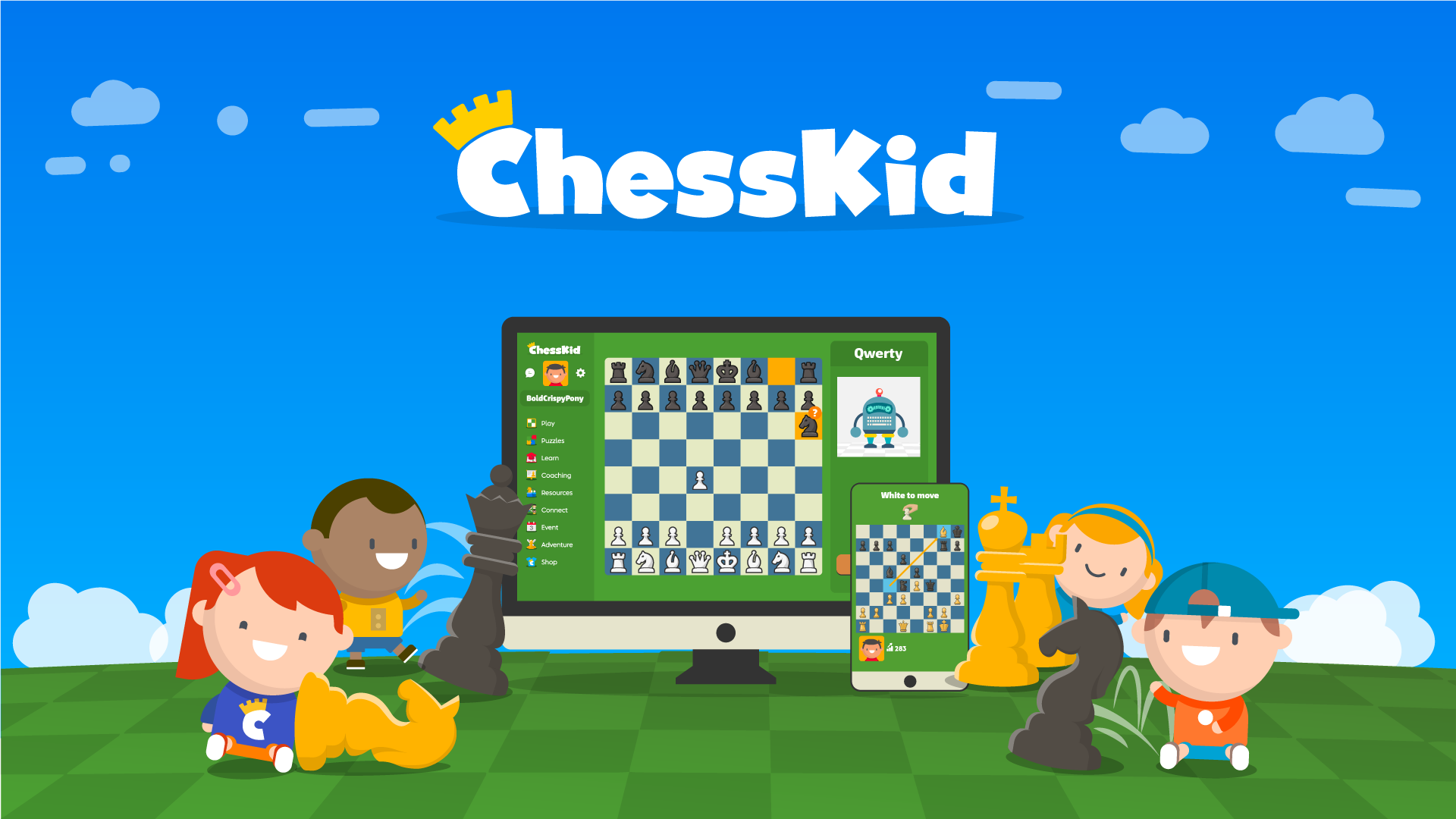
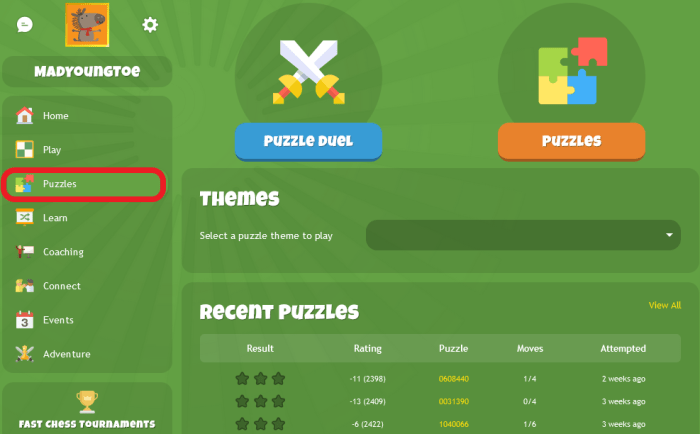
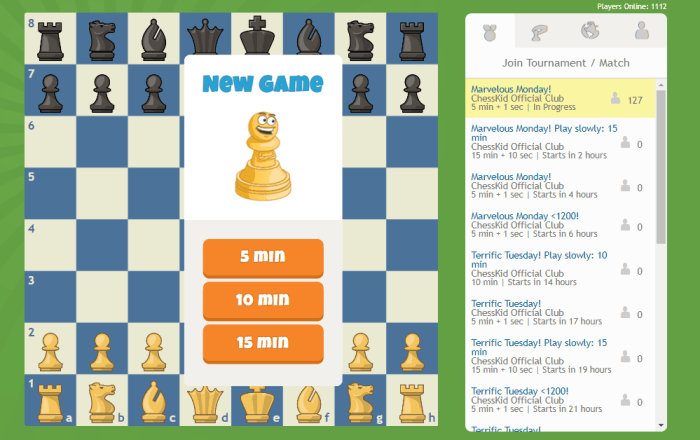
ChessKid is a kid-safe chess platform where children play against other kids, friends, bots, or the computer, then move through lessons, puzzles, and tournaments. The product works across web and mobile, with parent controls, guarded friend connections, and a path that starts with beginner lessons and scales up through harder strategy work. It is built to teach chess, not to teach around chess.
Chess.com Kids has focused developmental strength worth knowing about. It builds persistence, judgment. The main growth opportunity: purpose is not part of the design. The product does not connect chess effort to values, identity, or helping others.
Strengths & gaps
Strengths
- ● ChessKid is strongest for Persistence and Judgment. Kids have to keep trying, and they have to think through consequences on every move.
- ● The platform has a clear learning ramp. Beginners start with lessons and videos, then unlock harder tactics and strategies through practice.
- ● Social play is real, but controlled. Friends, clubs, tournaments, and guardian-linked accounts make it usable for families and schools.
Gaps
- ○ Purpose is not part of the design. The product does not connect chess effort to values, identity, or helping others.
- ○ Connection is limited by safety controls, which is good for kids but means the platform is not a broad social environment.
- ○ Kids who need emotional coaching will not get it here. ChessKid creates frustration practice, not regulation instruction.
Detailed scores
How Chess.com Kids performs on each of the 9 literacies in our framework.
Doing
— 1 of 3 Strong
ChessKid gives children real choice in how they enter the experience. They can play friends, bots, slow chess, fast chess, or puzzles, and they can pick which path to follow on a given day. But the overall sequence is still set by the product: learn, practice, level up.
ChessKid keeps children at the table when chess gets hard. The combination of puzzles, stars, levels, and repeated play creates a cycle where effort leads to visible progress. That is the kind of repeated challenge that builds staying power.
ChessKid asks children to switch strategies as positions change. The child has to move between lessons, puzzles, and live games, and each mode demands a slightly different approach. Still, the adaptation stays inside a single domain, so it does not reach Strong.
Thinking
— 1 of 3 Strong
ChessKid can make a child want to know more. A puzzle or lesson often exposes a gap between what the child expected and what actually works on the board. But the product mostly fills that gap for them instead of leaving room for much self-directed exploration.
ChessKid allows original chess lines, and the app now supports customization of avatars, boards, and pieces. That gives children some room to make the experience feel like theirs. But the structure is still a fixed game, not an open creative tool.
ChessKid is a judgment engine. Kids have to evaluate positions, compare candidate moves, and think about what the opponent might do next. That is repeated practice in weighing evidence and consequences.
Being
— 0 of 3 Strong
ChessKid supports connection through friends, clubs, tournaments, and sibling play. Parent and guardian controls keep the environment safer, and that matters. The tradeoff is that social interaction stays bounded and carefully managed.
ChessKid creates frustration, uncertainty, and delay in a safe context. Children have to sit with mistakes, wait for the next turn, and keep going through puzzles and games. The product does not teach them how to do that, but it does give them practice.
ChessKid is about learning chess and improving at chess. It does not connect that effort to a larger identity, a value system, or a contribution beyond personal skill. Purpose is outside the product’s observable scope.
Based on 7 sources
- Review commonsense.org — chesskid
- Product chesskid.com — getting started with chesskid
- Product chesskid.com — chesskid for parents
- Product apps.apple.com — id
- Product play.google.com — details
- Product support.chesskid.com — 8858668 is there a chesskid app
- Product reddit.com — switching_from_chesskid_to_lichess
Reviewed by New Literacies
Scored by our research-derived framework · AI-assisted analysis with editorial review · 7 sources reviewed · Our methodology →
Personalization bridge
Not sure what your kid needs most?
Take the quiz to see which literacies matter most for your family, then get practical things to try at home.
Get your family profileExplore more
See other products strong in the same literacies: