
Character.AI
Ages 13-17 · freemium · AI Product · character.ai ↗
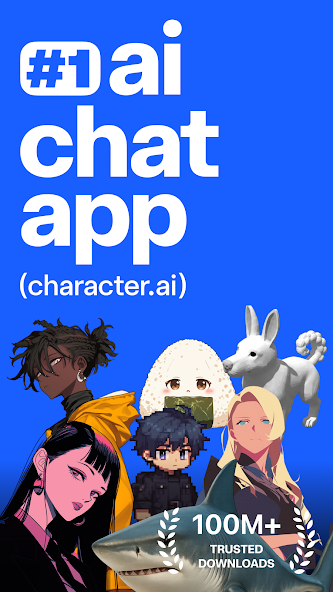
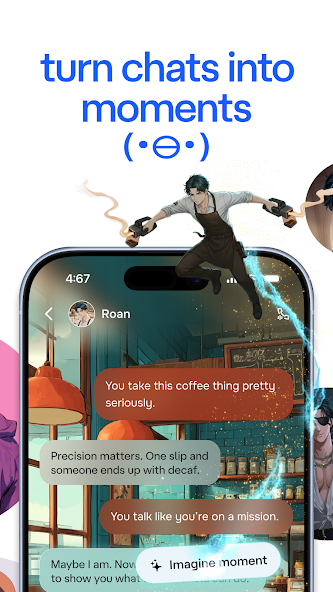
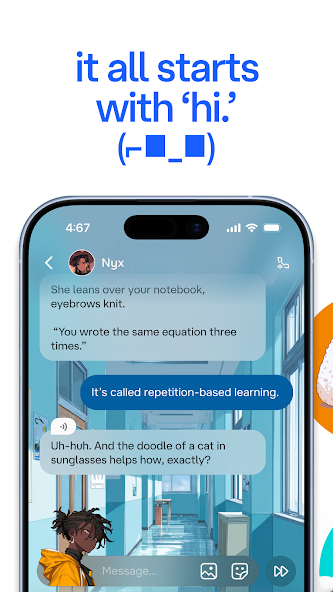
Character.AI is a roleplay-heavy chat app where kids create or pick AI Characters, then talk, call, text, and build stories with them. The current teen experience is more limited than the adult version, but it still centers on immersive conversation, memory, and character creation.
Character.AI has focused developmental strength worth knowing about. It builds creativity. The main growth opportunity: it does not build persistence well. The app makes continuing easy, but not struggling well.
Strengths & gaps
Strengths
- ● Character.AI is strongest for Creativity. The child can create characters, scenes, voices, and entire story worlds.
- ● It gives kids real room to improvise. A prompt can turn into a scene, a voice, or a new branch of the story.
- ● The teen experience is now more constrained than the adult one. That matters for safety, even if it narrows the product.
Gaps
- ○ It does not build persistence well. The app makes continuing easy, but not struggling well.
- ○ Judgment is weak. The app can sound confident while inventing things.
- ○ Connection and self-regulation are the main risks. The product feels social, but it can pull kids toward the bot instead of other people.
Detailed scores
How Character.AI performs on each of the 9 literacies in our framework.
Doing
— 0 of 3 Strong
Character.AI gives kids real control over the direction of a scene. They can pick a character, write the setup, and decide how the chat unfolds. The Scene guide shows that users are expected to author the premise rather than follow a fixed script. The limitation is that the child is still inside a prescribed chat loop. The AI keeps the interaction moving, but the child is not setting durable goals with meaningful consequences. That keeps Agency real, but not strong.
The app can keep a child chatting for a long time, but that is not the same as building persistence. It is easy to continue, easy to restart, and easy to let the AI carry the thread. The App Store review language about getting "hooked on and lost in the moment" points to engagement, not effort. Common Sense Media warns that social AI companions can become compulsive and emotionally sticky for teens. That is the wrong direction for persistence. The product rewards staying in the conversation, not staying with hard work.
Character.AI lets kids pivot quickly from one scene to another. But the system is doing the adapting more than the child is. The AI follows the prompt, changes tone, and keeps the exchange alive. That means the child does not have to test strategies or revise a failing approach. There is no real metacognitive loop and no transfer task. The app is flexible, but it does not train flexibility.
Thinking
— 1 of 3 Strong
The product does create interesting openings. A child can ask for a story, explore a new character, or follow an odd tangent into a new world. The official docs and app-store copy lean hard on exploration and surprise. Still, the app often answers too quickly. It gives the child an experience, not an inquiry process. So it sparks curiosity, but it does not reliably deepen it.
Character.AI clearly builds creativity. Kids can invent characters, write scenes, design voices, and move through alternate timelines or fictional worlds. The official scene and voice guides make the creative role explicit. This is not just consumption with a creative label attached. The child is authoring the premise and steering the result, even if the AI helps fill in the details. That is enough for Strong.
The product is weak on judgment because it can sound authoritative without being reliable. The official FAQ asks whether users can trust responses, and the Common Sense assessment found cases where Characters claimed to be real or made up evidence. That is a poor setup for learning how to evaluate claims. The child is not practicing source checking, comparison, or evidence weighing. Instead, they are in a world where a convincing response can still be wrong. That is a hard limit on Judgment.
Being
— 0 of 3 Strong
Character.AI is built to feel social, and that is exactly why connection is a concern. The app offers companionship-like interaction, voice, memory, and continuity. For some teens that will feel warm and responsive. But it is still a simulated relationship. Common Sense Media flags parasocial attachment as a special risk for teens, and the product's own move away from open-ended teen chat shows how serious the issue has become. It can mimic connection, but it does not build it.
The app is designed to be hard to leave. Memory, unlimited chat, response-length controls, super swipes, and voice all make continuation easy. That makes the product sticky. Sticky is not the same as self-regulating. The child is not practicing stopping, waiting, or tolerating boredom. The product does the opposite: it keeps the loop open.
Character.AI can be used to explore identity, but purpose is not the point of the product. It does not connect effort to contribution, values, or service. The product is about immersion and conversation. That makes Purpose too indirect to score confidently. A parent can use it as a springboard, but the capacity is not being built by design.
Based on 11 sources
- Review commonsensemedia.org — csm ai risk assessment characterai_final.pdf
- Product wired.com — character ai ceo chatbots entertainment
- Product support.character.ai — 21704914723995 Safety Center
- Product support.character.ai — 35409588582683 Community Update March
- Product support.character.ai — 23957274129691 Character Calls Voice FAQ
- Product support.character.ai — 41918454359451 Scene Creation Quickstart Guide
- Product support.character.ai — 24327914463003 New Feature Pinned Memories
- Product apnews.com — 5d203e9f22c62c153936ccc776a0ed
- Product apps.apple.com — id
- Product play.google.com — details
- Product apps.apple.com — id
Reviewed by New Literacies
Scored by our research-derived framework · AI-assisted analysis with editorial review · 11 sources reviewed · Our methodology →
Personalization bridge
Not sure what your kid needs most?
Take the quiz to see which literacies matter most for your family, then get practical things to try at home.
Get your family profileExplore more
See other products strong in the same literacies: