
Cascadia
Ages 8-12 · paid · Product · flatout.games ↗

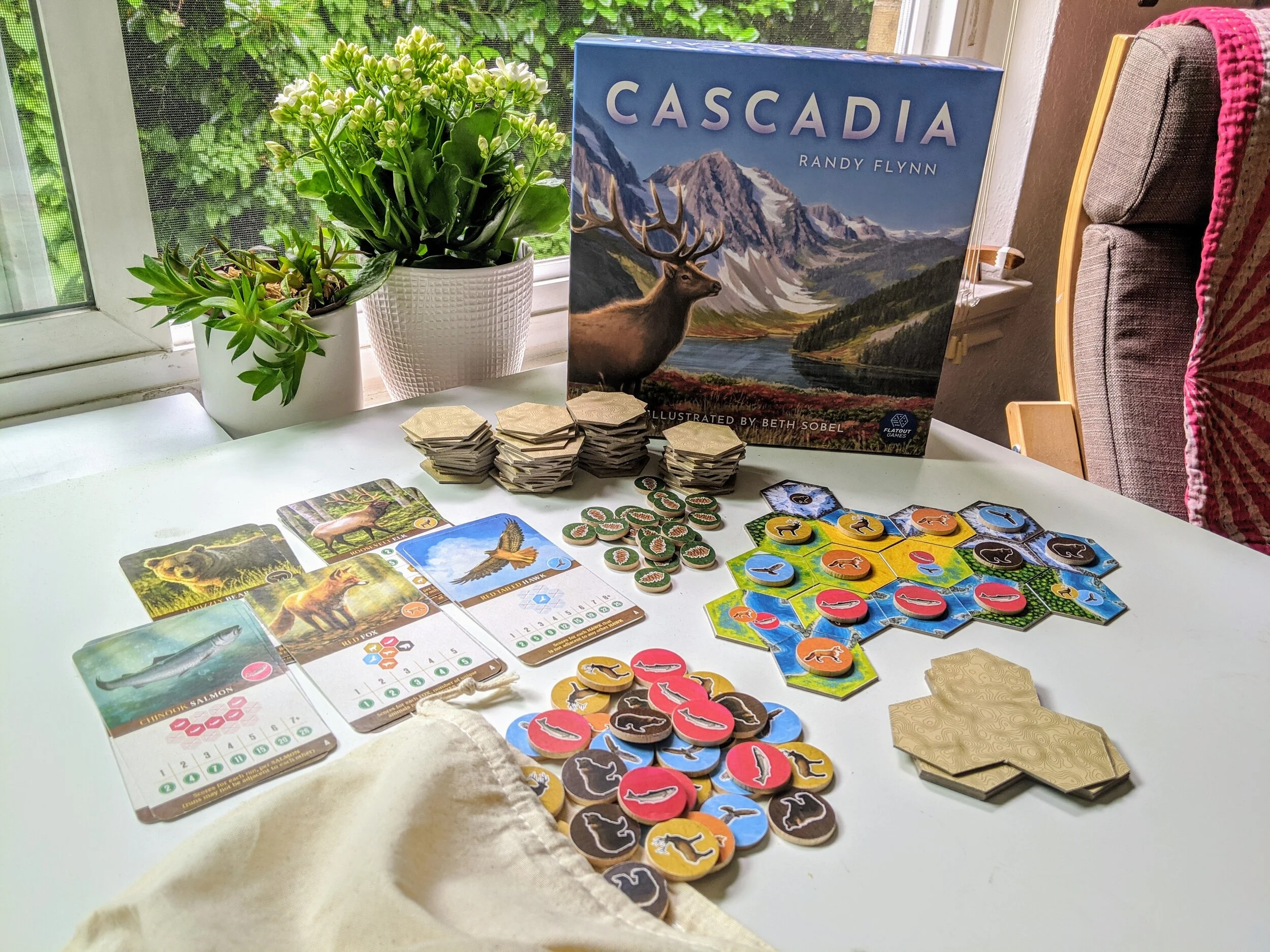
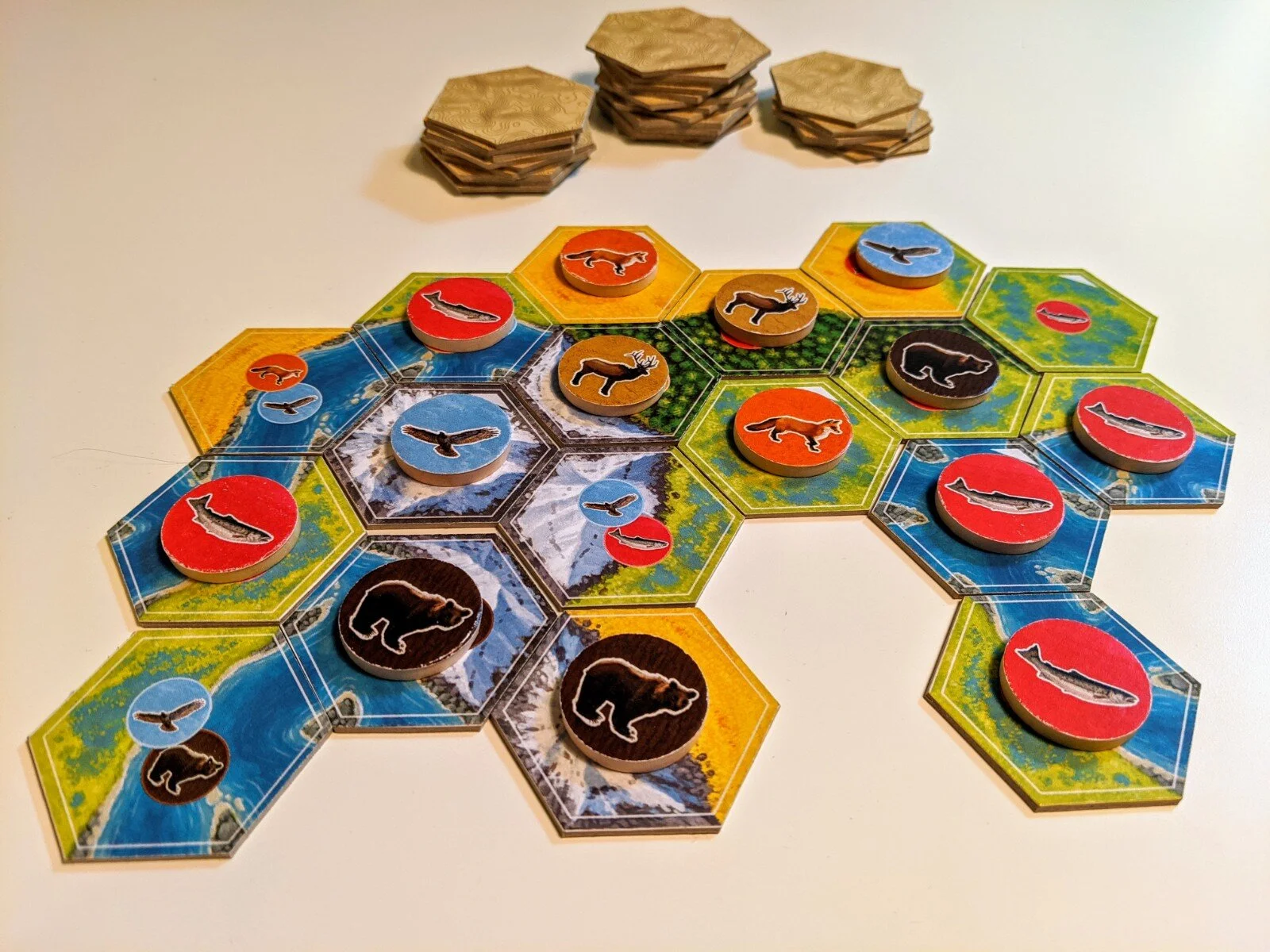
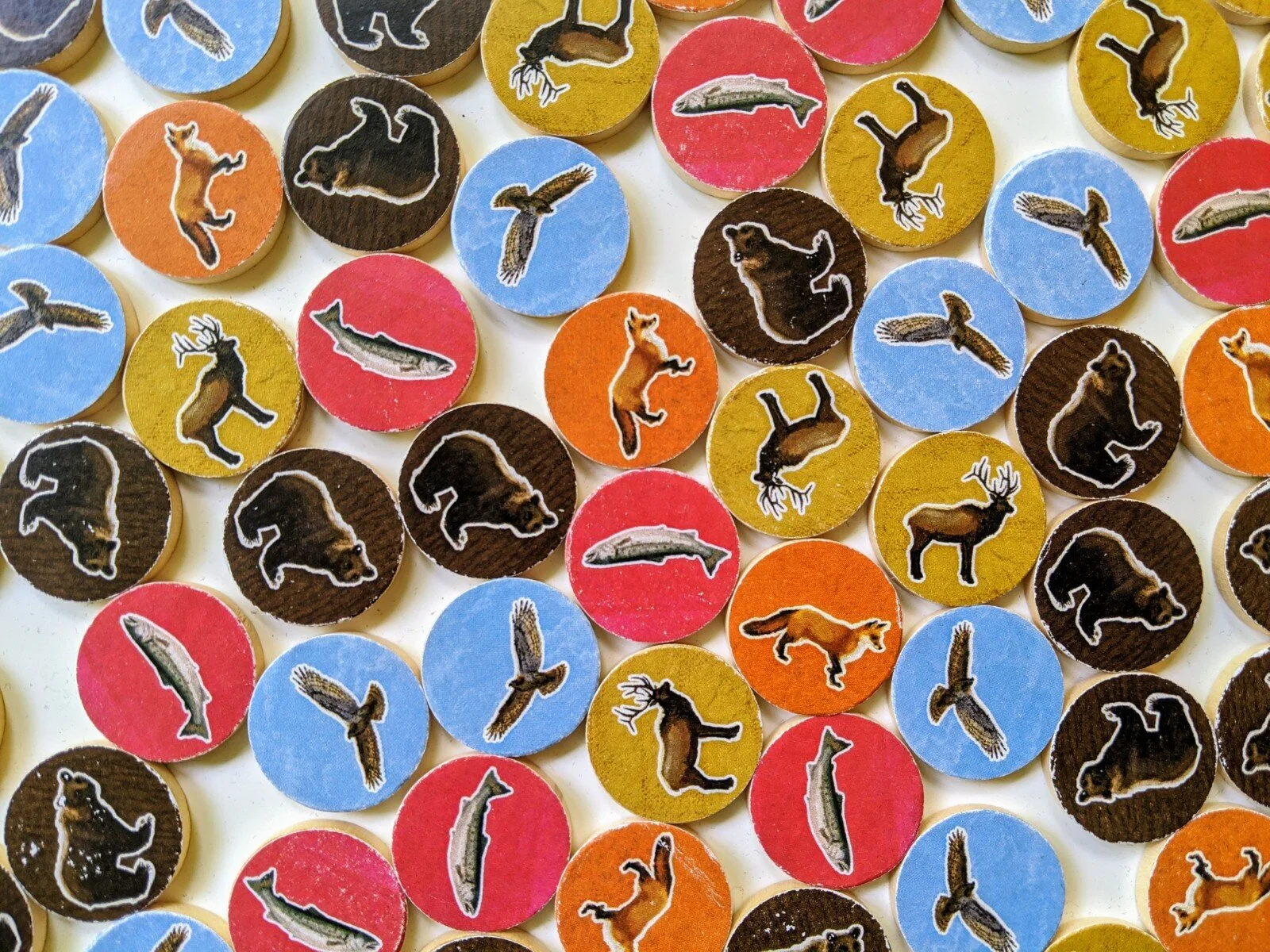
Cascadia is a tile-laying board game where kids build a Pacific Northwest ecosystem one turn at a time. Each round they draft one habitat tile and one wildlife token, add both to a personal map, and try to satisfy animal-pattern goals while also growing large connected habitat corridors. It is calm on the surface and quietly demanding underneath.
Cascadia has focused developmental strength worth knowing about. It builds judgment. The main growth opportunity: cascadia is not a social-development game. Most of the real work happens inside each player’s own tableau.
Strengths & gaps
Strengths
- ● Cascadia is strongest for Judgment. Kids are constantly weighing immediate points against future board space, wildlife patterns, and habitat corridors.
- ● It also builds Adaptability and Persistence in a quieter way. Plans keep changing as the draft shifts and the tableau fills up.
- ● The game is unusually approachable for how much thinking it asks for. Easy rules sit on top of a real decision puzzle.
Gaps
- ○ Cascadia is not a social-development game. Most of the real work happens inside each player’s own tableau.
- ○ Creativity is not the point. Kids are arranging efficiently, not inventing stories or making original artifacts.
- ○ The nature theme adds flavor, but Purpose stays thin. The child is optimizing a board, not connecting effort to values or contribution.
Detailed scores
How Cascadia performs on each of the 9 literacies in our framework.
Doing
— 0 of 3 Strong
Cascadia gives kids real choices on every turn. They decide which tile-token pair to take, where it goes, and which scoring path matters most in their map. But the rules tightly define what counts as success. That makes agency meaningful, but bounded.
Cascadia asks for steady effort. The puzzle gets tighter as the map grows, and strong scoring usually comes from sticking with a plan long enough to make it work. But the game is not punishing in the way a high-friction challenge game is. It builds follow-through more than grit under failure.
Cascadia keeps forcing re-planning. The shared draft changes what is available, wildlife goals compete with habitat goals, and each turn can disrupt the plan you had two turns ago. But the adaptation stays inside one elegant puzzle system. That keeps it at Moderate.
Thinking
— 1 of 3 Strong
The theme makes the game inviting. Kids are building habitats, noticing animal patterns, and often asking why some arrangements score while others do not. But the curiosity is directed toward a predefined scoring system rather than open-ended exploration. Cascadia sparks interest without turning into inquiry.
Cascadia creates pretty final tableaux, but that is not the same as creative expression. The child is solving for efficiency and pattern fit, not generating original stories or artifacts. The work is thoughtful, but it is not creativity in the rubric’s sense.
Cascadia is a tradeoff machine. Every pick asks the child to compare competing goals and live with the consequence of limited space later. The game keeps asking, "Is this best now, or best later?" That repeated weighing of consequences is exactly why Judgment is the standout capacity here.
Being
— 0 of 3 Strong
Families can enjoy Cascadia together, but the game itself does not depend on deep interaction. There is a shared market, yet most of the experience is internal planning and private map-building. Connection can happen around the game, but it is not built into the design.
Cascadia rewards patience. Kids have to resist obvious short-term moves, tolerate imperfect drafts, and stay calm enough to keep planning. That is real self-management practice. But the game does not teach emotional regulation directly.
The ecosystem theme is lovely, but the game does not connect effort to a larger moral or personal frame. Kids are making a strong puzzle board, not exploring identity, service, or contribution. Purpose remains outside the product’s scope.
Based on 7 sources
- Product flatout.games — cascadia
- Product spiel-des-jahres.de — cascadia is spiel des jahres
- Product theboardgamefamily.com — cascadia board game review
- Product frontlinegaming.org — board game review cascadia
- Product toppingthetable.com — cascadia review
- Product 4gsgames.com — cascadia board game
- Product store.boardgamebarrister.com — cascadia
Reviewed by New Literacies
Scored by our research-derived framework · AI-assisted analysis with editorial review · 7 sources reviewed · Our methodology →
Get the next guide before it goes live
One email when a new product review ships.
Free. No spam. Unsubscribe anytime.
See other products strong in the same literacies: