
Canopy
All ages · paid · AI Product · canopy.us ↗
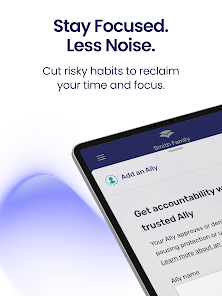
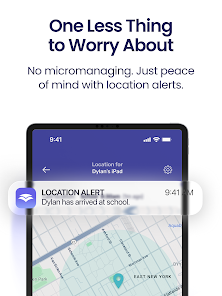

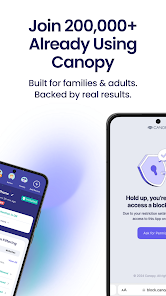
Canopy is a parental-control app built around AI filtering, screen-time management, app blocking, and sexting prevention. The child does not really "use" Canopy as a destination. They experience it as the layer that blurs, blocks, pauses, or reports digital behavior while a parent manages the rules.
We've reviewed Canopy against our 9-literacy developmental framework. The main growth opportunity: Canopy does not build much child-owned agency or judgment.
Strengths & gaps
Strengths
- ● Canopy’s clearest contribution is external structure. Families can use it to create cleaner device routines and reduce impulsive access to explicit content.
- ● Canopy also takes a more active filtering posture than simple website blacklists. The AI layer is meant to catch risky images and messages in real time.
Gaps
- ○ Canopy does not build much child-owned agency or judgment. Most important decisions are made by the parent and the system.
- ○ The public record also suggests implementation friction. Reviews mention overblocking, slowdown, and uninstall difficulty, which can make the experience feel more coercive than developmental.
Detailed scores
How Canopy performs on each of the 9 literacies in our framework.
Doing
— 0 of 3 Strong
Canopy places control with the parent. The child mostly encounters restrictions, pauses, and blocked content rather than meaningful choices. That keeps Agency low.
Canopy is not a challenge-based product. The harvested evidence does not show difficult tasks, mastery loops, or productive struggle. Persistence sits outside the demonstrated scope.
The software can be configured and tuned by adults, but that is not the same as the child learning when to switch approaches. No public source showed metacognitive practice here.
Thinking
— 0 of 3 Strong
Canopy is designed to reduce access, not open inquiry. That may be appropriate for safety, but it does not directly build exploration or question-driven learning.
Children do not create inside Canopy. It runs underneath other experiences as an enforcement layer. Creativity is outside the product’s core loop.
Canopy can help families avoid risky material. But because the software blocks or blurs so much of the decision space, it gives the child fewer chances to practice reflective digital judgment on their own.
Being
— 0 of 3 Strong
Canopy may support family safety goals, but its mechanics are surveillance and restriction. Those mechanics do not directly teach trust, empathy, or collaborative problem-solving.
Canopy can support self-regulation indirectly through routines, pauses, and time limits. But the regulation mostly comes from outside the child. It is structure, not deep skill-building.
Canopy is framed around protection and device management. The public evidence does not connect it to identity, values, or contribution.
Based on 4 sources
- Product canopy.us
- Product canopy.us — our technology
- Product trustpilot.com — canopy.us
- Product appbrain.com — ios
Reviewed by New Literacies
Scored by our research-derived framework · AI-assisted analysis with editorial review · 4 sources reviewed · Our methodology →
Get the next guide before it goes live
One email when a new product review ships.
Free. No spam. Unsubscribe anytime.