Buddy.ai
Ages 2-12 · freemium · AI Product · buddy.ai ↗
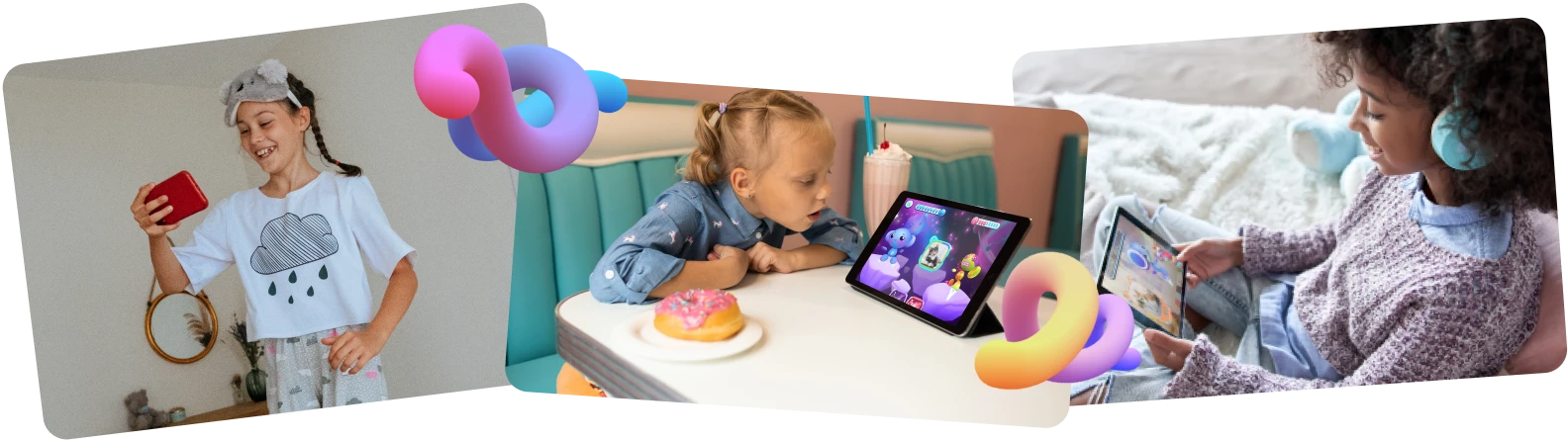
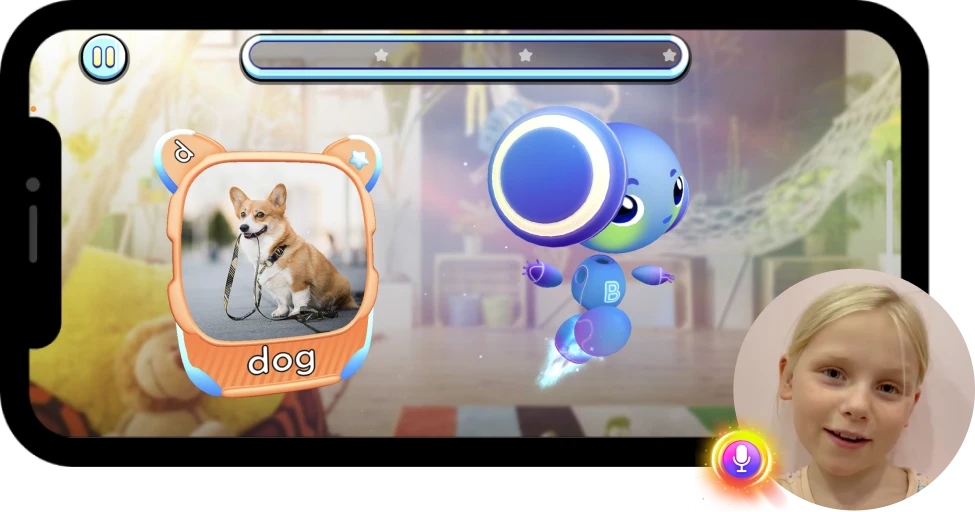
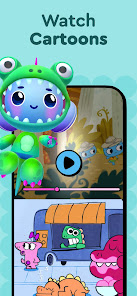
Buddy.ai is a mobile app where young kids practice speaking English with an animated AI tutor. The app listens to the child's voice, responds with prompts and feedback, and moves through short game-like lessons covering vocabulary, colors, numbers, and phrases. It's built for ages 3-8 — particularly kids learning English as a second language — with a speech recognition system trained specifically on children's voices rather than adult speech patterns.
We've reviewed Buddy.ai against our 9-literacy developmental framework. The main growth opportunity: the lesson path is fixed. Kids do not set goals or branch into their own questions.
Full review
The NL Score measures developmental capacity-building, not product quality. A lower score doesn't mean a bad product. Buddy.ai is a focused language-practice tool for young children. This assessment asks a different question: what developmental capacities does it build in a child?
Strengths & gaps
Strengths
- ● Buddy.ai gets kids speaking out loud. The voice-first loop is more effortful than tapping multiple choice.
- ● The app is bounded and routine-driven. The FAQ recommends 15-30 minute sessions three times a week.
- ● Its speech system is built for children's voices, so the feedback loop is more realistic than a generic voice assistant.
Gaps
- ○ The lesson path is fixed. Kids do not set goals or branch into their own questions.
- ○ The conversation is still solo. A child talks to a scripted AI, not a person.
- ○ It does not build much beyond language practice. Curiosity, creativity, and purpose stay mostly out of scope.
Detailed scores
How Buddy.ai performs on each of the 9 literacies in our framework.
Doing
— 0 of 3 Strong
Buddy.ai gives children a narrow kind of control, mostly around pace and repetition. The child can keep going or move on, but the app sets the goal, the topic, and the sequence. That is useful for instruction, but it is not much agency.
Buddy.ai does create real speaking practice. Children have to say the words out loud and sometimes try again when the speech system does not catch them. The sessions are also short and structured, so the app builds practice tolerance more than deep endurance.
Buddy.ai has three proficiency levels and a library of expeditions, but the interaction pattern stays steady. The child hears a prompt, answers it, and moves to the next item. The product adjusts difficulty, not strategy.
Thinking
— 0 of 3 Strong
Buddy.ai covers practical topics, but it does not create open-ended inquiry. Children answer Buddy's prompts instead of asking their own questions or exploring tangents. That makes the app useful for vocabulary, not curiosity.
Buddy.ai is about repetition, recall, and speaking practice. The child is not making original things or generating ideas from scratch. That keeps creativity at the level of language response, not invention.
Buddy.ai targets very young children and does not ask them to compare evidence or weigh competing options. Its task is to produce spoken language, not to make decisions under uncertainty. Judgment is outside this product's scope.
Being
— 0 of 3 Strong
Buddy.ai sounds social because the character talks back. But the exchange is still with a scripted AI, not another child or adult. It simulates conversation without building human connection.
Buddy.ai is relatively gentle on attention because the official materials say the website plan has no ads or in-app purchases. But the app does not teach emotional recovery, patience, or coping strategies. It avoids common traps without teaching the underlying skill.
Buddy.ai links effort to vocabulary growth and school readiness. It does not connect the work to contribution, identity, or values. That keeps Purpose outside the scored scope.
Based on 8 sources
- Product techcrunch.com — buddy ai is using ai and gaming to help children learn english as a second language
- Product buddy.ai
- Product buddy.ai — prices
- Product buddy.ai — faq
- Product play.google.com — details
- Product apps.apple.com — id
- Product edtechdigest.com — buddy ai
- Product pressreleases.triplepointpr.com — buddy ai worlds first ai tutor for children under 12 closes 11m seed round
Reviewed by New Literacies
Scored by our research-derived framework · AI-assisted analysis with editorial review · 8 sources reviewed · Our methodology →
Get the next guide before it goes live
One email when a new product review ships.
Free. No spam. Unsubscribe anytime.