
Brilliant.org
Ages 8-17 · paid · AI Product · brilliant.org ↗
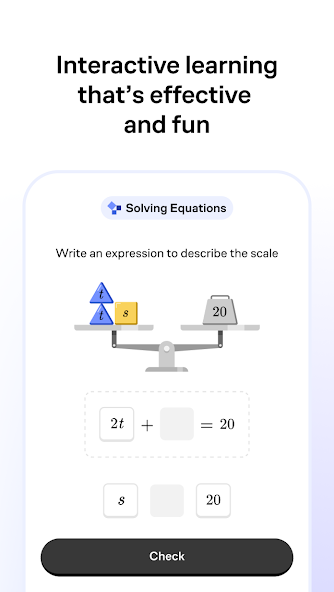
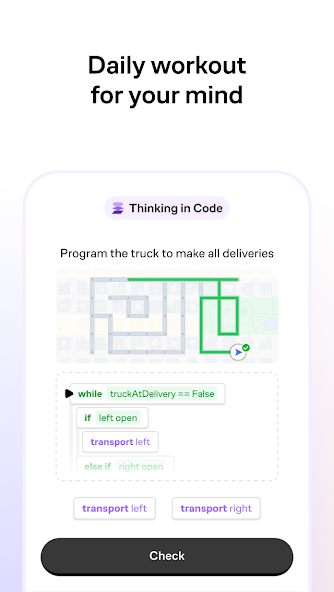
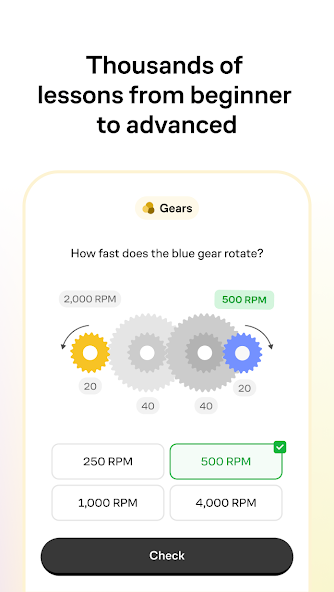
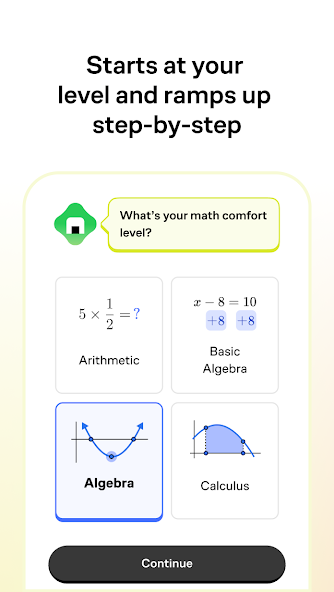
Brilliant is an interactive math, science, and logic platform where kids work through bite-sized puzzles and visual problems instead of watching video lessons. Each course uses a discovery approach: the child tries to solve a problem before learning the procedure, working through 5-12 minute interactive challenges with sliders, drag-and-drop, and guided reasoning. There are 70+ courses spanning grades 3-12, entirely self-paced with no deadlines.
Brilliant.org has focused developmental strength worth knowing about. It builds persistence, curiosity. The main growth opportunity: Brilliant builds zero creativity.
Strengths & gaps
Strengths
- ● Brilliant's discovery pedagogy is its standout feature for Curiosity. Brilliant pretests before teaching, so kids encounter problems before explanations. This creates genuine "I want to know" moments rather than passive answer delivery.
- ● Strong for Persistence because struggle is baked into the design. Problems take 5-12 minutes of real effort, hints are available but must be sought out, and errors get animated explanations rather than punishment. A homeschool parent reported her child found "it wasn't scary to try something that was new."
- ● The breadth of 70+ courses across math, science, logic, CS, and data analysis gives kids meaningful exposure to different thinking styles. A peer-reviewed study of 60 high school students found measurable learning gains over passive video instruction.
Gaps
- ○ Brilliant builds zero creativity. Every interaction is convergent: select an answer, move a slider, solve for the right value. Kids never generate ideas, build things, or produce shareable work.
- ○ Purpose is absent by design. Effort serves only the child's own skill progress. There's no contribution dimension, no real-world application, and no connection to identity or values.
- ○ This is an adult-first platform expanding into K-12. Most reviews describe the teen/adult experience. Evidence for kids ages 8-10 is thin, and the account requirement of age 13+ means younger children need a parent involved.
Detailed scores
How Brilliant.org performs on each of the 9 literacies in our framework.
Doing
— 1 of 3 Strong
Brilliant gives kids real autonomy at the macro level: pick any course, work at your own pace, no deadlines. The discovery model also positions the child to attempt solutions before instruction, which is a meaningful form of initiative. But within any given lesson, the child responds to guided problems rather than setting direction.
Brilliant's core pedagogy is built around productive struggle. The discovery/pretest model means kids encounter problems before knowing the answer, and each puzzle takes 5-12 minutes of real cognitive effort. Hints exist but must be actively sought. Mistakes get animated explanations and positive messaging rather than penalties.
The 70+ courses across math, logic, CS, and science expose kids to varied problem types and thinking approaches. Brilliant also uses spaced retrieval and interleaving across concepts. But the lesson format (interactive problem, feedback, next problem) stays consistent throughout, so kids can settle into a familiar rhythm.
Thinking
— 1 of 3 Strong
Brilliant's signature move is pretesting before teaching. The child tries to solve a problem before learning the procedure, creating a genuine information gap that drives inquiry. With 70+ courses spanning multiple domains and optional challenge problems for faster learners, exploration beyond the immediate lesson is supported. This is closer to inquiry than answer-delivery, distinguishing Brilliant from platforms where the child primarily receives explanations.
Despite being an excellent learning product, Brilliant offers no creative expression. Activities are slider-based, quiz-based, and guided toward single correct answers. The child never generates original ideas, builds artifacts, or produces shareable work. This isn't a flaw; Brilliant isn't designed for creativity, and Limited accurately reflects its scope.
Brilliant develops analytical and logical reasoning through its math, logic, and CS courses. The discovery format requires more reasoning than drill apps, and logic courses feature worst-case analysis and relationship visualization exercises. But in-product decisions are primarily convergent: problems have correct answers, not competing tradeoffs to weigh.
Being
— 0 of 3 Strong
Brilliant is a solo learning platform. The legacy community forum has been removed, and there are no collaborative features, peer interactions, or social components. One reviewer noted intergenerational use (a grandfather and granddaughter working together), but that's a use pattern, not a designed feature.
Brilliant creates manageable frustration through calibrated difficulty and avoids infinite-scroll patterns. Problems are bounded at 5-12 minutes with natural stopping points between lessons. Streaks and leagues provide some habit structure. But self-regulation isn't a design intention here; it's a side effect of the bounded format. Confidence is Low because independent detail on the streaks/leagues mechanics is sparse.
A child might discover an interest in logic or physics through Brilliant's course variety. But Brilliant provides no designed self-discovery, values engagement, or contribution opportunity. All effort serves individual skill progress. There are no shareable artifacts, no community projects, and no connection to broader meaning.
Based on 15 sources
- Research geteducated.online — brilliant review is it worth it
- Research educator.brilliant.org
- Review commonsensemedia.org — brilliant
- Review commonsensemedia.org — adult
- Product files.eric.ed.gov — EJ1394390.pdf
- Product e-student.org — brilliant org review
- Product learnopoly.com — brilliant org review
- Product upskillwise.com — brilliant
- Product organizedhomeschooler.com — brilliant review
- Product brighterly.com — is brilliant org worth it
- Product talk.collegeconfidential.com —
- Product trustpilot.com — brilliant.org
- Product brilliant.org — about
- Product brilliant.org — what grade levels does brilliant cover
- Product brilliant.org — who is brilliant for
Reviewed by New Literacies
Scored by our research-derived framework · AI-assisted analysis with editorial review · 15 sources reviewed · Our methodology →
Get the next guide before it goes live
One email when a new product review ships.
Free. No spam. Unsubscribe anytime.
See other products strong in the same literacies: