
Book Creator
Ages 6-14 · freemium · Product · bookcreator.com ↗

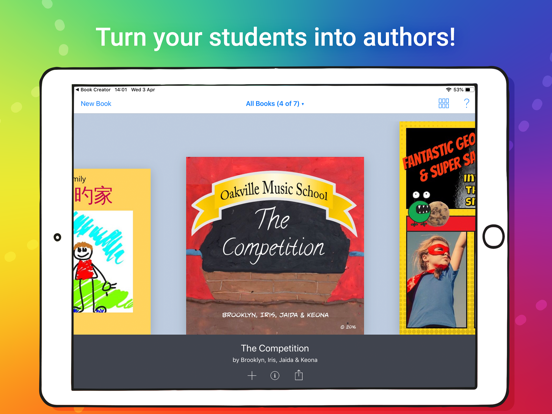
Book Creator is a digital bookmaking tool for classrooms. Kids use it to build books, comics, and multimedia projects with text, images, audio, video, and links. They can work in class libraries, share their books, and collaborate on the same project. The product is built for making and publishing, not just drafting. That means a child can move from idea to finished book without leaving the app.
Book Creator stands out for developmental impact across multiple literacies. It builds agency, creativity, connection. The main growth opportunity: persistence is not the core design. The tool supports revision, but it doesn't create hard challenge.
Full review
The NL Score measures developmental capacity-building, not product quality.
Strengths & gaps
Strengths
- ● Book Creator is strongest for Agency, Creativity, and Connection. Kids really do make the book themselves.
- ● It works well for mixed ages and mixed abilities. Accessibility tools and templates lower the barrier to entry.
- ● The finished work can matter to other people. That gives the project a real audience.
Gaps
- ○ Persistence is not the core design. The tool supports revision, but it doesn't create hard challenge.
- ○ Curiosity is limited by the format. This is a making tool more than a question-asking tool.
- ○ Judgment stays mostly editorial. The child is deciding what to include, not weighing complex tradeoffs.
Detailed scores
How Book Creator performs on each of the 9 literacies in our framework.
Doing
— 1 of 3 Strong
Book Creator gives students a blank page and a lot of freedom. They can start from templates or build a book from scratch, then decide how each page should look and what belongs on it. That kind of ownership is exactly what agency looks like in practice.
Books take revision, and Book Creator makes revision easy. Students can move elements, add audio or video, and keep improving the draft until it feels done. But the tool doesn't make failure hard to recover from, so persistence is present more as craft than as struggle.
The app invites students to move between comics, portfolios, how-to books, fiction, and nonfiction. That means they have to adapt the same idea to different formats and audiences. It's flexible enough to matter, but still one creation environment.
Thinking
— 1 of 3 Strong
Book Creator can make a child curious about how a page will look with a new sound clip, drawing, or video. The format gives space for exploration, but the main goal is still to make and share. Inquiry is possible, just not central.
This is the product's strongest capacity. Students create original books, comics, and multimedia pieces instead of selecting answers from a menu. Common Sense describes it as a top-quality creation tool that lets students publish digital books, and the official site frames it as a tool for all learners to create content. That is straightforward creative work.
Students decide how to organize pages, what media belongs where, and how to make the story or explanation clear. Those are real choices, and they matter to the finished book. But the decisions are mostly about structure and presentation rather than evidence, ethics, or tradeoffs.
Being
— 1 of 3 Strong
Book Creator is designed for sharing. Students join class libraries, collaborate on the same book, and can publish work for teachers, classmates, or a wider audience. That makes the social side of the experience part of the product, not an add-on.
Putting a book together requires patience. Students have to keep revising, coordinate media, and work through accessibility or publishing decisions. Book Creator gives support for that process, but it does not teach coping or emotional recovery. The regulation is embedded in the workflow.
The strongest purpose signal is audience. Students can create for a class, for family, or for a larger audience, which gives the work a reason to exist beyond the assignment. That is not full identity or service work, but it is enough to give the writing a meaningful why.
Based on 5 sources
- Review commonsense.org — book creator
- Review commonsense.org —
- Product bookcreator.com
- Product bookcreator.com — pricing
- Product bookcreator.com — comics
Reviewed by New Literacies
Scored by our research-derived framework · AI-assisted analysis with editorial review · 5 sources reviewed · Our methodology →
Get the next guide before it goes live
One email when a new product review ships.
Free. No spam. Unsubscribe anytime.
See other products strong in the same literacies: