Big Brain Academy: Brain vs. Brain
Ages 5-12 · paid · Product · nintendo.com ↗
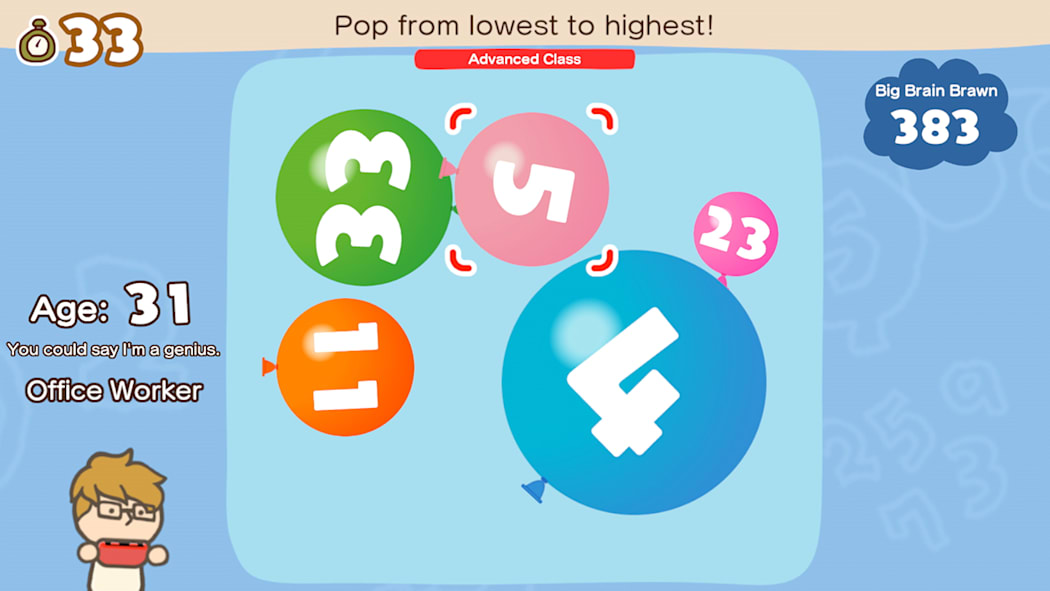
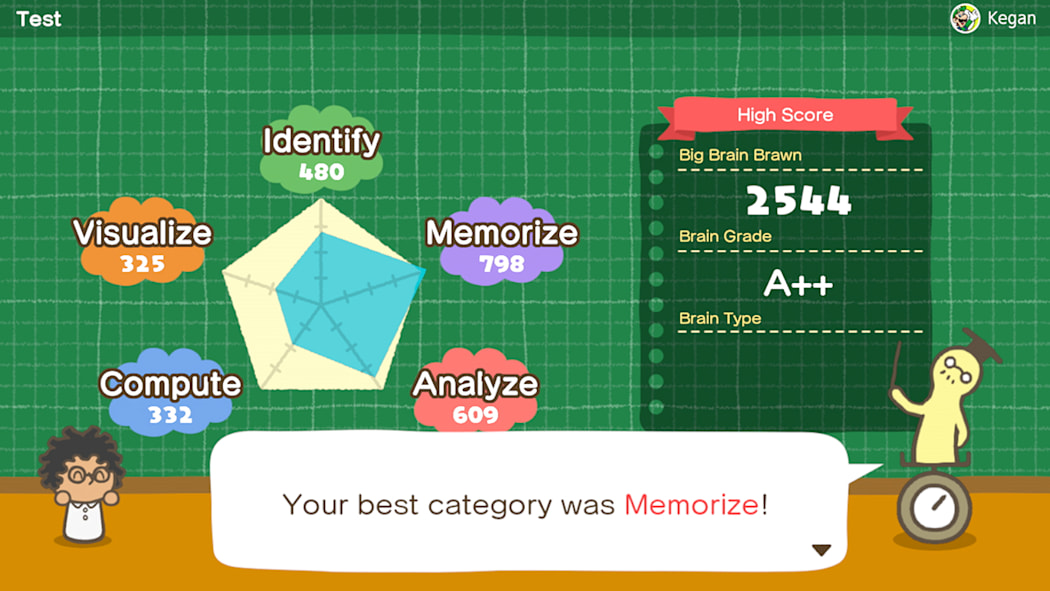
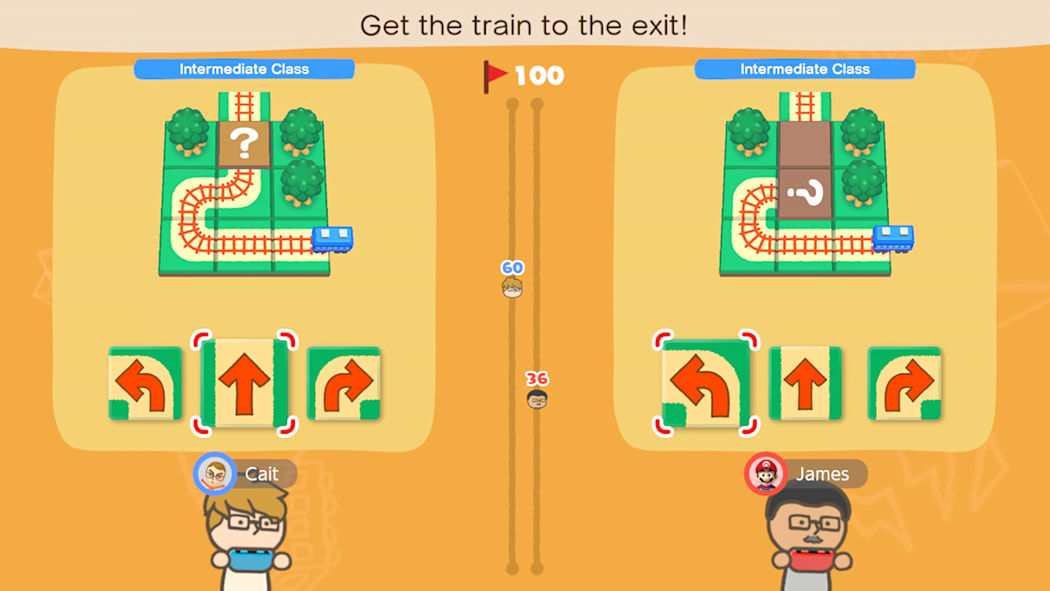
Big Brain Academy: Brain vs. Brain is a collection of one-minute mental mini-games across categories like memorize, compute, analyze, and visualize. Kids can practice alone, take tests, or play local matches with family members on different difficulty settings. It is closer to a fast puzzle workout than a rich adventure game.
Big Brain Academy: Brain vs. Brain has focused developmental strength worth knowing about. It builds persistence. The main growth opportunity: agency, Curiosity, and Creativity are all thin. The product is tightly scripted and mainly about fast puzzle response.
Strengths & gaps
Strengths
- ● Persistence is the clear strength. Big Brain Academy makes practice, repetition, and trying again the whole point.
- ● Local family play is better than it first appears. Different difficulty settings let younger kids stay in the same match with adults.
Gaps
- ○ Agency, Curiosity, and Creativity are all thin. The product is tightly scripted and mainly about fast puzzle response.
- ○ It also works best in short bursts. Common Sense is right to flag that limitation.
Detailed scores
How Big Brain Academy: Brain vs. Brain performs on each of the 9 literacies in our framework.
Doing
— 1 of 3 Strong
Kids do get to pick modes and difficulty. But once they start a challenge, the game takes over completely. This is a prompt-response product, not a self-directed one.
Big Brain Academy builds persistence through repetition. Kids miss, retry, chase scores, and try to beat prior performance. That is narrow practice, but it is still real persistence practice.
The game asks kids to switch mental modes often. Memorization, visual rotation, and computation do not feel the same. That creates some flexibility, even though each task remains short and structured.
Thinking
— 0 of 3 Strong
There is very little open exploration here. Big Brain Academy does not invite kids to ask questions or follow an interest trail. It asks them to answer quickly and move on.
Children are not making or designing anything in this game. They are solving preset puzzles as fast as possible. That matters for cognition, but not much for creativity.
Some minigames reward choosing the right strategy under time pressure. Kids decide what to notice first and how to approach a problem. But the scope of those decisions stays narrow.
Being
— 0 of 3 Strong
The best argument for Connection is local family play. Different difficulty settings make shared play fairer, which lets younger children compete alongside adults. That is a useful design choice, even if the social layer is not deep.
Time pressure and mistakes create frustration. Kids need to recover and keep moving. The regulation practice is brief and gamey, but it is there.
Big Brain Academy has no meaningful values or contribution frame. It is a brain-game collection, not a purpose-building product.
Based on 3 sources
Reviewed by New Literacies
Scored by our research-derived framework · AI-assisted analysis with editorial review · 3 sources reviewed · Our methodology →
Get the next guide before it goes live
One email when a new product review ships.
Free. No spam. Unsubscribe anytime.
See other products strong in the same literacies: