Behavior Buddy (UTSA)
Ages 2-12 · free · AI Product · abautsa.com ↗
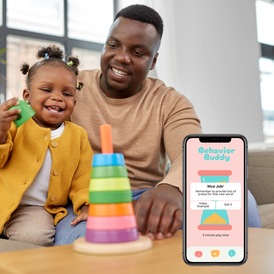


Behavior Buddy is a UTSA-led mobile app designed to help caregivers of children with autism use behavior-support strategies more consistently at home. It offers reminders, tracking, and machine-learning-supported feedback between appointments. The app is not mainly for the child to use. It is for the adult who is trying to carry intervention into daily family life.
We've reviewed Behavior Buddy (UTSA) against our 9-literacy developmental framework. The main growth opportunity: This is an indirect child-development tool.
Strengths & gaps
Strengths
- ● Behavior Buddy’s clearest value is practical continuity. It helps families carry support strategies from sessions into ordinary life at home.
- ● It also appears to be built around a real access problem. Many families do not have enough specialist support, especially outside appointments or in underserved areas.
Gaps
- ○ This is an indirect child-development tool. The app mainly changes what caregivers can do, so several capacities remain unassessed at the child level.
- ○ The evidence is also early. Behavior Buddy is still in a research and recruitment phase, which keeps confidence limited.
Detailed scores
How Behavior Buddy (UTSA) performs on each of the 9 literacies in our framework.
Doing
— 0 of 3 Strong
Behavior Buddy is mainly for the caregiver. The reviewed evidence does not show the child using the app directly or setting goals within it. Agency cannot be scored confidently from the child’s point of view.
Behavior Buddy exists to improve follow-through between sessions. That can create more repetition and consistency at home, which matters for Persistence. The public evidence is still too early for a stronger call.
Immediate feedback and in-the-moment intervention support can help families respond differently when challenges show up. That is a real adaptability signal, even if it is mostly caregiver-mediated.
Thinking
— 0 of 3 Strong
Nothing in the reviewed sources suggests that Behavior Buddy is trying to spark inquiry or exploration. Curiosity sits outside the documented scope.
The app is a support and tracking tool, not a creative environment. No retrieved source suggested open-ended making or expression.
Behavior Buddy may improve caregiver choices, but the public evidence does not show the child practicing independent evaluative judgment through the product itself.
Being
— 0 of 3 Strong
Connection is one of the stronger child-facing signals here. The app is built to support better caregiver-child interaction outside clinic sessions, when many difficult moments actually happen.
More consistent home support can help children manage behavior and communication challenges with fewer gaps between sessions. That gives Self-Regulation a real, if indirect, signal.
Behavior Buddy is framed around caregiver support and implementation. The reviewed sources do not connect the child experience to identity, values, or contribution.
Based on 2 sources
Reviewed by New Literacies
Scored by our research-derived framework · AI-assisted analysis with editorial review · 2 sources reviewed · Our methodology →
Get the next guide before it goes live
One email when a new product review ships.
Free. No spam. Unsubscribe anytime.