
Beast Academy Online
Ages 6-13 · paid · Curriculum · beastacademy.com ↗
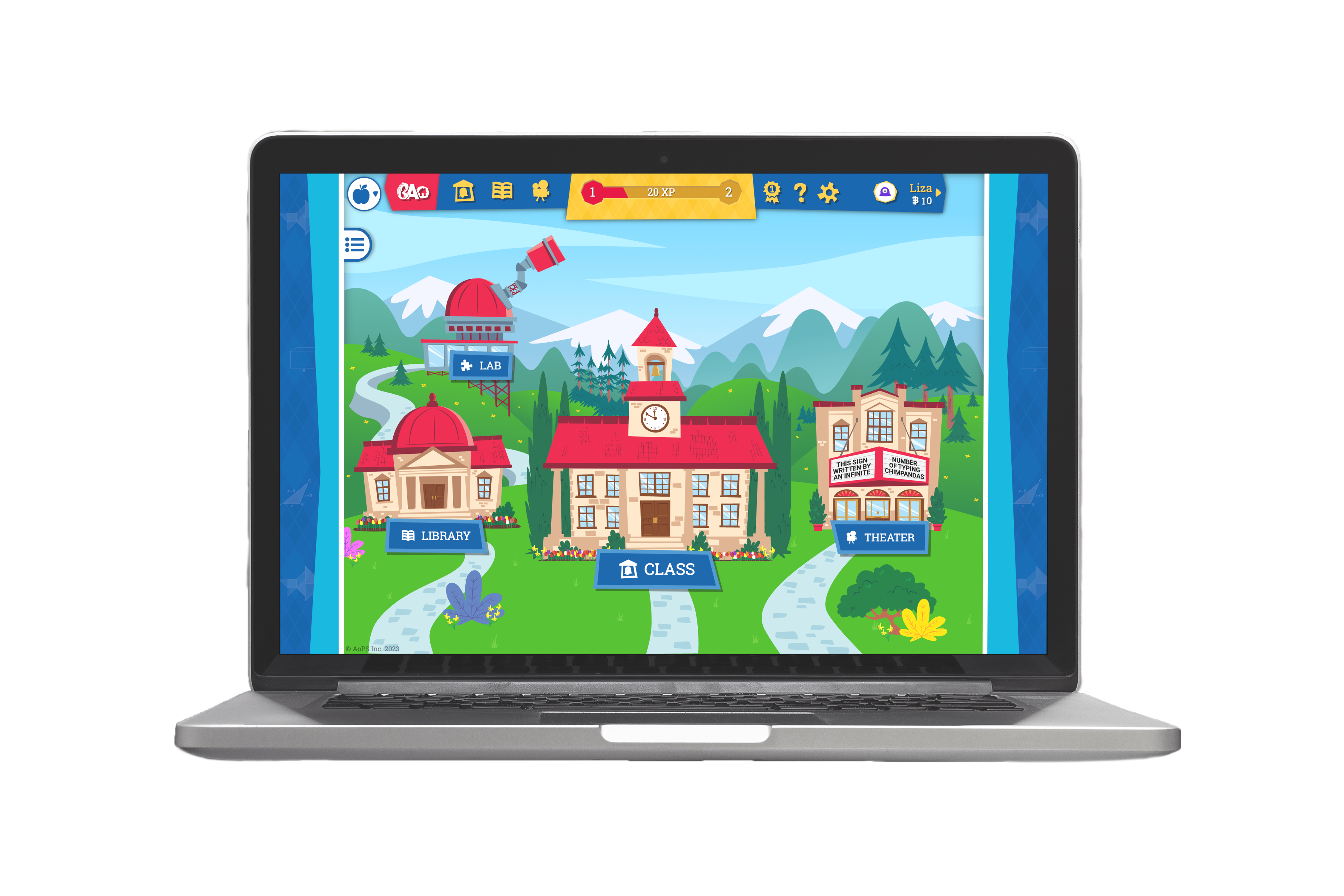


Beast Academy is a math curriculum from Art of Problem Solving that teaches through comic-style graphic novels, online puzzles, and dense practice workbooks. Kids follow monster characters who model mathematical thinking — debating strategies, making mistakes, recovering — then tackle non-routine problems that require genuine reasoning rather than memorized procedures. It covers roughly grades 1-5, with an online adaptive platform and optional printed books.
Beast Academy Online has focused developmental strength worth knowing about. It builds persistence. The main growth opportunity: Beast Academy is a solo experience.
Strengths & gaps
Strengths
- ● Beast Academy's biggest developmental win is Persistence. A two-year WestEd study (N=1,027) found statistically significant gains in perseverance and growth mindset, and the comic characters reinforce this by modeling mistakes, debate, and recovery.
- ● The non-procedural pedagogy builds real mathematical thinking. Every problem requires choosing a strategy, testing it, and adjusting when it fails.
- ● Engagement is unusually high for a math curriculum. A gifted homeschool co-op survey found 81% of families reported their kids were more engaged with Beast Academy than previous curricula.
Gaps
- ○ Beast Academy is a solo experience. It doesn't build Connection or any collaborative skill unless a parent or teacher adds that layer.
- ○ Purpose and identity are absent. Math is positioned as intrinsically interesting, but Beast Academy never connects effort to real-world meaning or personal values.
- ○ Kids who shut down when frustrated may struggle. The difficulty is a feature, not a bug, but Beast Academy assumes baseline frustration tolerance rather than building it.
Detailed scores
How Beast Academy Online performs on each of the 9 literacies in our framework.
Doing
— 1 of 3 Strong
Beast Academy gives kids genuine choice in how they solve problems. The non-procedural approach means no prescribed steps to mimic. But the curriculum path itself is fixed across Levels 1–5, and Common Sense Education flags that adult facilitation is expected.
Beast Academy is built around productive struggle. Problems range from accessible entry points to "mystifying stumpers" written by US Puzzle Team members, and the comic characters explicitly model making mistakes and pushing through. The WestEd evaluation across Mankato Area Public Schools found statistically significant perseverance gains over two years. One caveat: kids who already shut down at difficulty may need support getting started.
Beast Academy requires strategy-switching across varied problem types. Kids can't rely on a single procedure. Characters model trying different approaches and learning from dead ends. But the domain is purely mathematical, the progression is linear, and there's no metacognitive prompting to help kids transfer flexible thinking elsewhere.
Thinking
— 0 of 3 Strong
The comic characters model mathematical curiosity by wondering aloud, debating approaches, and chasing understanding. Over 500 puzzle styles reward investigation within the mathematical space. But curiosity here is a byproduct of engagement, not a directly taught skill. Kids answer questions rather than asking them.
Beast Academy engages mathematical creativity through multiple solution paths and lateral thinking puzzles. Kids generate their own strategies rather than following templates. But there's no blank canvas, no original creation, and no open-ended expression. Risk-taking exists within a right/wrong framework.
Beast Academy builds analytical judgment inside math. Kids don't follow procedures — they compare approaches, decide which strategy fits the problem, and check whether answers make sense. But that judgment stays inside a narrow domain. Beast Academy doesn't ask kids to weigh perspectives, evidence sources, or real-world tradeoffs outside the math work.
Being
— 0 of 3 Strong
Beast Academy is a solo curriculum. Individual students use the web app alone; the workbooks are used independently. Comic characters model collaborative discussion, but reading about collaboration isn't practicing it. Connection is outside Beast Academy's scope.
Hard problems create genuine frustration, and kids must manage that emotional response to keep going. Characters normalize difficulty by modeling recovery from mistakes. But Beast Academy doesn't teach coping strategies or label emotions. It creates the conditions for self-regulation practice without scaffolding the skill itself.
Beast Academy presents math as intrinsically fun through engaging characters and story. It doesn't connect mathematical effort to identity, values, community impact, or contribution beyond the self. Purpose is outside Beast Academy's scope.
Based on 9 sources
- Review commonsense.org — beast academy
- Product wested.org — evaluation of beast academy
- Product data.artofproblemsolving.com — WestEd%20Beast%20Academy%20Evaluation%20Technical%20Report%20Final.pdf
- Product cathyduffyreviews.com — beast academy math
- Product midsouthgiftedacademy.com — beast academy for gifted learners
- Product kateshomeschoolmath.com — beast academy review unconventional and challenging curriculum for curious kids
- Product brighterly.com — beast academy reviews
- Product forums.welltrainedmind.com — 358380 the official beast academy review thread
- Product midsouthgiftedacademy.com — beast academy for gifted learners
Reviewed by New Literacies
Scored by our research-derived framework · AI-assisted analysis with editorial review · 9 sources reviewed · Our methodology →
Get the next guide before it goes live
One email when a new product review ships.
Free. No spam. Unsubscribe anytime.
See other products strong in the same literacies: