
Audible
Ages 5-14 · paid · Product · audible.com ↗
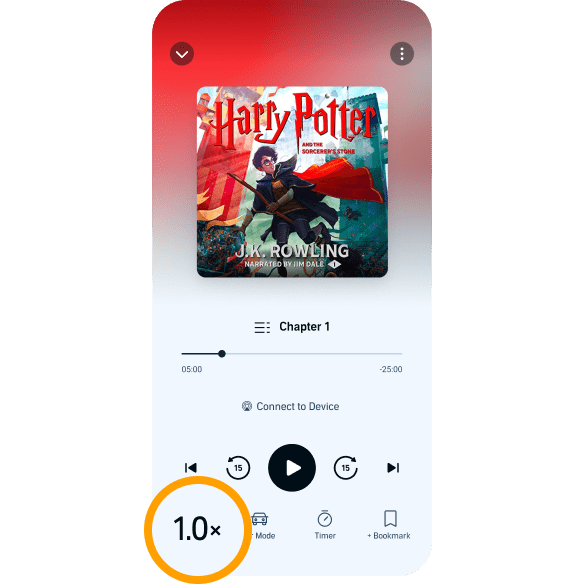
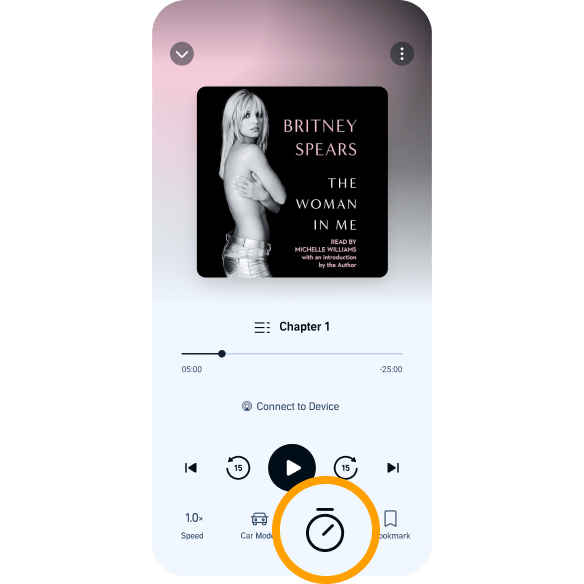
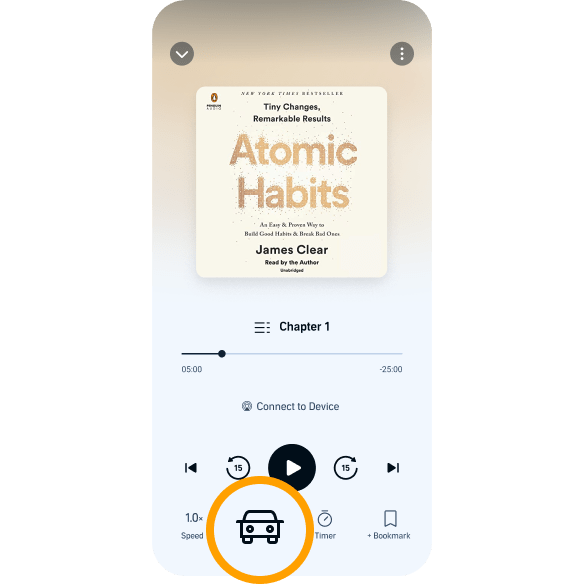
Audible is a subscription audio app with a parent-controlled Kids Profile. Adults share selected children’s audiobooks, podcasts, and Originals into that profile, and kids listen on the mobile app during car rides, bedtime, or quiet time. Children can change narration speed and use a sleep timer, but the experience is still mostly about listening to finished stories. It is a long-form audio library, not a tool for reading practice, writing, or creation.
We've reviewed Audible against our 9-literacy developmental framework. The main growth opportunity: audible is mostly passive. Kids hear stories, but they do not build things or solve problems inside the app.
Strengths & gaps
Strengths
- ● Audible makes long-form listening easy for children. The Kids Profile, narration speed, and sleep timer are all built for real family routines.
- ● The catalog is deep. Kids can move from one story or series to another without running out of material quickly.
- ● It can support reluctant readers without screens. Research on audiobooks links listening with reading interest, imagination, and vocabulary growth.
Gaps
- ○ Audible is mostly passive. Kids hear stories, but they do not build things or solve problems inside the app.
- ○ Agency is bounded by adult curation. The child chooses within a shared library rather than setting their own goal.
- ○ It soothes more than it stretches. That makes it useful for routine listening, but not a strong developmental tool.
Detailed scores
How Audible performs on each of the 9 literacies in our framework.
Doing
— 0 of 3 Strong
Audible gives children some real control over the session. They can choose among titles adults have shared, move between stories, and change narration speed. But the library is still parent-curated, so the child is selecting within a bounded set rather than setting the direction themselves.
Audible can keep a child listening through a long chapter book or a repeat favorite. MIT’s audiobook study treats sustained weekly listening as a meaningful literacy practice, and Audible’s own kids materials place the feature in bedtime and car-ride routines. Still, the app does not create productive struggle, so this is attention-building rather than persistence training.
If a title stops working, the child simply switches to another one. That changes content, not strategy. There is no real pivoting, debugging, or metacognitive adjustment built into the experience.
Thinking
— 0 of 3 Strong
Audible’s kids catalog gives children a lot to browse, and broad audiobook exposure can spark more interest in reading. The National Literacy Trust found that many children who listen to audiobooks report greater reading interest and imagination. But the app delivers finished stories, so the curiosity loop is still mostly on the listening side.
The Crayola partnership adds downloadable activities and family-side creative extensions. That is useful, but it sits next to the listening experience rather than inside it. Audible itself is not a place where kids generate ideas, build artifacts, or revise original work.
Choosing what to listen to is a preference decision. Audible does not ask children to compare evidence, assess sources, or make tradeoffs with consequences. That keeps judgment outside the core product scope.
Being
— 0 of 3 Strong
Families can listen together, and that shared routine can matter. But Audible does not build peer interaction, collaboration, or belonging into the product itself. Any connection is external to the app.
The sleep timer and quiet-time use case make Audible useful for winding down. Children can stay with a calm routine without a screen in front of them. The app does not teach emotional coping, but it does support the conditions for self-regulation practice.
Audible can carry meaningful stories, but it does not link listening to identity, values, service, or contribution. The child is consuming audio, not using the product to discover why their effort matters. Purpose is outside the design.
Based on 13 sources
- Research gablab.mit.edu — ali
- Product pmc.ncbi.nlm.nih.gov — PMC
- Product pmc.ncbi.nlm.nih.gov — PMC
- Product literacytrust.org.uk — the role of audiobooks to engage reluctant readers and underrepresented children and young people
- Product apps.apple.com — id
- Product play.google.com — details
- Product audible.com — with kids profiles parents can now easily share their love of stories
- Product audible.com — crayola
- Product audible.com — audiobooks kids collection
- Product audible.com — freetrial plans%3Flanguage%3Des_US%26srsltid%3DAfmBOoqMBroRKmk7nWbBYp2ds4rbOnskx6dXScDD4uRiOERIZalYuQk_
- Product audible.com — audible and disney release kid focused originals and exclusive audiobooks
- Product reddit.com — 1fja
- Product reddit.com — audio_books_for_long_car_rides
Reviewed by New Literacies
Scored by our research-derived framework · AI-assisted analysis with editorial review · 13 sources reviewed · Our methodology →
Get the next guide before it goes live
One email when a new product review ships.
Free. No spam. Unsubscribe anytime.