
AstroSafe
All ages · paid · AI Product · astrosafe.co ↗
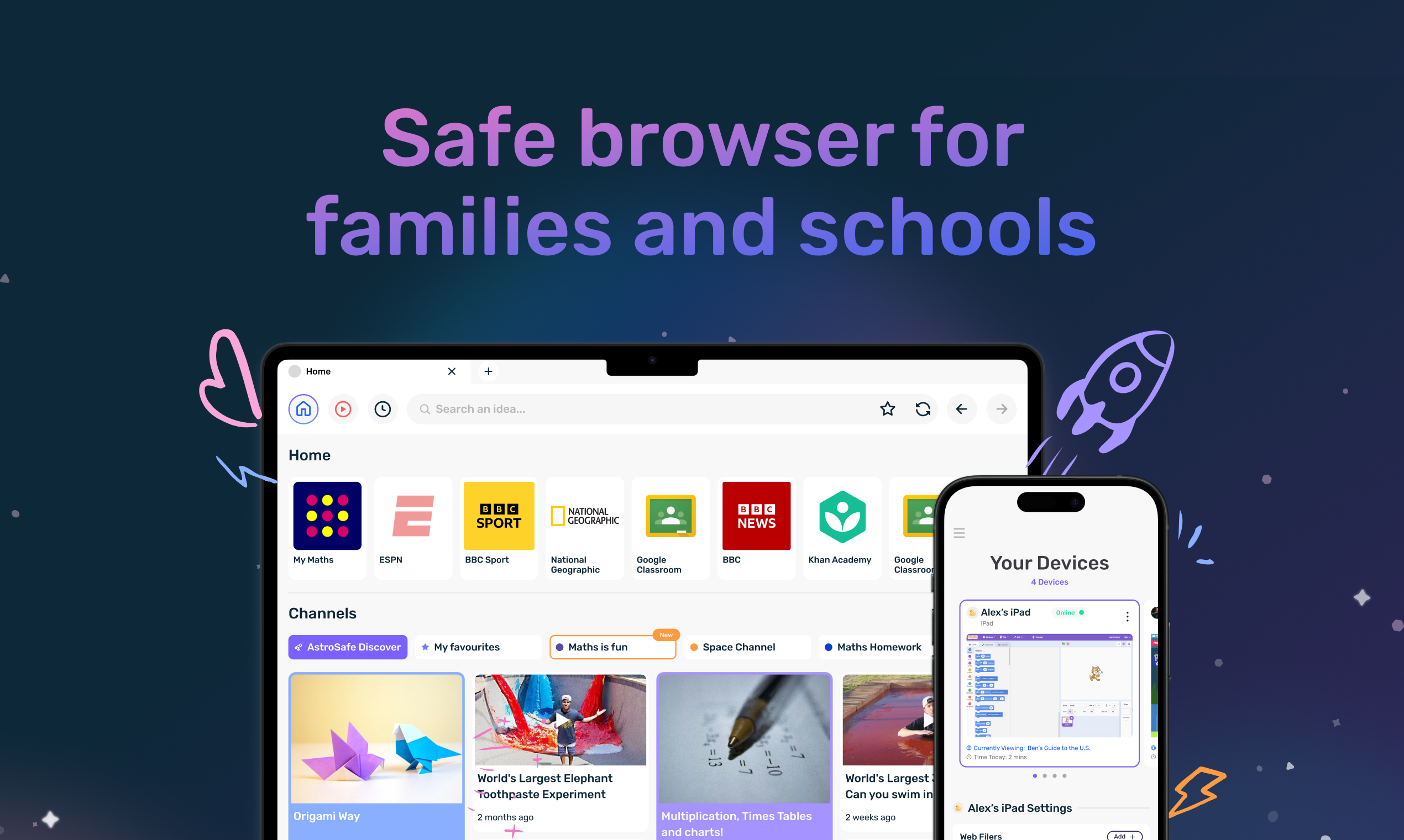


AstroSafe is a kid-safe browser and infrastructure stack for companies building child-facing apps, devices, and AI features. In the child-facing browser, kids search inside a filtered environment, watch videos without ads or recommendation traps, and get curated educational content. Parents and developers stay in the loop through controls, alerts, and compliance tools.
We've reviewed AstroSafe against our 9-literacy developmental framework. The main growth opportunity: AstroSafe is more environment than activity.
Strengths & gaps
Strengths
- ● AstroSafe makes exploration safer without turning the internet into a dead end. That gives kids more room to follow interests than a pure blocker would.
- ● AstroSafe supports better attention than standard browsing. Ads, shorts, recommendation loops, and open social feeds are stripped out.
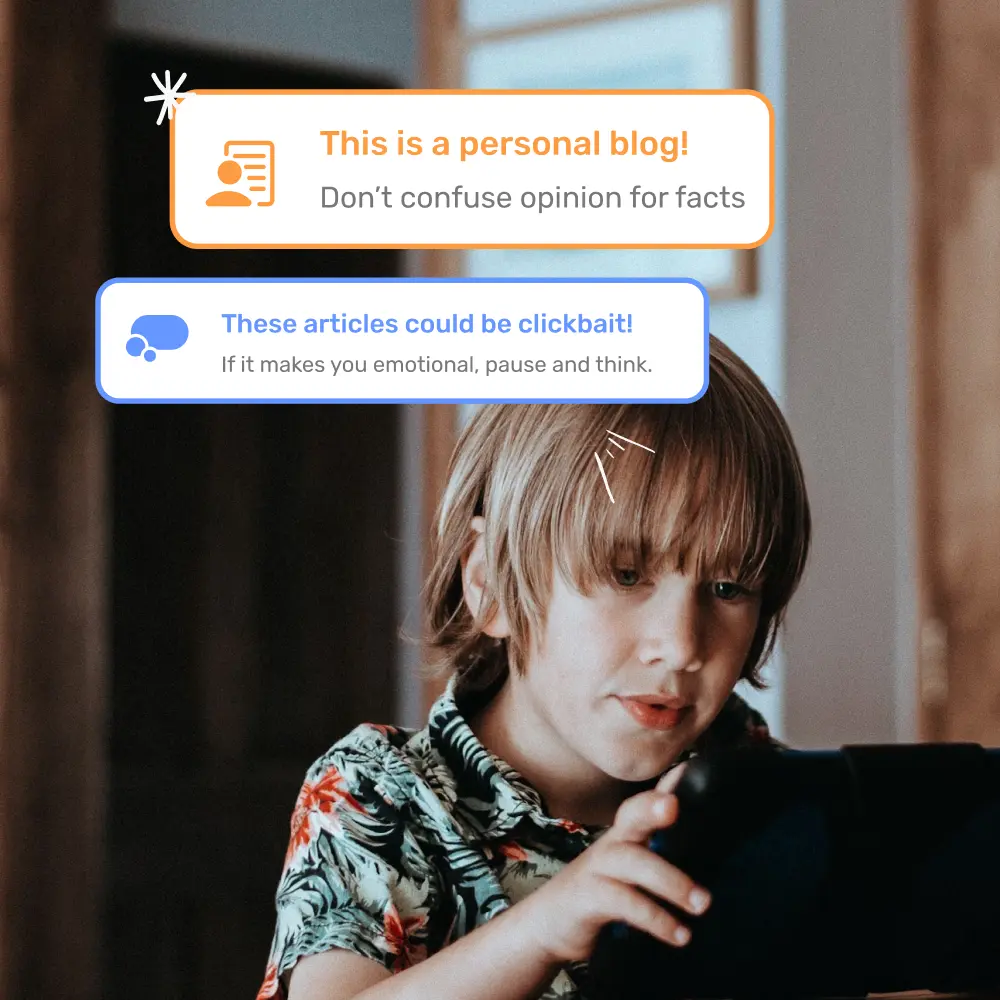
- ● AstroSafe may help with online judgment. Alerts about scams, clickbait, and fake news can turn browsing into a teachable moment.
Gaps
- ○ AstroSafe is more environment than activity. It shapes what a child can do, but it does not create deep challenge or making.
- ○ AstroSafe keeps many decisions with the system and the adult. That limits agency and judgment depth.
- ○ AstroSafe’s broader infrastructure claims are promising, but the evidence base is still mostly company-authored.
Detailed scores
How AstroSafe performs on each of the 9 literacies in our framework.
Doing
— 0 of 3 Strong
AstroSafe gives kids a safer way to search, browse, and follow links on their own. That matters. But the system still defines what counts as safe, and parents or schools can shape the allowed universe heavily.
AstroSafe does not revolve around challenge or productive struggle. It is a browsing and safety layer. Persistence is outside the scope.
The product helps children move through a safer internet environment. It does not ask them to change strategies or solve novel problems. Adaptability is not really what this product is for.
Thinking
— 0 of 3 Strong
AstroSafe supports exploration better than a blunt web blocker does. Kids can search, discover daily educational content, and save findings inside a more focused environment. Still, the curiosity is bounded by filters and trusted-source curation.
AstroSafe markets safe image and video tools, but the current evidence is light on actual child creation patterns. The product may enable creative downstream experiences, but that is still indirect here. Creativity stays limited on the evidence available.
AstroSafe is unusually explicit about fake-news, scam, and clickbait alerts. That matters because the product is not only blocking risky content, it is also naming it. The child may get some real judgment practice inside those guardrails.
Being
— 0 of 3 Strong
AstroSafe is not built around collaboration or rich social interaction. Parent involvement is important, but that is not the same as the child practicing connection. The available evidence is too thin to score this higher.
AstroSafe’s strongest developmental contribution is probably structural. By removing recommendation traps, ads, comments, and social-media access, it creates a calmer digital environment. That supports attention, even if the regulation is mostly built into the system rather than practiced internally.
AstroSafe is about safe access and safer design. It does not directly connect use to contribution, identity, or values. Purpose sits outside its scope.
Based on 3 sources
- Product astrosafe.co
- Product astrosafe.co — browser
- Product astrosafe.co — features
Reviewed by New Literacies
Scored by our research-derived framework · AI-assisted analysis with editorial review · 3 sources reviewed · Our methodology →
Get the next guide before it goes live
One email when a new product review ships.
Free. No spam. Unsubscribe anytime.