I’ve spent a good chunk of the past year trying to digest developmental psychology research. Hundreds of papers on what kids actually need to thrive. Agency. Curiosity. Judgment. Connection.
Most of it was sitting in my notes doing nothing. Useful to me, maybe. Not to anyone else.
I was hungry for something that didn’t seem to exist. There are whole books written about single concepts—Growth Mindset, Grit—that could have been blog posts. On the other end, there’s a long tail of academic research with insights too narrow to act on.
What’s missing is something in the middle: a holistic map of what actually matters, at a depth that’s useful without a PhD, but without the fluff and padding of a book about a single concept.
I want to know: what are the highest-leverage things I can actually do (and avoid) as a parent. Where am I making mistakes? Where can I do better?
That’s what led me to build one.
But first, three findings from research that have stuck with me:
-
Kids don’t lose curiosity. They learn to stop asking. Chouinard found kids ask 76 questions per hour at ages 3-5. Susan Engel observed fifth grade classrooms and counted fewer than one episode of curiosity every two hours. What you do with questions at the dinner table might matter more than what happens in the classroom.
-
Your phone habit might matter more than your kids’. Richardson et al. ran a modified marshmallow test with screens (ECIS 2024). Parental screen use for entertainment predicted worse self-regulation in kids. The children’s own screen time didn’t show the same effect. This one hit home hard. We’re decent about no phones at the table, but maybe we need a Yonder box.
-
Every time you jump in to help, you might be squashing agency. You send an implicit signal: you can’t do this without me. The research on learned helplessness is uncomfortably clear on this one. Instead: Let your kids struggle, even when it’s hard to watch.
One surprise, even with a psych undergrad: these concepts are deeply connected. Kids with secure attachment explore more boldly and act more independently. The research on connection directly predicts agency. I wouldn’t have found that just reading papers one at a time.
So, I’ve been exploring how to make these type of insights more accessible. Tools like Claude Code made this possible as a side project: AI-assisted research plus late-night energy. I can build something far more ambitious than I could have even six months ago.
My first attempt: an interactive map.
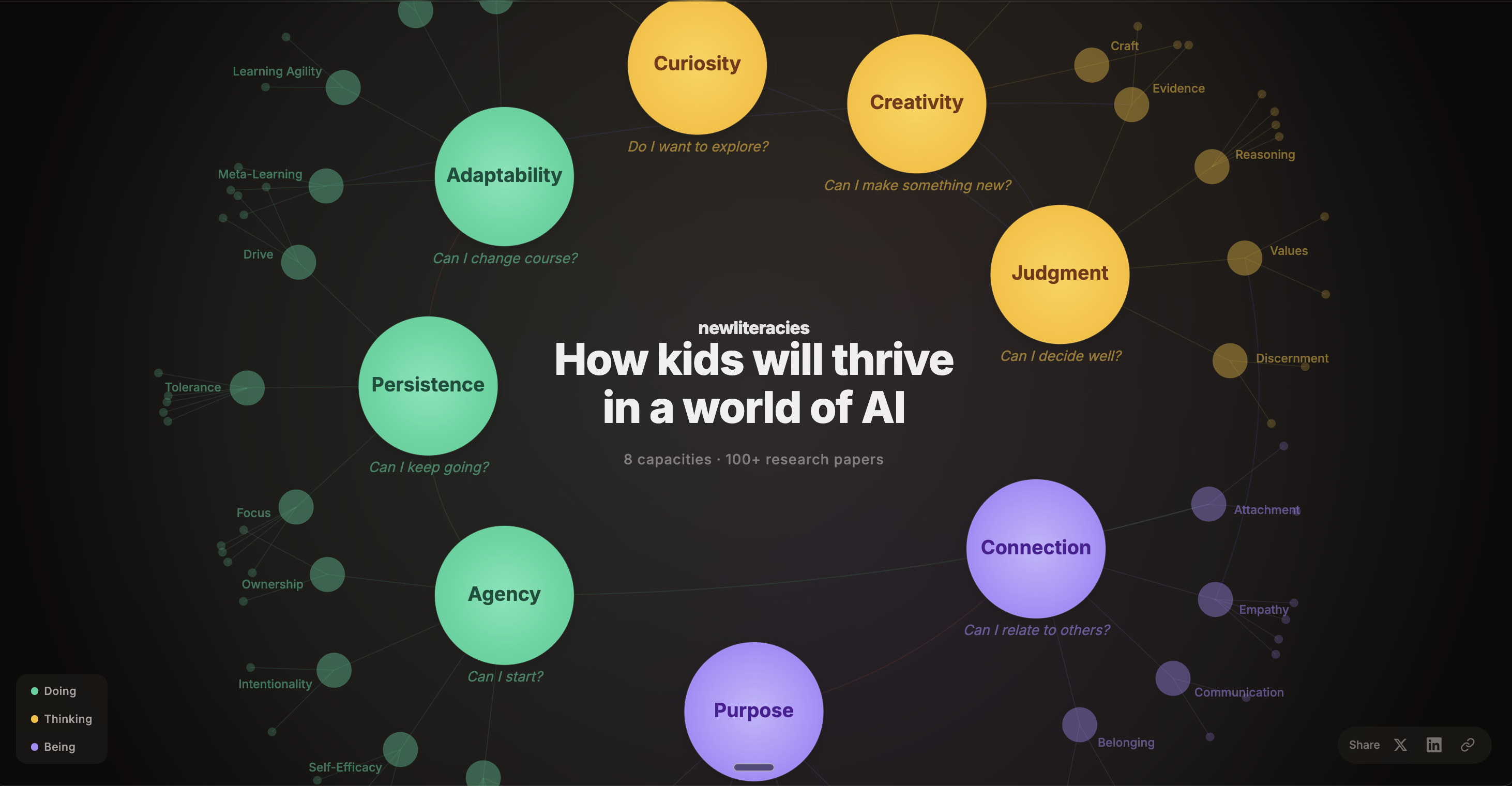
Explore a capacity you’re curious about. See what the research says helps or hurts it. See if it changes something you do with your family this week.
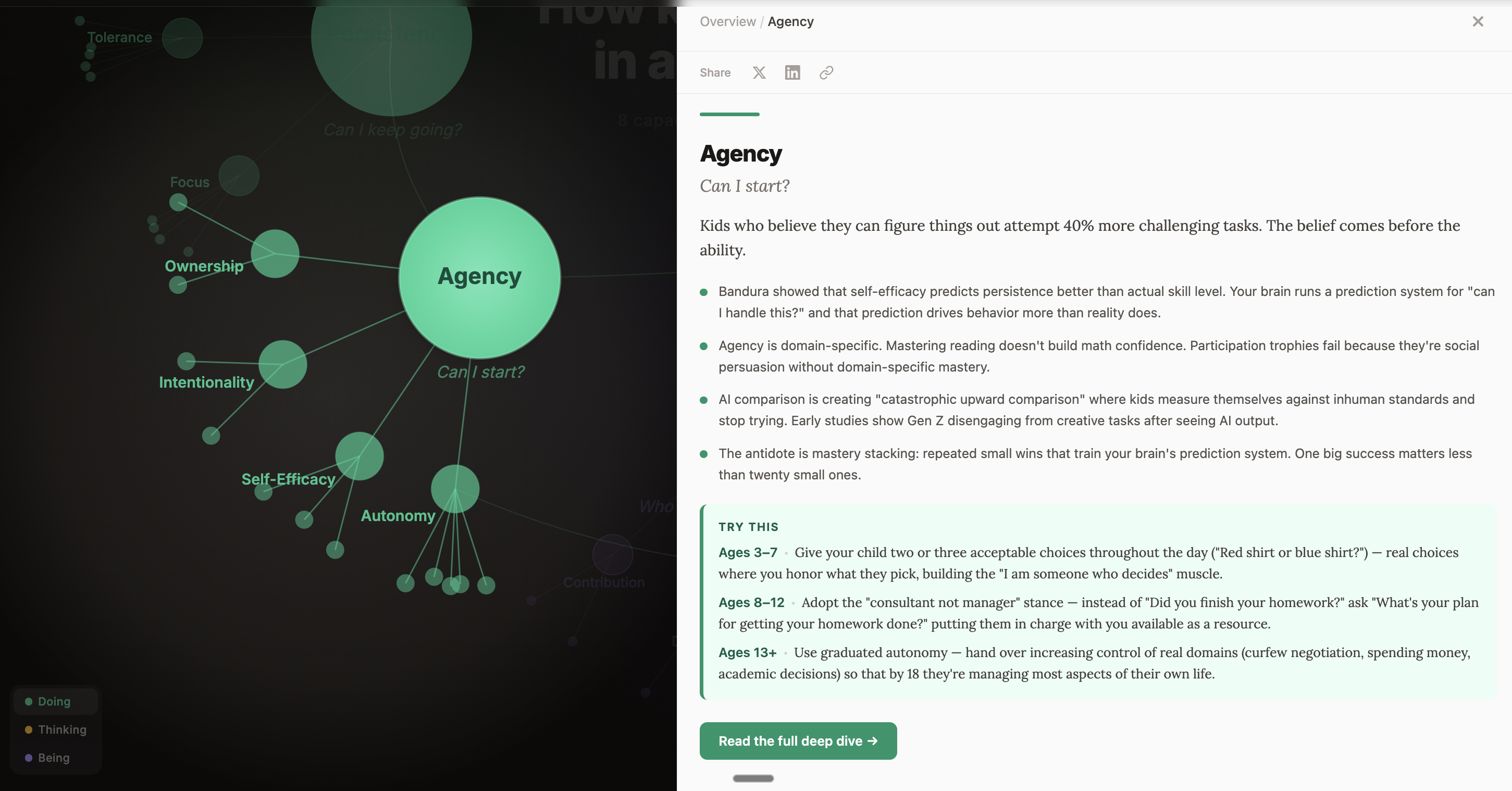
The map doesn’t cover everything yet. Some capacities I’m still researching, the connections between ideas could be richer, and I haven’t figured out how to surface the practical “so what” suggestions as well as I’d like. It’s a v1.
What would make it more useful?
I’m exploring how to make research like this actionable for parents. If there’s a capacity you wish were on there, or a question it doesn’t answer for you, reply or comment. I’ll read everything.